Knight-Swift’s Miller: Teams in position to ‘start with at least double-digit increases’ this bid season
Key takeaways
- Knight-Swift executives told investors that it is hoping for double-digit rate increases for its truckload operations in 2027
- Rate increases are a major priority for large fleets, like J.B. Hunt.
- Knight-Swift's LTL expansion is taking longer than its executives had planned
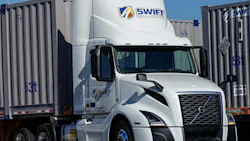
Fleet operators feeling a little timid about their ability to raise rates for 2027 should take heart from Knight-Swift Transportation Holdings CEO Adam Miller.
“I certainly feel like we’re in a position to start with at least double-digit increases as we get going in this bid season,” Miller told investors and analysts on October 21 after Phoenix-based Knight-Swift reported its third-quarter results. “We’ll see how the market progresses from here.”
Miller delivered his assessment of the pricing outlook after executives of Knight-Swift, No. 3 on the FleetOwner 500 list of the largest for-hire fleets, said its truckload operations produced third-quarter revenues per total mile (excluding fuel surcharges) that were up 12% from the same period in 2025. That was a five-point jump from Q2 and nearly five times Knight-Swift’s Q1 pace.
Still, Miller added, the rate recovery in freight is in the early innings, and companies have plenty of work left to catch up to the rising costs they’ve been absorbing in recent years as volumes fell off.
“Our margins have improved meaningfully, but they’re still nowhere near where they would be in the midst of an up cycle,” Miller added. “So I think there’s still a lot of room for that to run.”
That mindset echoes similar statements from J.B. Hunt Transport Services executives, who reported their results earlier this month. Speaking with analysts after that news, EVP and President of Intermodal Darren Field said pushing through rate increases is a top priority for the coming months.
 U.S. truckload spot rates hold steady for second week as dry van, reefer, and flatbed trends diverge
 bob_costello_ata_angle
 trucking's top industry issues 2026 thumbnail
“Since our last earnings call three months ago, we have seen increased inflationary cost pressures in our business, primarily related to driver availability, which has only amplified the magnitude of the price increases needed during this bid season,” Field said. “After four challenging years during the freight recession and continued inflationary cost pressures across the business, our focus during the 2027 bid season is on repairing our margins.”
Leaders of most large publicly traded carriers have told investors that a drop in capacity from various regulatory initiatives has been the primary driver of their ability to push price increases. Demand, they have regularly said, has been steady rather than surging and driving rate growth–yet.
“If we get any type of lift there, I think we could see the contract rate market even improve from low double digits,” he said.
Other items of note from Knight-Swift’s call included:
- Miller saying the company’s efforts to evolve from a regional to national less-than-truckload player is, “quite honestly, taking a little longer than we probably anticipated.” But it is moving forward, with longer-haul and heavier shipments growing, he said, and the plan to push into the Northeast could materialize next year. A key driver: The typical seasonal drop in LTL volumes from the third quarter into the fourth isn’t as steep as last year’s.
- Word that the U.S. Supreme Court’s Montgomery decision earlier this year is taking some time to turn into wholesale changes in the broker market. Treasurer Brad Stewart said that customers are still increasingly leaning toward asset-based carriers but added that they’re also not in a huge rush to make major changes: “We believe many shippers are not yet hurrying to materially reduce the number of brokerages that they work with. After periodically developing new refinements to our carrier vetting protocols over the past several quarters, we saw our third-party carrier count largely stabilized during the third quarter.”
Shares of Knight-Swift (Ticker: KNX) were changing hands around $60.65 on the afternoon of October 23. They have fallen nearly 10% over the past six months, which has cut the company’s market capitalization to about $9.9 billion.
About the Author
 Geert De Lombaerde
Senior Editor
A native of Belgium, Geert De Lombaerde has more than two decades of experience in business journalism. Since 2021, he has written about markets and economic trends for Endeavor Business Media publications FleetOwner, Healthcare Innovation, IndustryWeek, Oil & Gas Journal, and T&D World.
With a degree in journalism from the University of Missouri, he began his reporting career at the Business Courier in Cincinnati. He later was managing editor and editor of the Nashville Business Journal. Most recently, he oversaw the online and print products of the Nashville Post and reported primarily on Middle Tennessee’s finance sector and many of its publicly traded companies.
Related
 knx_truck_swift_1
 knx_swift_truck_2

