Is EPA SmartWay just marketing hype? Let's look at the math.
Key takeaways
- SmartWay’s oil and CO2 savings are modest at a national scale, but fleets still see measurable fuel economy gains.
- Low rolling resistance tires can improve MPG by about 3%, delivering direct cost savings to fleet bottom lines.
- Fuel prices drive tire and spec decisions more than certification labels—fleets invest where the math works.
In 2004, the U.S. Environmental Protection Agency (EPA) launched the SmartWay program to improve fuel economy and reduce emissions in freight transportation. This voluntary public-private program encouraged fleets to adopt various technologies to enhance the freight supply chain's sustainability and efficiency. Since then, the EPA estimates that SmartWay has helped its partners save 397 million barrels of oil while avoiding the emission of 170 million metric tons of CO2. At the surface, it appears to be a tremendous success story of government and industry working together to combat climate change.
But as with an iceberg, what matters most lies below the surface. Over the past 20-plus years, SmartWay has saved the U.S. approximately 19 days of oil and about 13 days of CO2 emissions. While the U.S. leads the world in oil consumption at 21 million barrels per day, China and the European Union together consume over 26 million barrels per day. While the U.S. emits about 4.8 billion metric tons of CO2 annually, China’s fossil-fuel CO2 emissions are about 12 billion metric tons annually. SmartWay is doing its part to reduce the dependency on oil and lower emissions, but it is not having a significant impact on the domestic or global landscape.
Just over 10 years ago, I said that SmartWay was more about marketing. The trucking industry has been a primary target of environmental activists for as long as I can remember, so participating in SmartWay isn’t really optional. It’s better to say you’re doing something as opposed to nothing, and SmartWay partners can definitely say they’re doing something. The overall impact is an afterthought because it’s all about image in today’s world.
The EPA boasts that nearly 4,000 companies and organizations participate in SmartWay, with over 200 major industry associations, non-governmental organizations, states, localities, and professional trade groups participating as SmartWay Affiliates. The EPA names Excellence Awardees each year; over the past 15 years, 314 partners have been recognized, and 151 have received multiple awards.
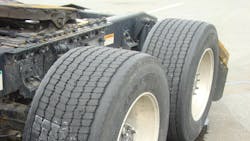
Low rolling resistance (LRR) tires are a significant component of SmartWay, and the EPA has a list of verified tires and retreads. When I wrote about LRR tires back in October 2015, there were almost 1,000 tires on the verified list and no retreads. Today, 320 manufacturers offer 874 steer, drive, and trailer tires, encompassing 3,000-plus tread designs. Retreads are now part of the picture, with 16 manufacturers represented and about 100 tread designs. It’s not an exclusive club.
In 2015, I suggested that the bar for LRR tires might be too low, making it too easy for offshore manufacturers to have their tires verified. I also suggested that someone audit the verified list to ensure that all 320 manufacturers are meeting the EPA-established LRR target values. Based on some of the names on the current verified list, I suspect little has changed over the past 10 years.
While SmartWay may be a marketing tool to keep the climate change lobby at bay, the introduction of true LRR tires appears to have had a positive impact on fuel economy. Fleets are unlikely to track how many barrels of oil they save annually, but they do track miles per gallon, and a 3% improvement goes directly to the bottom line.
Tire companies sell LRR tires and retreads because the math works. Just because a tire is on the SmartWay-verified list does not mean it will translate into actual savings. I’ve said it before, and I will say it again: Math sells truck tires with or without SmartWay verification.
The trucking industry and the environment benefit from more efficient tires and retreads. While the overall climate impact may be minimal, cost savings have economic benefits that impact everyone. In 2004, the average diesel price was $1.81 per gallon. By 2008, it skyrocketed to $3.80. Just five years ago, the price was $2.55; last year, it was $3.66.
Without SmartWay, I’m fairly certain the truck tire manufacturers would have still explored the LRR path because fuel will always be the number one operating expense, and the math always wins.

 truck exhaust stacks
About the Author
Kevin Rohlwing
Kevin Rohlwing is the SVP of training for the Tire Industry Association. He has more than 40 years of experience in the tire industry and has created programs to help train more than 180,000 technicians.