Logistics company places largest order of Volvo VNR Electric trucks
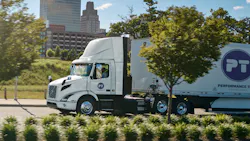
Performance Team has placed an order for 16 Volvo VNR Electric Class 8 trucks—the first zero-tailpipe emission, battery-electric Class 8 truck in the company’s fleet—which are aimed to be on the road by end of year carrying regional loads daily to customers across Southern California.
Designed for local and regional freight distribution, the Volvo VNR Electric aims to improve local residents’ quality of life by decarbonized and quiet transportation on urban streets and roadways, creating a clean and comfortable working environment for drivers. The El Segundo, California-based company operates a North America warehousing and distribution network of 45 locations and a fleet of 215 trucks.
“The shift toward electrification is an exciting time in the commercial truck space and Performance Team is leading the way with its largest order of the only battery-electric Class 8 model in scalable serial production today,” said Peter Voorhoeve, president of Volvo Trucks North America. “Through its commitment to deploy 16 Volvo VNR Electrics by the end of 2021, Performance Team has demonstrated a strong commitment to environmental sustainability, and this is another great step forward in reducing the trucking industry’s overall carbon footprint.”
The acquisition of the new Volvo VNR Electric models is part of Maersk’s Environment Social Governance (ESG) strategy to decarbonize logistics. Performance Team is participating in a state of California South Coast Air Quality Management District grant to reduce emissions in the transportation sector by replacing diesel trucks with electric trucks and creating new, future charging infrastructure.
“We’re seeing a 30% growth rate in our warehousing and distribution business,” said Jason Walker, EVP of operations of Performance Team. “Customers are looking for more truck power to meet high-volume delivery demands. This new order of Volvo VNR Electric trucks will give us firsthand experience on their performance carrying regional loads and environmental benefits. Our findings will help determine next steps in our fleet modernization and the electric infrastructure necessary for future operations.”