Key takeaways
- EBS could improve trailer braking performance, but North American adoption faces regulatory and architecture hurdles.
- Standardized tractor-trailer connectivity will be critical as fleets add cameras, telematics, and autonomous functions.
- Trailer technology must balance safety gains with manufacturing efficiency, maintenance needs, uptime, and fleet ROI.
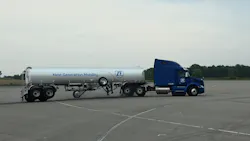
EAST LIBERTY, Ohio—Since the first time a wagon got hitched to a horse, and in the internal combustion century-plus since then, tractor and trailer development operated in distinct silos: Trailers—while essential for payload transport—are primarily viewed as simple boxes on wheels.
However, as fleets face rising operating costs, stringent safety demands, and an increasingly complex digital and connected universe, the commercial vehicle industry and the modern supply chain must transition toward a more intelligent, integrated model.
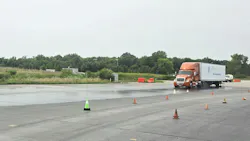
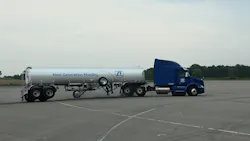
At a recent media preview hosted at the Transportation Research Center (TRC) here, ZF Commercial Vehicle Solutions demonstrated how it is trying to keep it simple—even as the technological opportunities seem complex.
By combining the historical strengths of Wabco and TRW Automotive, both acquired by ZF in the last decade, the global supplier is positioning itself as a systems leader capable of elevating the trailer from a passive asset to a fully connected, active safety platform.
Dirk Wohtlmann, who has moved into the role of head of the North American CVS group after leading the region’s engineering operations, outlined the coming full day of demonstrations for FleetOwner ahead of similar presentations for OEM partners and fleet customers.
With 30 years of experience starting with Wabco and its integration into ZF, Wohltmann brings a unique perspective to commercial vehicle architecture.
“For me, it’s always important that we see the overall systems,” Wohltmann explained. “Individual components and parts can only work to their best if they are integrated in a full system. If they are not integrated, they do not bring the best performance we want to see for safety, efficiency on the road, the driver experience, and fleet productivity.”
This holistic approach is the essence of ZF’s reintroduction of its comprehensive trailer portfolio here, aimed at showing OEMs and fleets that the "smart trailer" revolution is not a distant concept, but a suite of practical and proven solutions that can be deployed immediately.
With more to come.
A central challenge in modernizing trailer safety is the stagnation of regulatory baselines. Jason Paauwe, North American trailer sales lead for ZF, outlined the problematic reality: The Federal Motor Vehicle Safety Standards (FMVSS) mandate for trailer anti-lock braking systems (ABS) was established in 1998 and has not been updated since.
For true EBS and advanced autonomous driving functions to succeed, tractors and trailers must be linked by a standardized, high-speed data connector that goes far beyond the capabilities of the aging seven-pin connector and PLC lines.
FleetOwner sat down with Wohltmann and Paauwe to sort through the challenges of tractor-trailer technologies and mixed fleets and what's coming next.
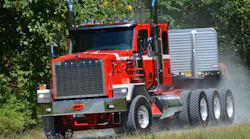 Kenworth C580 Winch Tractor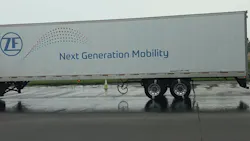
The path to EBS and connectivity
While ZF continues the push to maximize utility from its ABS-based architectures in North America, both Wohltmann and Paauwe emphasized that electronic braking systems (EBS)—commonly referred to as "brake-by-wire"—represent the long-term future of trailer technology. (ZF refers to its system as iEBS.)
In standard pneumatic systems, the braking command travels from the cab to the trailer as an air pressure wave down a physical hose, resulting in a minor but measurable physical delay. EBS replaces this pneumatic signal with a high-speed electronic braking command sent directly from the tractor ECU to the trailer ECU, yielding near-instantaneous brake response times, shorter stopping distances, and superior vehicle-wide stability.
The primary barrier to widespread EBS adoption in North America is a fundamental difference in regulatory and operational models compared to Europe, where EBS has been the standard for decades.
In Europe, strict legislation mandates precise brake-force balancing between the tractor and the trailer, falling within a highly regulated tolerance band. EBS is required to achieve this dynamic balancing automatically.
In contrast, the North American market has historically relied on manual mechanical tuning and pneumatic controls for the highly cost-sensitive marketplace.
Additionally, North American tractor-trailer combinations operate under different electrical architectures. While Europe utilizes 24-volt systems, North America remains on 12-volt systems, though Wohltmann predicts a gradual shift toward 24-volt architectures between the late 2020s and 2030.
The most critical technical bottleneck, however, is tractor-trailer connectivity.
Wohltmann and Paauwe are actively engaged in the SAE and TMC standard committees to drive this transition, noting that there are currently three proposed connector designs on the table.
They emphasized the urgent need for industry-wide alignment on a single, open-source-style standard. Without standardization, the industry risks entering a state of "connector chaos," forcing suppliers to develop multiple proprietary interfaces and forcing fleets to manage incompatible mixed-equipment operations.
Wohltmann stressed that the ideal connector must be backward and forward compatible, ensuring that fleets can seamlessly pull older trailers while preparing their operations for the high-bandwidth data demands of camera systems, cargo-monitoring telematics, and autonomous driving.
But that’s easier said than done, Paauwe noted.
“This is a complicated topic because when you start to talk about these new ideas, everyone protects it with IP—so everybody has a hidden agenda,” he said. “You can join these [standards] meetings. They're supposed to talk about their new concept of this connector idea, and the first two slides are about their connector and the next eight slides are about the technology they're going to sell after they release this connector.
“So, we're trying our best to help influence those conversations. We're not monetizing the truck-to-trailer connector. We definitely have an enhanced influence because we do supply both the truck and the trailer market; we integrate with the OEMs on both sides. But, really, it's going to take an alignment from an unbiased, unmonetized source to get this done.”
Industrial realities: high-volume assembly lines
Deploying sophisticated electronic systems is not just a safety or engineering challenge; it is also an industrial and operational one, as ZF representatives explained.
For trailer manufacturers, introducing highly complex electronic systems can severely disrupt manufacturing efficiency. Modern trailer plants operate at incredible run rates, pumping out up to 200 trailers a day. Under existing ABS architectures, programming and parameterizing the trailer's electronic control units is a highly streamlined, highly efficient process that requires minimal specialized labor.
By contrast, configuring an EBS system requires detailed, vehicle-specific algorithms that account for the entire trailer setup—including precise suspension loads, axle configurations, wheel-end dimensions, and specific laden versus unladen weight profiles.
If the assembly line is not prepared for this level of parameterization, it can create severe production bottlenecks, directly threatening the OEM's profitability. ZF is actively working with OEM sales and engineering teams to simplify this transition, developing standard modular parameter files and training programs to ensure that technology adoption does not compromise manufacturing efficiency.
A similar evolution must occur within fleet maintenance networks and independent service bays. Many trailer repair shops are still staffed primarily by "wrench turners and riveters" who may lack the electronic tools or diagnostic training required to service advanced trailer ECUs.
As Paauwe noted, some dealerships still contact ZF trying to configure automatic lift-axle parameters without a laptop or access to diagnostic software. To bridge this gap and protect fleet uptime, ZF is introducing unified diagnostic software, including ZF Scan and ZF Pro Diagnostics, which provide a single interface for both legacy TCS2 systems and future EBS technologies.
This hardware and software suite is backed by the ZF ProAcademy and comprehensive online training modules, designed to elevate trailer technicians into technology-literate diagnostic specialists.
The ultimate scorecard: safety, uptime, and TCO
Ultimately, the adoption of advanced trailer technology is governed by economic reality.
As Paauwe bluntly noted, regardless of how advanced a trailer's engineering is, fleets evaluate every technology through three fundamental questions: Did the freight arrive safely and on time? Did the equipment stay operational? And did the fleet make money doing it? If a new technology introduces operational friction or fails to deliver a clear return on investment (ROI), it will not succeed in the highly competitive commercial market.
This economic pragmatism is why ZF's strategy is centered on modularity. Rather than imposing a single, over-engineered solution, ZF provides a suite of scalable building blocks—ranging from entry-level 2S/1M ABS to active RSS stability control, TailGUARD reversing safety, and digital telematics.
This allows fleets to select and configure the exact level of technology that addresses their operational pain points and matches their specific risk profiles. By listening directly to fleets and working closely with trailer OEMs, ZF aims to deliver systems that are "right on spot"—delivering measurable safety and efficiency benefits, maximizing uptime, and ensuring that smarter trailers ultimately translate into more profitable operations.
“All of this is more or less ready as we speak here,” Paauwe emphasized. “So, on one hand, we gave you a little glimpse and an outlook as to what could happen later—but, here we are and this what you can get right now. Here are the building blocks of how we can support you.”
For full coverage of the ZF demonstration day, wait for the September print edition of Trailer|Body Builders magazine.
About the Author
 Kevin Jones
Kevin Jones
Editor
Kevin has served as editor-in-chief of Trailer/Body Builders magazine since 2017—just the third editor in the magazine’s 60 years. He is also editorial director for Endeavor Business Media’s Commercial Vehicle group, which includes FleetOwner, Bulk Transporter, Refrigerated Transporter, American Trucker, and Fleet Maintenance magazines and websites.
Working from Beaufort, S.C., Kevin has covered trucking and manufacturing for nearly 20 years. His writing and commentary about the trucking industry and, previously, business and government, has been recognized with numerous state, regional, and national journalism awards.