Fleets Explained: How carriers use load boards
Key takeaways
- Load boards help carriers find backhauls, explore new lanes, and secure freight without a pre-existing network.
- Advanced filters and alerts let carriers quickly find loads by trailer type, lane, rate, weight, or appointment window.
- Integration with TMS and freight factoring speeds operations, automates bookings, and reduces cash-flow delays.

A load board is an online marketplace that connects carriers, brokers, and shippers. In a load board, brokers (and, less often, shippers) can post loads that need trucks, while carriers can post trucks that need loads.
The virtue of a load board is that the parties in a market can all communicate their supply/demand widely and quickly. The most popular function of a load board for carriers is to search for and book spot loads, but the platforms behind these marketplaces offer much more than a simple list of available jobs.
When to use a load board
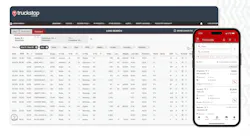
When a fleet wants to make a haul where they don’t have existing business, they can turn to a load board. The marketplace lets carriers cover backhauls, explore new lanes, and find quick revenue with new partners.
By finding a return load (a backhaul) after delivering a primary shipment, carriers can ensure their equipment stays earning revenue rather than returning empty. In this open and busy market, fleets have an opportunity to pick from a variety of lanes without overcommitting. Newer fleets and owner-operators can secure freight without a pre-existing network or extensive sales efforts. Carriers can also make business connections with customers, potentially securing more jobs down the line.
Load boards also collect huge amounts of industry data. The platforms often share current industry trends, such as average rates, load-to-truck ratios, or hot lanes.
However, load boards also have drawbacks and generally won’t be a carrier’s sole source of business. Just as an open and busy market means a wealth of opportunities, it also means competition and risk. Some trucks on load boards will accept rates below average operating costs, and load information can become outdated in seconds.
Exposure to countless potential customers also brings the risk of a bad customer. Some brokers/shippers will demand absurd terms or waste the carrier’s time. Some might take a long time to submit payments or try to pay less than the agreed amount. Working with a new broker/shipper also means spending more personnel time researching, negotiating, and possibly disputing.
What is a load board posting?
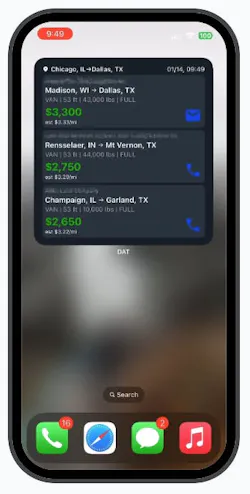
Load boards can have load postings and truck postings, signaling the respective trucking demand and supply. If a posting seems to fit with a user’s business needs, the parties can contact each other for further negotiation and coordination.
Load postings tend to at least include: origin/destination, a per-mile rate, and the freight involved. Depending on the board platform and the user, a posting can include much more information about the job.
Popular load board platforms today
There are too many boards to count, but these are some popular load boards for carriers today:
- DAT One
- Truckstop
- Trucker Path TruckLoads
- 123Loadboard
- Uber Freight
- C.H. Robinson
- TQL
- XPO
- Direct Freight
Each load board represents its own limited network, so some fleets use multiple platforms at the same time. Load boards like those operated by DAT and Truckstop represent a varied population of brokers/shippers, while a 3PL board like that operated by C.H. Robinson only shows C.H. Robinson freight.
A carrier might want to use multiple load boards to maximize their visibility, if it outweighs any additional subscription fees. Available features also vary greatly, depending on the providers and their pricing plans, so one board may have unique strengths compared to another.
How to use a load board
Using a load board requires a profile on the platform. Registration for carriers often requires plenty of verifiable information, such as MC number, DOT number, company name, lanes, proof of insurance, contact information, or references.
 self driving truck by kodiak
 fleets_explained_how_to_spec_trucks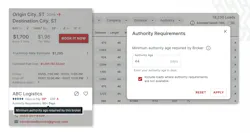
The information will influence a fleet’s success on the market: Whether posting a truck or negotiating a load posting, brokers/shippers will review a carrier’s insurance, safety rating, and authority age to gauge their riskiness.
Next, a carrier can start searching for loads that fit its operations. The search process can be as simple or as complicated as a fleet needs.
Once the carrier finds an enticing haul, they can get into contact with the broker/shipper to work out the fine details, negotiate rates, accept the load, and finally execute the haul.
Precise load searching
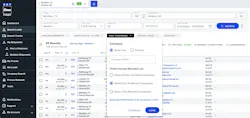
Load boards also support several advanced search features, allowing carriers to quickly find the best haul for the best rate and minimize empty miles.
These are some of the most common details in a load posting that carriers may search by:
- Trailer type
- Origin/destination
- Appointment windows
- Load weight/dimensions
- Rate per mile
- Mileage
- Location proximity or specific lanes
- Additional stops
- Broker authority age
Filtering a load search for only specific variables might not capture all the possible loads that would match those standards: Load posters might share little extra information about the job initially. Some platforms also allow brokers to only show loads to their preferred carriers.
Speed matters in the spot market: A load’s availability can change fast. Load boards often allow carriers to set up automated alerts when specific loads are available, or even automate their load bookings.
Posting a truck
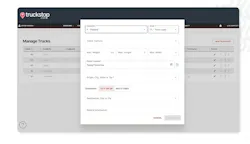
Carriers can share their truck availability and preferred lanes so that brokers reach out directly to them.
When posting a truck, users tend to need to include the equipment, mode (e.g., truckload, less-than-truckload), available space/weight, dates, and desired locations.
Specialized boards
Platforms often have specialized boards for specific equipment. Loads like refrigerated, hazmat, oversize, or LTL might be located on a separate board (and likely with higher rates).
Negotiation
Loads can either be booked instantly through the platform or finalized through direct communication—e.g., phones, messaging systems. Here, the carrier can hammer out further details about the job.
If the posting didn’t already describe these details, or if a carrier wants to persuade the customer to change their terms, this stage is also where the parties will decide on:
- Fuel surcharges
- Detention/layover policy
- Special handling requirements
- Tracking requirements
- Truck ordered not used (TONU) fees
Carriers might also feel confident to negotiate a higher rate for the load. Load board platforms tend to share the average market price for a given lane, allowing brokers’ offered rates to be a reasonable starting point for rate negotiation. The platforms also inform the carrier of important current conditions, like the market’s load-to-truck ratio and likely routing options.
Ultimately, negotiating rates is a balance between maximizing revenue and maximizing the odds of securing a load.
Broker information
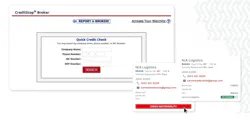
Platforms often also provide some background on a broker. A broker’s profile page may provide payment history, credit data, complaint trends, and operational details.
Carriers can use this data to weigh the risk of potential customers. If a broker evidently takes too long to pay, that data might warrant higher rates to offset weakened cash flow.
Financing / Freight factoring
It can take 21 to 30 days for a carrier to get paid for a spot haul. Depending on the customer, getting paid can take even longer (if at all). Month-long invoice timelines can be a cash-flow challenge for smaller carriers. Many of the large load board providers, such as Truckstop, DAT, and C.H. Robinson, offer freight factoring to ease the burden of invoices.
Freight factoring essentially outsources the invoice collection process to a third party at some expense. The carrier often needs to send its invoice directly to the factoring company, not the customer, at the end of a haul.
The factoring company pays the carrier almost the entire invoice total, often within 24 hours. Once the customer pays the invoice, the factoring company pays the rest but keeps a percentage of the invoice total—anywhere from 1% to 5%.
But a board’s factoring partner won’t pay for just any invoice. A platform may deem a broker ineligible for factoring if the client proves too difficult.
Software integrations
Many of these processes can be used on a fleet’s own software. Load board platforms can generally communicate with a transportation management system (TMS) via application programming interfaces (APIs).
Connecting a load board to a TMS allows a carrier to centralize many of the platform’s features. Users can automate truck postings and load communications according to internal data. Carriers can continuously fetch current market conditions, quickly pull available loads into their own TMS, or automatically match loads against available or nearby drivers.
Many load boards manage bills of lading, proof of delivery, signatures, and other necessary documents. The platforms are often able to share those directly with a user’s TMS.
It can be a gamble whether a certain load board and TMS are compatible. Generally, more popular load boards and TMSs are more likely to have API support.
Membership fees
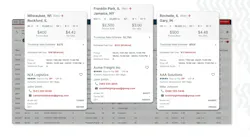
Some load boards are free, and some charge a monthly subscription fee. Free load boards tend to have fewer of the features detailed in this explainer. A platform’s more advanced features may require even higher payments.
DAT One charges carriers from $54 to $329 per month. Truckstop charges carriers $35 to $299 per user per month. The higher subscription tiers add functions like advanced filtering, routing tools, payment support, detailed market data, and specialized boards.
Meanwhile, the load boards operated by C.H. Robinson and Trucker Path are free. Trucker Path’s Truckloads board has limited functionality at the free tier, but with subscriptions ranging from roughly $20 to $50 per month, payment unlocks fuller functionality and more advanced data.
About the Author
 Jeremy Wolfe
Jeremy Wolfe
Editor
Editor Jeremy Wolfe joined the FleetOwner team in February 2024. He graduated from the University of Wisconsin-Stevens Point with majors in English and Philosophy. He previously served as Editor for Endeavor Business Media's Water Group publications.