This week in trucking: Idaho speed limits, more Iran chaos




Here are the headlines from this week in trucking as of April 9.
Listen to the news on this week's episode of The Fleet Lead podcast here or search for The Fleet Lead on your favorite podcast app.
Summaries of the stories are below:
Idaho is allowing semi-trucks to travel 80 miles per hour
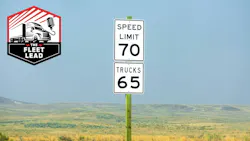
Idaho has a new law coming into effect for its interstates soon: House Bill 664 will allow semi-trucks and passenger vehicles to BOTH share the same top speed of 80 miles per hour. No longer will trucks have a separate interstate speed limit of 70 miles per hour. The legislation comes into effect on July 1.
The Iran War is raising aluminum prices
Conflict in the Middle East is not only a concern for oil prices. Iran launched attacks on major aluminum facilities in Bahrain and the UAE around March 30. The disruptions have repercussions for future equipment prices: Aluminum futures, as of this recording, are about 10% higher than before the Iran war began.
FMCSA is working on a truck parking survey
The Federal Motor Carrier Safety Administration (FMCSA) made a step forward on its national truck parking study. The agency this week published a Federal Register notice of its research proposal: The study would collect approximately 1,000 survey responses from truck drivers about their experiences finding truck parking spaces. The goal of the survey is to estimate the potential monetary benefits of creating new truck parking spaces.
In fuel this week, diesel prices are up by 24 cents
The national average on-highway diesel price jumped up to $5.64 per gallon, according to the Energy Information Administration (EIA). To help relieve U.S. drivers, lawmakers in several states are considering a pause on motor fuel taxes.
Shortly after EIA’s report, a ceasefire was announced for the Iran War, which allegedly reopened the Strait of Hormuz. However, EIA warned that reopening the Strait would be a long and difficult process, meaning fuel prices wouldn’t fall very quickly [—when do they ever?] And to make matters even more uncertain, shipping traffic in the Strait has been minimal since President Trump announced the ceasefire, according to industry monitors, who note that the Iranian military is requiring vessels to coordinate their travel with it.
About the Author

Jeremy Wolfe
Editor
Editor Jeremy Wolfe joined the FleetOwner team in February 2024. He graduated from the University of Wisconsin-Stevens Point with majors in English and Philosophy. He previously served as Editor for Endeavor Business Media's Water Group publications.