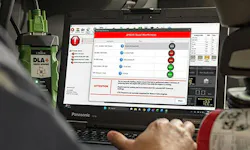
Learn about Noregon's 30-year history helping the industry maximize uptime and advance technician skillsets. OTHER Learn about Noregon's 30-year history helping the industry maximize uptime and advance technician skillsets. OTHER Read time: 4 minutes Roadside repairs can be stressful, costly, and time-consuming. However, they are a necessary service offering, as a broken-down truck can create safety hazards for the driver, technician, and other vehicles on the road. Customer contact details: Company name, driver name, location, and email/phone number. Driver Vehicle Inspection Report (DVIR): While the driver may not know the root issue, a detailed description of what happened is expected. Ensure only one service provider is assigned: Some fleets may call multiple repair companies; confirm who has been contacted to avoid two technicians on one job. Exact parts requests if accessible: For example, confirm tire size or engine model to avoid unnecessary downtime. Confirm job request: While typically the customer’s responsibility, service centers should confirm everything the customer would like repaired or checked. Repair location clarity: While the ideal repair location is not on the side of the road, it is often necessary. If roadside repair is required, request GPS coordinates and communicate any safety concerns. Roadside Considerations Safety measures: If a technician is tending to a service call on their own, it’s important that another employee is aware of their location and arrival time. Proper clothing: Depending on the weather, the technician may need to bring weather-appropriate clothing. Comprehensive diagnostic tools: With solutions like JPRO , technicians can diagnose all makes and models, reduce repair times, and get drivers back on the road with fewer delays. Common Issues and Procedures Inaccurate or unsafe repair locations: Roadside repairs may be unavoidable, but customers should be warned, and technicians must be given precise GPS coordinates. Technician safety: When performing repairs on the side of a busy road or highway, it is essential to prioritize safety. Use cones and reflective flags, especially at night, to clearly signal that work is in progress. Several service calls: If not already confirmed during pre-check, technicians should verify that the vehicle owner has not contacted multiple service centers for the same repair. Maintenance Factors Engine oil level: Checking to ensure the engine is at the correct oil level is critical to preventing engine wear and can help prevent breakdowns. Fuel Treatment: In cold climates or during winter months, treating fuel can help prevent gelling, especially when the truck is going to sit overnight. Diesel Exhaust Fluid (DEF): Maintaining the proper DEF levels and ensuring there is no contamination. Check with a DEF refractometer for concentration and use test strips for contamination. Tire pressure in winter: Expect hot versus cold fluctuations of approximately 10 PSI. Avoid inflating hot tires. Tire Tread and Chains: Adequate tread depth in certain weather, whether hot or cold, is essential for traction. In certain climates, chains or automatic chain systems may be required. Coolant Consideration: A significant percentage of major engine failures is often due to poor coolant system maintenance. Therefore, it’s important to keep coolant and coolant-dependent tools nearby at all times. Here are two suggestions for coolant checks: Refractometer: Using a refractometer will provide the most accurate freeze-point measurement. Test strips: Useful for quick checks, but not suitable for detecting combustion gases. Quality Control & Follow-Up Post-service check-in: A quality service manager should follow up within 24–48 hours after a repair to ensure standards were met and to address any questions or concerns. Track repeat calls: Identify recurring issues to spot systemic problems. Keep track of upcoming and past repairs: Tools like ShopPulse can improve customer communication, track work orders, invoices, and inventory in one place, and connect with JPRO for transparency by linking diagnostics directly to a work order. Get Started Today The goal of roadside repair is to complete work quickly, safely, and with lasting quality. Subscribe for more insights Get the latest tech tips, training, and updates delivered to your inbox. A Modern Approach to CAN Bus Diagnostics Why traditional CAN bus diagnostics fail and how modern diagnostics identify faults faster. Guide to CARB’s Clean Truck Check Learn about California’s Clean Truck Check program and how to stay compliant with new requirements. A Technician’s Guide to DPF Regens Learn the importance of DPF regens and the costs and consequences of running them unnecessarily. Small Town Shop Offers Big-Time Services Learn how Van Cleef Auto Parts uses TaaS to provide leading service, versatility, and customer satisfaction. This whitepaper explores the 2026 economic outlook, industry trends, and customer research findings. 10 Steps Before Clearing Fault Codes Learn the 10 steps to take before clearing a fault code to avoid recurring issues. Streamline the Diagnostic Process As shops take inventory of their diagnostic tools, it's vital to consider the importance of tech-to-tool ratios. Differences Between OE and SAE Fault Codes Learn the differences between OE and SAE fault codes and how JPRO can simplify fault code analysis. Ways to Recruit & Retain Skilled Truck Drivers Explore the most effective ways to recruit and retain the backbone of the American economy: truck drivers. ©Noregon. JPRO, NextStep, and TripVision are registered trademarks of Noregon. All Rights Reserved.