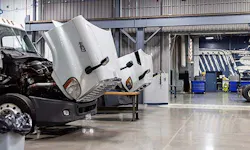
Learn about Noregon's 30-year history helping the industry maximize uptime and advance technician skillsets. OTHER Learn about Noregon's 30-year history helping the industry maximize uptime and advance technician skillsets. OTHER Get diagnostics tips, training updates, and product updates delivered to your inbox. Forsyth Technical College wrapped up the expansion of its Diesel Technology facility in 2025, to meet growing student demand, industry changes, and workforce needs across the transportation and equipment sectors. The Transportation Technology Center, located at 4255 Patterson Ave in Winston-Salem, North Carolina, has added additional bays, including two drive-through bays designed to hold up to eight trucks, as well as another for steering, suspension and alignment training. They have also added a second classroom, which can be divided into two additional rooms if needed, enhancing lab capacity and available space. When asked about the expansion, student Alex Blanco shared, “It’s a much bigger space now, so we’re able to fit more trucks and work in smaller groups. It’s a lot easier to work on a truck, and the newer equipment, such as the hydraulic crane, it really helps get the task done.” Student Trevor Studstill expanded on that thought, saying, “With this expansion, we’re able to take out several engines at a time and take them apart within our groups to learn more about specific parts on one engine versus another.” Expanding Access to Complete a Night Program Pathway The diesel program at Forsyth Technical College has seen a surge of enrollment in recent years, driven in part by an expanded night program designed to support high school dual-enrolled students and working adults seeking a more flexible pathway into diesel careers. While nighttime classes have been offered on and off for more than five years, the college has recently established a complete night program pathway. Students are no longer limited to individual courses and can now complete an entire diploma program during evening hours. Philip Grimes, an instructor at Forsyth Technical College, shared, “Many off-highway and dealership employers don’t offer second or third shifts, so students can work during the day and attend school at night. That flexibility has been a game changer.” As the night program grew, facility limitations did as well. Before the expansion, instructors frequently had to rework lab spaces to accommodate different classes and subjects. Grimes continued, “We used to work pretty tirelessly, sometimes even day to day, tearing the lab space down and putting it back together for a different subject. Now, with the additional space, setups can remain in place, and students’ projects can stay the same for the next day. That’s been a big enhancement.” Aligning Diesel Training with Industry Needs The expanded facility also supports the program’s close alignment with workforce and industry demands. When asked how the program keeps pace, Allen Doub, a Forsyth Tech graduate and instructor for over 15 years, stated, “Strong industry partnerships are critical. Our advisory board, instructors, and organizations like Noregon provide constant feedback on where the field is heading. Technology changes fast, and without those connections, programs can fall behind quickly. Partners also provide equipment, training opportunities, and resources that help keep our program current.” Philip Grimes added, “Through organizations like Noregon, ASE, and industry councils, we receive frequent updates, webinars, and train-the-trainer opportunities. That helps us stay informed while still focusing on foundational skills within a 16-week semester.” With Noregon’s support, students in participating diesel programs gain exposure to industry-standard diagnostic tools and training resources, with some recipients also benefiting from financial support through Noregon’s scholarship program. Caleb Powell, a Noregon scholarship recipient, is currently a Forsyth Technical student who also works at Salem Leasing. He shared, “The scholarship has helped me out a lot and eased my mind when it comes to paying for school. Having that support in the back of my mind allows me to focus more on learning.” By working together to provide direct student support, partnerships like Noregon’s help Forsyth Technical College focus on what matters most, preparing students with the skills, confidence, and resources needed to succeed in today’s workforce. A Full-Circle Workforce Impact Through Education and Training For Forsyth Tech, the facility expansion reflects an extensive commitment to workforce development through education, industry partnerships, and student success. “This is full circle,” Allen Doub said. “Forsyth Tech and our diesel program are just a piece of the pie. The industry is part of it, and so are the students and their futures.” Graduates of the diesel program at Forsyth Tech are in high demand. Ranked among the top 20 diesel programs in the US, employers are actively recruiting students and investing in the program through equipment donations, training partnerships, and work-based learning opportunities. This whitepaper explores the 2026 economic outlook, industry trends, and customer research findings. Guide to CARB’s Clean Truck Check Learn about California’s Clean Truck Check program and how to stay compliant with new requirements. Small Town Shop Offers Big-Time Services Learn how Van Cleef Auto Parts uses TaaS to provide leading service, versatility, and customer satisfaction. A Technician’s Guide to DPF Regens Learn the importance of DPF regens and the costs and consequences of running them unnecessarily. 10 Steps Before Clearing Fault Codes Learn the 10 steps to take before clearing a fault code to avoid recurring issues. Streamline the Diagnostic Process As shops take inventory of their diagnostic tools, it's vital to consider the importance of tech-to-tool ratios. Differences Between OE and SAE Fault Codes Learn the differences between OE and SAE fault codes and how JPRO can simplify fault code analysis. Ways to Recruit & Retain Skilled Truck Drivers Explore the most effective ways to recruit and retain the backbone of the American economy: truck drivers. This whitepaper explores the 2026 economic outlook, industry trends, and customer research findings. Guide to CARB’s Clean Truck Check Learn about California’s Clean Truck Check program and how to stay compliant with new requirements. Small Town Shop Offers Big-Time Services Learn how Van Cleef Auto Parts uses TaaS to provide leading service, versatility, and customer satisfaction. A Technician’s Guide to DPF Regens Learn the importance of DPF regens and the costs and consequences of running them unnecessarily. 10 Steps Before Clearing Fault Codes Learn the 10 steps to take before clearing a fault code to avoid recurring issues. Streamline the Diagnostic Process As shops take inventory of their diagnostic tools, it's vital to consider the importance of tech-to-tool ratios. Differences Between OE and SAE Fault Codes Learn the differences between OE and SAE fault codes and how JPRO can simplify fault code analysis. Ways to Recruit & Retain Skilled Truck Drivers Explore the most effective ways to recruit and retain the backbone of the American economy: truck drivers. ©Noregon. JPRO, NextStep, and TripVision are registered trademarks of Noregon. All Rights Reserved.