Rohlwing: Why band-mounted TPMS keeps failing fleets
Key takeaways
- Band-mounted TPMS sensors are time-consuming and costly to service, risking labor delays and higher maintenance expenses.
- Valve-stem TPMS sensors remain simpler, more reliable, and easier to maintain, reducing downtime and warranty claims.
- Fleets should learn from past TPMS failures to avoid repeating costly mistakes with sensor placement and design choices.
Insanity is doing the same thing over and over again and expecting a different result. This saying is attributed to Albert Einstein, and as a big fan of Einstein’s many quotes, this one, in particular, plays a significant role in my life. I often find myself stepping back to reconsider if I should try something again, take a different approach, or scrap the effort altogether. Wasting time is one of my biggest pet peeves because time is my most precious commodity. I don’t have a lot of it, so I hate wasting it.
Now that tire pressure monitoring systems (TPMS) are (finally) starting to gain acceptance, there’s a great opportunity for the trucking industry to learn from the passenger and light truck market. I’ve been intimately involved with the introduction of TPMS on the passenger side since its inception 20 years ago. There were many lessons learned in the early days. One of the first was the importance of sensor position during demount and mount. If technicians ignored the sensor, it often broke when it was pinned against the rim. There were many costly mistakes because the industry failed to adapt.
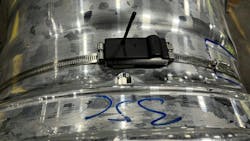
Another expensive (and painful) lesson resulted from the decision to use a band-mounted sensor instead of a valve stem sensor. Most OEMs opted for valve stem sensors because they are easy to install, remove, and maintain. Technicians could remove the hex nut or separate the sensor from the rubber valve when necessary. For whatever reason, one OEM decided that a band-mounted sensor was a better option, while the rest of the industry stood by and watched.
A symphony of expletives would often resonate throughout the shop whenever a band-mounted sensor required servicing. The removal and installation process was both time-consuming and frustrating. Sensors were supposed to be positioned opposite the valve stem, but they often shifted after a few thousand miles in service. The cradle had a small clip that held the sensor in place, but when it broke during operation, the sensor would bounce around inside the tire, turning the inner liner into spaghetti. It was a short-lived experiment that has not been repeated in over a decade.
 Key factors affecting safety when lifting commercial motor vehicles for tire service
 gettyimages1195393614
For whatever reason, the trucking industry has determined that band-mounted sensors will not suffer the same fate as those in the past. It appears that the design is more robust, so there should be less likelihood that the sensor will separate from the band. And I’m sure it’s been thoroughly tested to make sure it won’t change position or damage the rim (when properly installed). Without an engineering degree, my opinion is uneducated and based solely on experience.
My past experience tells me that the symphony of expletives is about to be heard once again in truck tire shops across this great nation. The process of installing and removing a valve stem sensor is not much different than that of a regular valve stem. Remove the hex nut, and the assembly pops out. Pop it back in, tighten the hex nut, and it’s ready to go.
Installing and removing band-mounted sensors is time-consuming, frustrating, and much more difficult. And when, not if, the band-mounted sensor starts slipping on the rim, a metal band will probably cause damage. When a non-metal band starts slipping, the friction could release the sensor inside the tire, creating metal spaghetti when the body cables are exposed and damaged.
Soon after the band-mounted TPMS disaster of over a decade ago, sensor manufacturers introduced a valve-stem replacement. Within a few years of introduction, most were out of the market, never to return. The OEMs that stood back and watched the experiment were beyond relieved that they had chosen a TPMS solution that was simple, easy, and almost foolproof. I have no idea what happened to the people who rolled the dice with band-mounted sensors, but I’m guessing it wasn’t pleasant, as it cost the OEM thousands, if not millions, in warranty claims.
Fleets with band-mounted TPMS sensors need to be aware that this approach failed over a decade ago, and in my uneducated, non-engineer opinion, it will fail again. The time factor alone frustrates service providers, particularly in mounted tire programs. Purchasing replacement bands and incurring additional labor costs are expected to occur regularly. Get ready for insanity.
About the Author
Kevin Rohlwing
Kevin Rohlwing is the SVP of training for the Tire Industry Association. He has more than 40 years of experience in the tire industry and has created programs to help train more than 180,000 technicians.