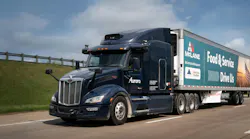
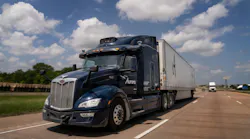
Aurora expands driverless trucking with Charger Logistics to support refrigerated freight
Key takeaways
- Charger Logistics will deploy Aurora's driverless trucks on the Dallas-Laredo freight corridor.
- The deployment includes temperature-controlled freight alongside other commercial freight.
- Aurora says the agreement will help increase capacity and improve truck utilization.
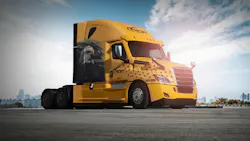
Aurora Innovation said Charger Logistics will begin using the Aurora Driver on the company's second-generation driverless trucks for freight operations.
The company, which develops self-driving freight technology, will support driverless hauls for Charger Logistics between Dallas and Laredo to help add capacity and improve asset utilization across the carrier's network.
The deployment will use Aurora's second-generation driverless trucks on one of Charger Logistics' busiest freight corridors in the Sun Belt. The carrier provides truckload, dedicated, temperature-controlled, warehousing, and cross-border logistics services, making refrigerated freight one of the applications for the new driverless trucks alongside pharmaceutical, automotive, retail, and consumer products.
“Our new fleet of driverless trucks enables us to meet the substantial demand we’ve seen since we first launched last year,” said Zac Andreoni, VP of business development at Aurora. "Charger's scale and reach across North America give us a strong foundation to grow from—this is just the first of many routes we expect to bring online together.”
Aurora only recently launched its second generation of driverless trucks in July. Its manufacturing partner, Roush, is aiming for an annual production rate of 1,000 trucks.
What this means for the trucking industry
The deployment shows autonomous trucking continuing to expand into commercial freight operations, including temperature-controlled freight. Because Charger Logistics moves refrigerated food and pharmaceuticals, the agreement suggests autonomous technology is beginning to support freight segments where reliable transit times and equipment utilization are especially important. As more routes come online, fleets will be watching how driverless trucks perform in high-volume corridors and specialized freight applications.