Heller: English proficiency and CDL rules drive stronger oversight for professional drivers
Key takeaways
- FMCSA enforcement on CDL standards is increasing, emphasizing proper training and English proficiency for drivers.
- Low-quality CDL schools are being removed or flagged, raising the bar for driver safety and compliance nationwide.
- Fleets active in industry associations statistically achieve higher safety performance amid tighter federal oversight.

If your office phone rings, and you are not there to answer it, does it make a noise? While you might wonder if a tree makes a sound when it falls in the woods with no one to hear it, you can be certain that if you miss that office phone call, it will just lead to an email or text message alert on your computer or phone. My phone, email, text, and voicemail have all reached their limits because of recent enforcement actions related to the commercial driver’s license (CDL).
It seems that with every new day, actions regarding the CDL are changing the professional driver landscape in our industry. English language proficiency and non-domiciled CDL rules are not really new, but in the lax environment the enforcement had transitioned into, they indeed fell by the wayside. With that in mind, enter Administrator Derek Barrs, confirmed in early October, who brings leadership and an enforcement background to spearhead a new era of compliance.
And enforcement is what is needed. As luck would have it, I have the privilege of representing the very best this industry has to offer in terms of exceptional motor carrier companies operating along our nation’s interstates. But, as Isaac Newton proved, for every action, there is an equal and opposite reaction, meaning there are always motor carriers seeking to undermine the quality reputation our members display on a daily basis. I am not saying accidents will not happen, but inevitably, the race to zero can only begin with stronger enforcement from those who govern.
That being said, we are beginning to experience the world as it appears. From the very beginning of driver training, the Federal Motor Carrier Safety Administration (FMCSA) has cracked down on entry-level driver training providers. Operating under a rule with a caveat of basic assumed compliance, the agency has declared war on CDL mills that seemingly expedited the training process to increase quantity rather than ensure quality. In swift action, FMCSA has removed hundreds and flagged thousands in an effort to reshape CDL training across the country, a welcome sight for those who train the right way to create safer drivers.
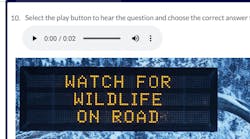 English proficiency assessment
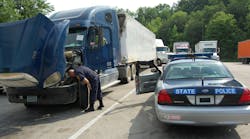 truck inspection enforcement
The enforcement actions regarding old rules are not falling on deaf ears either. Congress is paying attention. By my count, there are approximately six House bills, and in some cases, companion bills in the Senate, seeking to enforce the agency’s continued oversight of compliance with the English Language Proficiency standards in the regulations. Whether it is checks at weigh stations, testing at CDL schools, or ensuring that those tests are only available in English, these standards are being put forth to enforce 391.11(b)(2), the rule that requires a professional driver to be able to communicate in the English language.
Indeed, the times have put that to the forefront of our industry, but these measures are not the only actions our industry could expect to see increased enforcement. The Safety Fitness Determination standard has been under the spotlight for some time now. Recently highlighted as problematic because of the revelation that over 640,000 FMCSA-regulated motor carriers are operating on our roadways with no safety rating whatsoever, the agency must begin its practice of making sure that the system is up to date as well. Again, I have the enviable position of representing motor carriers widely regarded as among the best in the business.
Lucky for me, that is not just my opinion but statistically proven by our friends at the American Transportation Research Institute (ATRI). Research from ATRI statistically corroborates that motor carriers that are active in industry associations are safer than both former association members and carriers that have never been association members. In an effort to help FMCSA make their job of motor carrier and driver enforcement a little easier, I suggest they start with those who are not members of state or national associations as a road map for enforcement.
That may sound like preaching. However, there is a reason these companies belong to associations: They can surround themselves with players that share the same mindset for improving their safety operations. So remember, while my phone continues to ring from carriers inquiring about these new enforcement actions, it is all done to maintain compliance and raise the bar on safety, something each and every reader of this column strives to do every single day.
About the Author
 David Heller
David Heller
David Heller is the senior vice president of safety and government affairs for the Truckload Carriers Association. Heller has worked for TCA since 2005, initially as director of safety, and most recently as the VP of government affairs. Before that, he spent seven years as manager of safety programs for American Trucking Associations.