Wabash unveils AI-powered TrailerHawk to combat cargo theft
Key takeaways
- Wabash’s TrailerHawk uses AI, biometrics, and digital seals to secure freight and create an end-to-end chain of custody.
- Real-time alerts and geofenced locks help deter theft, reduce OS&D, and may lower insurance risk for fleets.
- Designed for fleets of any size, TrailerHawk integrates with TMS platforms and can be factory-installed or retrofitted.
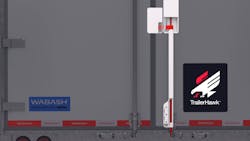
Cargo theft continues to plague fleet owners across the U.S., with industry losses reaching $6.6 billion annually. To help protect freight in transit, Wabash developed TrailerHawk, an AI-powered cargo assurance solution that the trailer manufacturer calls the most comprehensive of its kind.
“We’re combating strategic theft all the way down to the driver, at the load level, and eliminating so much OS&D (overages, shortages, and damages),” said Brett Suma, managing director at Wabash and CEO of TrailerHawk, which Wabash acquired in February 2025. “We wanted to provide an end-to-end chain of custody for both the asset and the cargo, so we built the software to power it.”
Originally developed to protect its own assets and cargo, TrailerHawk integrates several components, including computer vision, facial recognition, and digital locking systems, to secure freight in transit. The new trailer technology was unveiled during the shipper-focused Manifest conference earlier this month.
Drivers must register for the platform, provide their commercial driver’s licenses, and verify their identities using mobile biometrics before accessing the application. After arriving at a trailer, they complete an acquisition process that includes photographing the tractor’s license plate and DOT registration information.
“We know the driver is who they say they are, the tractor is what it’s supposed to be, and the carrier is who it’s supposed to be,” Suma said, adding that all three elements are continuously validated throughout the haul to maintain chain-of-custody integrity. If any element falls out of continuity during a trip, the system generates real-time alerts and notifies designated stakeholders via their preferred channels.
As shippers load pallets into trailers, TrailerHawk records the activity.
“We know who was operating the forklift and how many pallets they loaded,” Suma said. “We know the latitude and longitude. When they’re done, we know they closed the trailer door and locked it from the interior, creating a digital seal.”
That digital seal tracks all lock and unlock events and can be configured to disengage only within a predefined geofence if shippers choose.
TrailerHawk secures trailers using a three-point locking mechanism that Suma described as “very, very difficult” to penetrate. If tampering does occur, the system immediately records the activity at the trailer door.
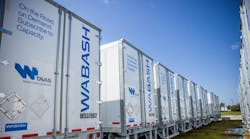
In addition to securing cargo, Suma said the solution could ultimately help fleet owners reduce insurance premiums by deterring theft and minimizing OS&D incidents.
TrailerHawk integrates with shipper, 3PL, and carrier TMS (transportation management systems) and is designed for fleets of any size.
“It’s an offering you can select when building a new Wabash trailer, and we can also retrofit trailers that don’t have to be Wabash,” Suma explained. “The reality is, if you’re an owner-operator and you want peace of mind, if you want OS&D to go away and don’t want to deal with the red tape of a delivery, you can deploy it yourself.”
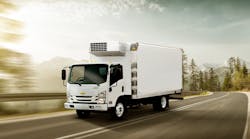
Suma expects larger fleets to deploy TrailerHawk strategically, prioritizing high-value or high-risk freight, such as refrigerated cargo.
“Food is now part of that,” he said. “Food shippers are especially sensitive to product adulteration. If a seal is broken, the entire load has to be destroyed. From our conversations with food shippers, this is probably going to become table stakes. Even though they can segregate with carriers for underlying product loss, they can’t withstand the brand damage.”
From an asset chain-of-custody perspective, Wabash said TrailerHawk also improves operational efficiency by automatically capturing acquisition and disposition inspection data. That documentation can help protect fleet owners from liability for yard damage.
“We’re not trying to build solutions in a vacuum, only from a shipper’s perspective,” Suma said. “We really want to create value for drivers and fleets, too.”
About the Author

Justin Reynolds
Contributor
Justin Reynolds is a B2B technology writer and editor with 20 years of experience telling stories about innovation and its impact on the way we work and live. He started his career in journalism, spent two years at a B2B tech agency, and has worked as a full-time freelancer since 2015. He lives in Connecticut.