How Two Carriers Warn Drivers Before Severe Weather Hits
Bad weather is just part of the job for truck drivers. Heavy rain, snow, ice, and flooding can show up without much warning. One minute, the road is clear. The next, a driver is fighting for control on black ice, driving into a wall of rain, or coming up on a low spot that has turned into standing water.
Fleets that start preparing now have more time to get ahead of it. Fleets that wait until the first storm warning hits their phone are already behind.
That is why more fleets are turning to in-cab alerts, delivered right through the ELD drivers already run, to warn them about hazards before they reach them.
The Problem with Checking the Forecast
Most drivers check the weather before they leave. But the weather can change fast, especially over a long haul. A route that looked clear that morning can turn into a storm zone or a flooded low-water crossing by the afternoon.
Radio and phone alerts can help, but they're often broad and based on where a driver is right now – not where the route is taking them.
Traditional alerts can tell a driver a whole county is under a warning, not that a specific stretch of road ahead is already underwater or coated in ice. Drivers need warnings tied to what's ahead of them, whether the risk is snow, ice, or flooding, and they need them early enough to reroute or take precautions.
Turning Weather Data into a Warning Drivers can Use
This is where Fleetworthy Safety+ comes in. Safety+ takes hazard data, including the National Weather Service data and state DOT notifications and turns it into real-time, in-cab alerts that show up when a driver is headed toward a hazardous area.
Notably, Fleetworthy is the only solution that works with state DOTs to warn drivers about closed roads, construction, public service announcements, etc. The alert reaches drivers through the ELDs already in their trucks.
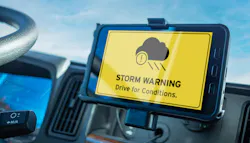
When a driver is headed toward a hazard, the system sends an alert to their ELD screen, giving them time to slow down, reroute, or take precautions for what’s ahead.
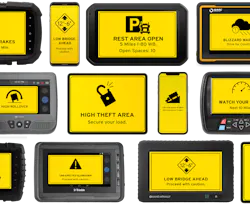
Some of these alerts can include:
- Low bridges
- Sudden slowdown
- Heavy storm
Fleets can also build their own custom alerts for the risks that matter most to their operation such as speed traps, yard instructions, etc. By putting timely, relevant alerts directly into the cab, fleets can extend their safety programs by helping drivers make informed decisions in the moments that matter.
One Carrier's Custom Approach Becomes the Standard
C.R. England, one of the largest refrigerated carriers in North America, was already using Fleetworthy Weigh Station Bypass when they turned to in-cab alerts.
C.R. England’s goal was simple: give drivers more warning, so they can adjust before conditions turn dangerous.
Over time, their safety team identified the weather risks specific to their most common routes and layered on custom alerts. In fact, their custom use of Fleetworthy's product led Fleetworthy to standardize automated severe weather alerts from National Weather Service data.
"Drivers have a tough job with traffic, weather, and delivery windows. Anything we can do to help them, we want to do," shared a member of C.R. England’s Safety Department.
Since 2019, C.R. England has nearly cut its chargeable accidents per million miles in half. Now, the fleet has stronger safety with drivers getting better information sooner.
Mountains Bring Their Own Kind of Weather Risk
Stevens Transport, another major refrigerated carrier, faced a different version of the same problem. Its trucks regularly cross mountain routes where chain-up requirements are a must. Missing that requirement, or finding out too late, can mean a stopped truck, a missed delivery, or risk for their drivers.
The company's safety team built a network of custom geofenced alerts covering the risks specific to their routes, including mountain chain-up zones flagged 20 miles before a truck arrives.
Advance notice gives drivers real time to prepare instead of finding out at the last mile. As Stevens' Senior Director of Safety, Ken Resta, put it, the alert “gives drivers exactly what they need to know, when they need it.”
Why this Matters Beyond any One Storm
Severe weather is not going away and is not getting more predictable. Snow and ice get most of the attention, but flooding causes just as much disruption and shows up on a route with just as little warning.
What is changing is how proactive alerts are warning drivers in real-time before they get caught by surprise.
Truck drivers deal with a lot on the open road. But fleets can be a lot more prepared for whatever the road throws at them when they have alerts like:
• Severe weather, such as blizzards, heavy storms, flooding
• Low bridges
• Sudden-slowdown
• High Cargo Theft Risk
• And more
Tools like Fleetworthy Safety+ give drivers a better shot at preparing for and avoiding dangerous areas on their route. The same connected platform also helps fleets manage weigh station bypass and toll costs, so drivers spend less time stopped and more time moving.
For a fleet, these tools can mean fewer accidents, delays, and surprises that disrupt their operations. To see how Fleetworthy Safety+ can help you stay fleet ready, learn more at fleetworthy.com.
About Fleetworthy:
Fleetworthy offers the only complete technology suite for fleet readiness, uniting safety and compliance, toll management, and weigh station bypass solutions. We help fleets streamline operations, control costs, and operate with confidence. Trusted by 90% of the largest fleets in North America, Fleetworthy offers the most adopted toll management solution and the largest weigh station bypass network in the country. Going beyond regulatory requirements, our safety and compliance capabilities strengthen safety programs and enable proactive audit readiness. We support millions of vehicles and drivers and are recognized across the industry for innovation and leadership in connected fleet technology.