From local to global: Geotab highlights how it supports fleet expansion and safety
Key takeaways
- Geotab introduced the upgraded Geotab Go device and the new Go Plus, enhancing connectivity, security, and support for complex fleet operations.
- The company showcased AI tools like Geotab Ace and new routing features such as Suggested Assist and Capacity Plan to optimize fleet efficiency and safety.
- New safety solutions include 360-degree camera systems and long-lasting asset trackers, supporting fleet safety and asset management across diverse industries.
- Partnerships with companies like Link Labs and ELA Innovation expand Geotab’s ecosystem, enabling comprehensive asset and tool tracking for various fleet needs.

LAS VEGAS—Telematics provider Geotab introduced a plethora of new features and products at its Geotab Connect user conference and touted how its business solutions are fit for fleets of all shapes and sizes, from small businesses to large enterprise fleets, from HVAC companies to construction companies. In doing so, the company accidentally showcased the classic American Dream.
To share the new products and updates with the crowd, the keynote included a story of the fictional career arc of Pete, the owner of a small HVAC business. Throughout the presentation, Pete grew his business from 50 vehicles running in a local area to a global business with thousands of assets.
Here’s how Geotab helped Pete realize his dreams.
How Geotab helps Pete’s small businesses
“Pete’s got about 50 or so vans, trucks, a couple of medium-duty vehicles to support those commercial loads,” Mike Branch, Geotab’s VP of data and analytics, described. “Pete's wife still does the books. He’s not flush with cash.”
In this fictional scenario, Pete, as a small business owner with a fleet of vehicles, simply needs greater visibility into the operations of his team. “He wants to know where his team is, where they're going, how productive they are, and how the job went,” Branch said.
One way Geotab can support Pete in this stage of his business is with its upcoming next-generation Geotab Go vehicle tracking device. The upgraded device, available in Q2 of this year, “has been engineered with a completely new formula,” Geotab CEO Neil Cawse said. “It’s more powerful than a speed assessor, it's more unified with integrated Bluetooth, and requires much less hardware to connect to auxiliaries and other data.”
The Geotab Go device is the foundation of Geotab’s offerings. The Go device collects and processes “high-fidelity data into the Geotab intelligence platform to provide businesses with the actionable insights required to manage modern fleets leaner, safer, and more efficiently,” according to Geotab. But while Branch describes this device as “sophisticated,” he said that doesn’t mean it’s complex.
The information collected from this device is accessible through Geotab’s fleet manager dashboard, which offers quick access to relevant information, such as maps, asset location, and more. But when Pete feels comfortable with his fleet’s visibility, he can also access more detailed information and deeper insights within the same dashboard.
With Geotab Ace, Geotab’s AI chatbot that’s accessible within the dashboard, Pete can ask conversational questions and get instant insights from his fleet’s data. For example, Pete can ask Ace, “Which technician takes the longest on service calls?” Immediately, Ace will show a report on the average amount of time spent between each technician at the jobsite.
Large and small business owners should also be concerned with safety and preventing collisions. If Pete wants to prevent collisions within his fleet, he can use Ace and Geotab data to discover which drivers are the most at risk for a collision through Geotab’s Collision Risk assessment.
 Fuel Portfolio for Fleets Workshop at ACT Expo 2025
How Pete uses Geotab for his large business
Fast forward a few years, and Pete’s HVAC business has grown. He’s now gone from 50 vehicles in one town to 500 vehicles across the nation. Gone are the days when visibility was his main focus. Pete is now interested in business acquisitions, specifically in the construction and logistics businesses.
“The big difference here is that while these technicians needed vehicles to get their job done [when Pete’s business was primarily HVAC], now the vehicles are becoming the things that actually do the job,” Cawse explained.
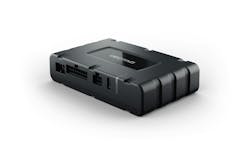
This makes vehicle connectivity and location tracking even more valuable, which, according to Cawse, is where the new Geotab Go Plus comes in. The Go Plus has all the features of the Geotab Go device, but it also has better connectivity, a better security rating, and better support for other Geotab devices, Cawse explained. The Go Plus device also acts as a Wi-Fi hot spot, enabling Pete’s employees and vehicles to run multiple apps and AI solutions. Cawse said the Go Plus acts as a way for Pete to future-proof his business.
By now, Pete’s business has been around long enough to have built a network of local customers, and keeping those customers is important. Branch and Cawse shared an example of one morning when Pete’s fictional team experienced a breakdown and the team “goes into survival mode.” Amidst the chaos in the office, a technician without the right skills or the right set of tools is dispatched to assist the loyal customer simply because he was in the vicinity. Unfortunately, this kind of scenario could lead to the loss of a customer.
With a new addition to Geotab’s Routing and Optimization Engine, instead of sending the technician that was closest, the routing system will automatically suggest sending the nearest technician that also has the right skills and the right tools via Geotab’s new Suggested Assist. Another new addition to Geotab’s Routing and Optimization Engine is a new Capacity Plan, which allows fleet managers to select different parameters and metrics to optimize the best possible routes for their fleet, including weight restrictions, residential areas, and more.
Also new from Geotab, whenever a vehicle needs servicing, Pete can handle scheduling and keep tabs on preventive maintenance in the new Geotab Maintenance Overview Page within the dashboard. In this page, fleet managers can see breakdown rates for vehicles, schedule work orders, view upcoming scheduled maintenance events, and keep an eye on critical work events.
At this point in his career, Pete has acquired a construction business, moving his fleet well beyond the service vans and pickups used in his HVAC business. This is where Geotab touts its marketplace system, relaying that no telematics system can be everything for every fleet, and relying on industry partnerships is the key to growth.
Geotab partners with companies such as Link Labs and ELA Innovation, which help fleets know the location of assets and even small tools. Xtract walks fleet drivers through a specific workflow to ensure they have all the necessary information required by insurance in the event of a collision. Drivers experiencing a breakdown can call Geotab’s AI voice agent, relay the necessary information, and through an integration with Cox Fleet dispatch, will be sent a tow truck right away.
Additionally, Geotab Navigation is now available as a standalone offering, and integrating Altitude within the map allows fleet managers to see high-risk driving areas, such as low bridges, congestion, and more.
How Geotab helps Pete go global
Pete now has a few grey hairs, likely due to the exponential growth of his HVAC and construction business. In this stage of Pete’s life, his business now also includes logistics services throughout North America.
These big trucks come with different needs than the smaller HVAC service vans Pete began his career with, and safety is a top priority. He wants his drivers to have a 360-degree view of the truck, which is now available with Geotab Go Focus Pro cameras and in-cab camera monitors. These cameras can be installed anywhere on the truck—front, back, and all along the sides—giving drivers a better view of their environment and reducing blind spots.
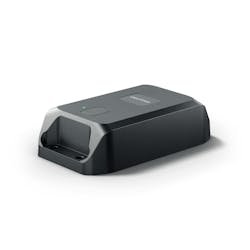
Also enhanced for this year is Geotab’s Go Anywhere line of asset trackers, which can be attached to non-powered assets and ping the asset’s location once an hour for up to 10 years. “Replacing batteries becomes a thing of the past,” Branch said.
Another upgrade to the Go Anywhere lineup is Go Anywhere Plus, which “merges the role of satellite and mobile networks together” to ensure an asset can always be located.
From American dream to reality
While Pete’s story is fiction, real fleets are using these solutions to help grow their business today. Geotab’s global footprint includes 3,500 employees, 22 offices, and yearly investments of more than $200 million in research and development. This year’s conference was its largest yet, with more than 4,000 in attendance. These stats highlight the work Geotab is doing in the telematics space—not to mention its growth in the use of AI each year.
Cawse said Geotab’s goal is to bring AI to the people as a partner to help drive positive change in the industry and, in Pete’s case, help build his American Dream.
About the Author
 Jade Brasher
Jade Brasher
Executive Editor Jade Brasher has covered vocational trucking and fleets since 2018. A graduate of The University of Alabama with a degree in journalism, Jade enjoys telling stories about the people behind the wheel and the intricate processes of the ever-evolving trucking industry.