GM celebrates new headquarters in Detroit, CEO talks EV and industry transition
Key takeaways
- GM has moved its headquarters back to Detroit’s Woodward Avenue, aiming to foster a more collaborative work environment.
- CEO Mary Barra emphasized GM’s resilience in facing tariffs and regulatory changes, highlighting a 6% sales growth in 2025.
- The company remains committed to an all-EV future, despite regulatory shifts and consumer demand challenges.
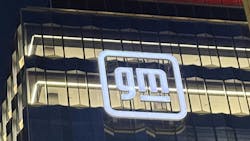
DETROIT—General Motors corporate employees worked their first day at the company’s new global headquarters at Hudson’s Detroit this week. The automaker hosted a fireside chat with GM CEO Mary Barra and the Detroit Automotive Press Association to celebrate the opening and talk about the future.
GM’s first headquarters opened on Woodward Avenue, the street that splits Detroit’s east and west sides, in 1911. GM’s new home brings the company back to where it started.
“It's our fourth location in Detroit—back to Woodward,” Barra said during the chat. “Excited to be here and excited for 2026.”
Why did General Motors relocate?
Any image of the Detroit skyline isn’t complete without the Renaissance Center. The tallest building in the city, commissioned by Henry Ford II in the 1970s and General Motors’ headquarters since the 1990s, offers 5.5 million sq. ft. of space and features views of the Detroit River and the Ambassador Bridge to Canada. Designed to help usher in a renaissance of downtown Detroit, the building itself is an icon. Regardless, GM has officially moved out. Why?
The RenCen, as it’s locally known, consists of seven towers. Locals and others who’ve visited the RenCen note its confusing floor plan. Some say they’ve gotten lost. This design didn’t “align” with GM’s current collaborative work culture, according to Barra.
“You’d have to take 10 minutes to [go] … down a tower, up a tower to get to the people that you needed to work with,” Barra explained. Things have changed since the RenCen was built 50 years ago, “so we knew we needed to make a change to get people closer together.”
The simpler floor plan of Hudson’s Detroit consists of two towers connected by an outdoor public plaza. The larger tower—Detroit’s second-tallest building—will be completed in 2027 and feature residential space, a hotel, and dining. The smaller, 12-story tower is reserved for office and retail space; GM leases the top floors of the building as well as parts of the ground level as a showroom.
This move marks a significant reduction in GM’s downtown office space; however, many of the automaker's operations had already been relocated outside Detroit to the General Motors Tech Center in a nearby suburb, and one could argue that this downsizing was inevitable.
While Barra’s fireside chat took place on her first day working in Hudson’s Detroit, Barra spoke less about the new space and instead reflected on 2025 and addressed where the automaker stands in the midst of an industry resisting the EV revolution.
GM’s Barra talks tariffs and EVs
GM’s response to 2025 tariffs
Once the word “tariff” was thrown around in 2024, Barra said GM’s team immediately began planning: “We looked at what were ‘no-regret moves’ that we could do depending on what happened.”
Executives created a tariff playbook that GM implemented once tariffs were officially announced. And while multiple industries took a blow due to tariffs, Barra said 2025 only helped demonstrate the company’s “agility and flexibility.” GM ended the year with a 6% growth in total sales and touted its highest sales numbers for multiple vehicle models.
Have EV regulations changed GM’s strategy?
While Barra admitted the tariffs brought on changes for GM, she said the regulatory changes regarding electric vehicles (EVs) were more significant.
“We were headed to be 50% EVs, from a regulatory perspective, by 2030,” Barra said. “Now, without the consumer tax credit—also with the changes that are not completely done yet from a regulatory perspective—we are on a different path.”
But GM’s path still includes electric vehicles. The company has a lineup of electric vehicle models that it shows no signs of abandoning. In Barra’s words: “We have a really strong EV portfolio that we're still committed to.”
In fact, Barra said GM’s destination is an “all-EV future,” regardless of regulations or adoption incentives.
 Motor City skyline
 gm_assembly_plant_1
“I've always said I didn't want the regulatory environment to drive EV adoption,” Barra admitted. “I wanted it to be because people chose them because they felt they were better vehicles, and it fit their lives. I think where we're at now of being aligned with consumer demand is going to help us get there.”
That alignment Barra spoke of includes the continual investment of both internal combustion (ICE) vehicles and electric vehicles for the foreseeable future.
In the meantime, Barra said GM’s EV focus will be on lowering EV costs in preparation for a time when charging infrastructure is more robust and the demand for EVs explodes.
“I’m a little surprised at some OEMs that are really pulling away [from EVs] very quickly,” she said.
As for other OEMs, General Motors' competitors have shown sales progress with their hybrid electric vehicles. When asked about the propulsion system, Barra didn’t go into specifics aside from the mention of a forthcoming plug-in hybrid model:
Plug-in hybrids “were the only hybrids that actually counted toward the [previous] regulatory perspective,” she said. “So, we have plans to do those, and we'll have hybrids where we think we need to. But again, we're mainly investing and continuing to work on EVs because we think that's the end game.”
Regarding hybrids, Barra casually touted that many of GM’s current ICE models are “more efficient than a hybrid, so we're going to continue on that path.”
While Barra expects changes in 2026, she looks forward to “exciting launches” the company has planned this year, as well as continuing to build upon GM’s current product portfolio to help make 2026 an even better year for General Motors.
About the Author
 Jade Brasher
Jade Brasher
Executive Editor Jade Brasher has covered vocational trucking and fleets since 2018. A graduate of The University of Alabama with a degree in journalism, Jade enjoys telling stories about the people behind the wheel and the intricate processes of the ever-evolving trucking industry.