EPA is ending vehicle GHG rules
Key takeaways
- The EPA's final rule would repeal a decade of heavy-duty GHG emissions standards, including upcoming 2027 regulations.
- The move is described as the largest deregulatory action in U.S. history, with significant implications for environmental policy and industry practices.
- Trucking industry groups broadly support the repeal.
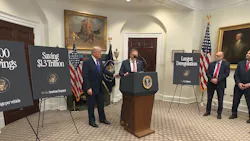
The U.S. Environmental Protection Agency (EPA) announced the final rule to repeal all mobile greenhouse gas (GHG) regulations. The final rule of the 2009 Endangerment Finding repeal is still not available in the Federal Register as of the time of writing but will likely be released very soon.
The rule proposes to remove the last decade of heavy-duty GHG emissions standards, including the approaching model year (MY) 2027 standards. The rule would remove GHG standards from the EPA’s heavy-duty Phase 1 (started with MY 2014), Phase 2 (started with MY 2018), and Phase 3 (starting MY 2027) rules.
The Trump administration called the rule “the single largest deregulatory action in U.S. history.”
What does this mean for commercial carriers?
EPA’s revocation of GHG standards would grant some freedom to truck manufacturers, ultimately reducing upward price pressures on heavy-duty equipment.
Regulators and industries generally expect tighter emissions standards to increase vehicle prices. The compliance costs—generally, more sophisticated powertrain development and aftertreatment systems—push manufacturers to raise prices. Without those regulatory requirements for GHG emissions, manufacturers will not suffer those development costs.
While manufacturers likely won’t lower truck prices as a response to the rule, the repeal would at least remove one variable from the regular rise in prices.
Trucking industry approves GHG rule revocation
Trucking industry groups applauded EPA’s GHG regulation revocation, focusing particularly on the cancellation of GHG Phase 3. The Truckload Carriers Association (TCA), American Trucking Associations (ATA), Owner-Operator Independent Drivers Association (OOIDA), and the Clean Freight Coalition (CFC) issued comments supporting the latest rule:
Truckload Carriers Association
“We commend President Trump and Administrator [Lee] Zeldin for taking decisive action in repealing the GHG Endangerment Finding. … The GHG 3 mandates have created unattainable targets for an industry that has experienced four very challenging freight demand years.”—Jim Ward, TCA president
American Trucking Associations
“A balanced federal approach that recognizes operational realities and avoids a patchwork of state-by-state mandates is essential to ensuring continued environmental progress without disrupting the movement of goods across our country. The Phase 3 rule missed that mark. … Rescinding Phase 3 is a necessary step toward a more realistic approach that protects both environmental progress and the strength of our supply chain.”—Patrick Kelly, ATA VP of energy and environmental affairs
Owner-Operator Independent Drivers Association
“Small-business truckers make up 96% of the trucking industry, and prior EPA greenhouse gas rules threatened to regulate many of them out of existence. … Equipment affordability and uptime are essential to keeping small trucking businesses operational. We commend EPA Administrator [Lee] Zeldin on his more feasible approach to emissions regulations.” —Todd Spencer, OOIDA president
Clean Freight Coalition
"From the outset, CFC members have expressed serious concerns about the unattainable targets and unrealistic timelines included in GHG3. Left in place, the rule would have imposed significant costs on the trucking industry, disrupted the
supply chain, and increased prices for goods for families and businesses across the country." — Jim Mullen, CFC executive director
 truck exhaust stacks
 Diesel and gasoline prices rise nationwide as spring approaches
About the Author
 Jeremy Wolfe
Jeremy Wolfe
Editor
Editor Jeremy Wolfe joined the FleetOwner team in February 2024. He graduated from the University of Wisconsin-Stevens Point with majors in English and Philosophy. He previously served as Editor for Endeavor Business Media's Water Group publications.