Trucking Efficiency Roundup: Pioneer, Zonar, and Clean Energy expand EV, telematics, and RNG solutions for fleets
Key takeaways
- Fleets use Pioneer e-Boost D Mobile for off-grid EV charging to maintain operations and bypass utility delays.
- Zonar’s OEM-certified telematics enables CARB compliance without downtime or additional hardware for California fleets.
- Clean Energy RNG solutions provide lower-cost, negative carbon-intensity fuel for transit, refuse, and commercial fleets.
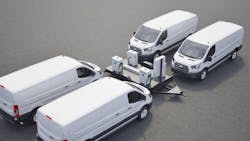
Pioneer expands e-Boost D Mobile deployments to support large-scale EV fleet charging
Pioneer Power Solutions achieved approximately $1.8 million in new orders through mid-February. Recent orders include deployments supporting electric school bus fleets in California and Florida, grid modernization efforts for a major Southeastern utility, and airside EV charging at Canada’s largest airport operator.
“From electric school bus deployments in California and Florida to off-grid charging solutions for utilities in Southeastern U.S. and aviation mega-hub in Canada, we are removing the primary barriers to EV adoption,” Geo Murickan, president of Pioneer eMobility, stated. “We aren't just selling chargers or power, we are providing operational certainty for large-scale fleet transitions.”
The company’s e-Boost and newly unveiled e-Boost D Mobile platforms provide high-capacity charging powered by grid, diesel, or renewable diesel to help fleets bypass utility upgrade delays. Pioneer said the orders highlight a growing shift toward immediate, off-grid “Energy-at-the-Edge” solutions that support large-scale electrification and mission-critical operations. Read more…
Zonar becomes first telematics provider approved for OEM-based CARB Clean Truck Check compliance
Zonar recently became the first telematics provider certified by the California Air Resources Board (CARB) to support Clean Truck Check compliance using OEM-installed and hardwired vehicle integrations. The solution allows fleets operating Freightliner Cascadia, Thomas Built Buses, and Western Star trucks in California to meet emissions requirements without additional hardware, plug-in scans, or downtime.
“CARB compliance is becoming more frequent, more complex, and more disruptive for fleets—but it doesn’t have to be,” Amit Anand, SVP of product at Zonar, stated. “Because we design our own hardware, work directly with OEMs, and partner closely with CARB, we were able to deliver a solution no one else in the market could. This certification removes downtime, eliminates guesswork, and allows fleets to stay compliant automatically using technology they already have.”
The certification benefits fleets facing increasing compliance frequency, including school, transit, and commercial fleets, as well as mixed fleets with OEM-equipped vehicles. Zonar’s Emission Check solution enables earlier detection of emissions issues, lowers compliance costs, and prepares fleets for more frequent CARB enforcement. Read more…
Clean Energy expands RNG fueling agreements with trucking, transit, and refuse fleets nationwide
Clean Energy Fuels recently made multiple agreements with trucking, refuse, and transit fleets to provide renewable natural gas (RNG) fueling infrastructure and supply nationwide. The deals include partnerships with Ecology Transportation Services, Recology, WM, WMATA, ABM Facility Services, Arlington Transit, and several municipal and airport fleets.
“2025 was a rough year for other alternatives that didn’t live up to the hype. But fleets continue to seek proven solutions to meet sustainability targets, and they’re finding that the RNG metrics deliver on multiple fronts—it’s clean, affordable, has diesel-like capability, is domestically produced, and there is a robust fueling infrastructure already in place,” Chad Lindholm, SVP at Clean Energy, stated. “These new agreements that we’re announcing today reflect that growing recognition across diverse fleet applications.”
Clean Energy will operate and maintain fueling stations supporting thousands of RNG-powered trucks and buses, dispensing millions of gallons annually across multiple states. RNG adoption through these agreements reduces greenhouse gas emissions by capturing waste methane and provides a lower-cost, negative carbon-intensity alternative to diesel. Read more…