2026 vocational tire outlook: Volatility to value
Key takeaways
- OTR tire demand held steady in 2025 as fleets prioritized uptime and cost control amid economic uncertainty.
- Replacement demand led the market, with dealers shifting to lean inventories and faster, just-in-time service models.
- 2026 outlook: Flat-to-modest growth as infrastructure, AI data centers, and mining support steady tire demand.
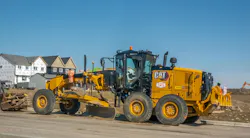
Despite economic headwinds, the U.S. vocational tire market performed steadily in 2025, buoyed by a resilient construction segment. Executives from leading manufacturers and suppliers analyzed the market’s recalibration and what lies ahead for 2026 with Modern Tire Dealer, a FleetOwner affiliate publication, along with a look into what's ahead for 2026.
2025 OTR tire market recalibrates amid cost pressures
Ryan Loethen, president of CEAT Specialty Tires, North America, calls 2025 “a year of recalibration in the U.S. OTR tire market. After the volatility of the prior cycles, the market moved toward more normal lead times and more disciplined purchasing. End users stayed focused on uptime and total cost per hour, and dealers who could support faster turnarounds and dependable supply were in the best position.
"Demand held up better than many expected, but buying behavior changed. Customers were more price-aware and more intentional, and they asked tougher questions about performance per dollar.”
While the U.S. aggregate and quarry tire segment experienced early challenges in 2025, driven by economic uncertainty related to tariffs, soft residential spending, and other disruptions, conditions improved the second half of the year, according to Rob Seibert, president of Bridgestone’s Off The Road division.
Infrastructure, data centers boost OTR tire demand
"Similarly, the construction segment grew in 2025,” Seibert said. “The industry was fueled by new work tied to AI-related data center projects, along with ongoing support from state and federal funding for infrastructure, resulting in strong demand for tires.”
Matt Futrelle, head of Americas, commercial specialty tire, Continental Tire the Americas, said the replacement construction market in the U.S. was overall strong in 2025 due to a relatively strong economy, some tariff-prebuy activity, and rising prices. "For construction, there are still many mega projects that are ramping up or in progress," he said. "Data center sites are popping up all over, but housing starts and commercial buildings have been lagging."
Jimmy McDonnell, VP of sales and marketing for Maxam Tire North America, said the mining tire segment “was down in 2025, slightly behind the previous year. The OTR construction market was up modestly in 2025 (and) definitely finished better than expected, given market conditions.”
"The U.S. OTR mining and construction tire markets experienced some unevenness in demand patterns during 2025, particularly around the timing of replacement activity,” said Sarah Robinson, brand director of construction, mining, tweel, and B2G, Michelin North America. “That said, when viewed over the full year, both segments finished relatively stable compared with the prior year.
"In construction, especially, replacement demand was supported by equipment originally purchased in the 2022–2023 timeframe, moving further into its service life. Higher financing costs also continued to encourage customers to extend the life of existing fleets, which helped underpin replacement activity across both mining and construction.”
The mining tire market has been “consistent and steady with improved commodity pricing driving interest,” Ben Brown, global VP of OEM sales and marketing, OTR Engineered Solutions, said. “Conversely, the construction market has been more stagnant, with only certain sectors performing at, or above, historical levels.
"In particular, new data center construction has created pockets of opportunity, but major infrastructure investments have been lacking, which often is the major driver of equipment demand across multiple segments. Replacement demand in the aftermarket outperformed new OEM demand in 2025, which is likely to continue through 2026.”

Mining tire demand stabilizes with strong commodity prices
Joaquin Gonzalez, president of Tire Group International (TGI), said demand for mining tires “was fairly steady throughout the year, supported by consistent mining activity and a continued focus by fleets on uptime, casing life, and cost per hour. While supply conditions were much better than in prior years, larger mining sizes still required planning, and replacement demand held up well overall.
"The construction side was more mixed," Gonzalez said. "This market is more fragmented and much more sensitive to broader economic conditions. In 2025, private construction was softer, which led to lower utilization in some fleets and, in turn, slower replacement demand. Public infrastructure work and rental activity helped offset some of that softness, but overall replacement demand in construction was flat to slightly down compared to the prior year. Buyers were more price-conscious and flexible on brands, especially in smaller and mid-size segments, where availability and quick turn mattered most.”
Paul Hawkins, SVP of aftermarket sales at Titan International, said the U.S. mining tire market “was largely replacement-driven" last year. "Demand was tied closely to equipment utilization at existing operations rather than new mine development," he explained. "Globally, copper-related mining activity, driven by electrification and data center demand, helped propel the mining sector.
"The U.S. construction tire market told a more mixed story. Residential construction remained slow, but that softness was offset by strength in commercial, road, and infrastructure-related projects. Public-sector funding at the municipal, county, and state levels drove higher utilization across rental fleets and government-owned equipment, which supported replacement demand throughout the year.
"One noticeable shift in 2025 was in customer behavior. With higher interest rates, many dealers became more disciplined about inventory, focusing less on stocking ahead and more on making sure customers’ equipment stayed up and running. As a result, we saw requests for quotes and fitment recommendations come in closer to project start dates. That puts more pressure on dealers to respond quickly, especially when customers don’t want to wait weeks for product or tie up cash in excess inventory.”
The aggregates sector remained active, “even where certain metals projects slowed,” according to Stephen Reynolds, OTR sales director, Triangle Tire USA. “Dodge’s data still showed total construction starts up 5.1% year to date through November 2025 and up 5.7% on a trailing 12-month basis, underscoring that activity didn’t vanish. It rotated by segment and timing.”
He adds that public works projects “remained a key support in 2025, helped by federal infrastructure funding. Also, data centers and related utilities work continued to be a stand-out driver.”
"The US construction tire market, while still growing, has been more challenged than mining,” Loic Ravasio, president of Yokohama OTR, said. “E-commerce growth and warehouse expansions drive construction growth, offsetting a slower residential construction market. Increasing infrastructure spending is also contributing to growth.”
"The U.S. tariff clouds were hovering over our heads the entire year” in the construction segment, Chan Phothisane, OTR national sales director, ZC Rubber America, said. “There were many uncertainties regarding the final tariff percentage on each country. Tire importers were unsure what price they would pay when the containers arrived at their door. The decision to stock less in the warehouse and buy only what was needed was a major trend.”
In the mining segment, Chen said “the U.S. government is investing in U.S. soil for critical minerals. The U.S. will increase domestic production of lithium and rare earth minerals. Foreign investors are building U.S. refineries to help support future growth in demands.”
2026 outlook: Replacement demand drives OTR tire market
Bridgestone’s Seibert said the U.S. OTR tire market “appears well-positioned to extend the positive momentum established in 2025. We anticipate stronger public construction activity and continued progress in infrastructure projects moving through the pipeline. With interest rates declining, new home construction and private-sector building activity are expected to improve, and the ongoing expansion of AI data centers should further support demand within the OTR tire market. Although economic pressures persist, we are maintaining measured expectations and anticipate both the aggregate/quarry and construction segments to be poised for modest growth in 2026.”
Loethen said CEAT expects to see “a competitive market with customers looking for measurable value. Dealers will see opportunities to reduce downtime and simplify procurement for end users. The winners won’t be the loudest voices. They’ll be the most consistent: consistent product, consistent service, and consistent results in the field."
"We believe that the OTR tire market will be flat to slightly up in 2026," Continental's Futrelle said. "The replacement market saw a big first half due to tariff-related prebuys, but then the market slowed down a bit. It will be tough to keep up with the first half year-over-year, but the year will likely be more balanced.
"The yellow iron OE market seems to be expecting a bit of a bounce back in 2026, depending on the segment. Housing starts have been declining, specifically multifamily, and this impacts certain construction businesses.”
He added: "The aggregates market has been very active with M&A (mergers and acquisitions), which should lead to some shaking up of tire suppliers. Mining should be a bright spot in most areas due to high prices and some countries working to increase local production and some looking to increase exports and realign sourcing."
Global Rubber Industries (GRI) expects that the U.S. OTR tire market will “show stable to modest growth, led primarily by the replacement channel,” Ydo Doornbos, GRI’s director of North America, said. “In construction, demand is likely to remain uneven but supported by infrastructure, utilities, and industrial projects. Replacement will continue to be the backbone of the market, as fleets prioritize uptime and cost control regardless of new equipment cycles. Overall, 2026 is shaping up as a replacement-led market, where value, durability, and application-specific performance matter most.”
Michelin’s Robinson believes “market fundamentals, such as commodity demand and construction activity, appear broadly steady. If those conditions hold, replacement demand should remain resilient, though customers continue to be thoughtful and measured in their purchasing decisions. The pace of any change in original equipment demand will likely depend on broader factors such as interest rate trends and the availability of used equipment. Overall, we’re approaching 2026 with a balanced outlook and a focus on supporting customers as conditions evolve.”
OEM tire demand pressured by rates, cautious fleet spending
Brown of OTR Engineered Solutions believes that demand for OTR tires in 2026 will likely be flat year over year “due to the continuance of high interest rates and supply chain headwinds, such as tariffs, which continue to add cost and complexity. Dealer inventory levels have improved, but with consumers and fleets alike watching their spending, only those machines that are in poor condition are likely to be replaced. Certainly, this bodes well for aftermarket replacement demand, but it puts OEM demand planning under continued pressure.”
"In 2026, the OTR tire market should feel relatively stable, with modest improvement on the construction side,” TGI’s Gonzalez noted. “Mining is expected to remain consistent, since tire demand is tied directly to operating activity and can’t be easily deferred without impacting production. Any changes there will be driven by utilization, not macro swings."
Titan’s Hawkins believes the OTR tire market will be led by the replacement market, “rather than entering a rebound or growth surge. Replacement cycles have largely normalized after several years of extended use, which is likely to continue. Infrastructure and commercial construction projects should remain a consistent source of demand, while mining activity is expected to follow commodity-driven needs rather than a general expansion. This points to a market defined by measured, disciplined purchasing—not speculation.”
Yokohama OTR anticipates “a flat-to-slight growth market in 2026 for both the mining and construction segments in the U.S.,” Ravasio said, adding that tire management solutions will become increasingly important.
About the Author

Mike Manges
With nearly three decades in the tire industry, Mike Manges is chief editor of Modern Tire Dealer, a FleetOwner affiliate.