Paccar enters 2026 with ‘very strong’ Class 8 truck order pace
Key takeaways
- Paccar’s 2026 order book is filling earlier, giving fleets and OEMs better production visibility after a volatile 2025.
- Regulatory clarity on EPA NOx rules and tariffs is easing buyer hesitation and pulling truck orders closer to delivery dates.
- Class 8 demand could rise up to 15% in 2026, signaling improving freight conditions and cautious optimism for fleet investment.

Customers of global truck maker Paccar have been submitting orders to the parent of Kenworth, Peterbilt, and DAF at a “very strong” clip since last month, CEO Preston Feight told analysts and investors January 27.
The trend is setting up Paccar for a smoother year of production than 2025, when new-truck deliveries globally fell 22% to 144,200. The company’s first-quarter order book is “mostly full,” Feight said after he and his team reported Paccar’s fourth-quarter results, and has been lifted by recent strength from body builders as well as a steady flow from less-than-truckload customers. Recent orders have helped supplement traditional December bookings from clients looking to spread out their deliveries over the course of the ensuing year, Feight added.
“What we’re seeing now is a little bit more close in terms of order intake,” Feight said. “It’s allowing us to build up our backlog a little bit [and has] increased visibility a little bit. And then that’s what’s going to translate into higher builds in the outer quarters.”
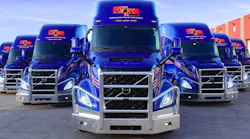
The Paccar team is forecasting that Class 8 sales in the U.S. and Canada—where Kenworth and Peterbilt claim a 30% market share—will range between 230,000 and 270,000 trucks this year. The high end of that range is about 15% above 2025’s level of 233,000 units.
Underpinning that expected growth, Feight said greater clarity about the Environmental Protection Agency’s 35-milligram nitrogen oxide emissions limit, as well as the Trump administration's Section 232 truck tariffs rolled out on November 1, are bringing more customers to Paccar. If signs of a proper rebound in truckload demand and carrier profitability turn into reality, Paccar—which has in recent months shifted its factories to produce multiple lines for their local markets—stands to benefit even more in 2026.
Executives are looking for Paccar’s capital spending this year to be very much in line with 2025’s numbers: Capital projects are in line to get $725 million to $775 million, versus $728 million last year, and research and development projects are forecast to receive between $450 million and $500 million compared to $446 million in 2025.
Shares of Paccar (Ticker: PCAR) fell about 1% to $120.81 after executives’ report and conference call. They’re still up nearly 20% over the past six months, a rise that has lifted the company’s market capitalization to about $63 billion.
About the Author
 Geert De Lombaerde
Geert De Lombaerde
Senior Editor
A native of Belgium, Geert De Lombaerde has more than two decades of experience in business journalism. Since 2021, he has written about markets and economic trends for Endeavor Business Media publications FleetOwner, Healthcare Innovation, IndustryWeek, Oil & Gas Journal, and T&D World.
With a degree in journalism from the University of Missouri, he began his reporting career at the Business Courier in Cincinnati. He later was managing editor and editor of the Nashville Business Journal. Most recently, he oversaw the online and print products of the Nashville Post and reported primarily on Middle Tennessee’s finance sector and many of its publicly traded companies.