Regulatory outlook for Trump vs. California this year
Key takeaways
- California initially defied federal enforcement of English Language Proficiency laws but recently adopted new enforcement rules.
- The federal government withheld over $40 million in California's transportation funding because of conflicts over non-domiciled CDLs.
- Revocation of California's emissions waivers face a drawn-out legal battle.
This is the second part in a series of articles on the 2026 regulatory outlook. Click below for:
With the new Trump administration, it has become a regular ritual: Roughly every other week, California and the federal government publicly air their grievances with each other.
While it can be hard to keep up with, federal agencies' battles with California—and their fallout—will continue into 2026. The two government bodies have clashed over English enforcement, non-domiciled commercial driver's licenses (CDLs), and emissions standards.
Driver English Language Proficiency enforcement
California in 2025 defied the English Language Proficiency (ELP) crackdown, but the state is changing its ways this year.
When FMCSA initiated roadside ELP enforcement in June last year, California's enforcement personnel did not follow the agency's guidance, according to FMCSA. The agency in August claimed that California (in addition to Washington and New Mexico) was not properly placing drivers out of service for ELP violations.
"From June 25, 2025, through August 21, 2025, of the roughly 34,000 inspections resulting in at least one reported violation, only one inspection involved an ELP violation resulting in a driver being placed out of service," FMCSA said in its August announcement. "Notably, at least 23 drivers with documented ELP out-of-service violations in other states were later inspected in California—yet the state failed to honor those violations or enforce ELP, allowing unqualified drivers to continue operating on our roads."
The agency threatened to withhold California's Motor Carrier Safety Assistance Program (MCSAP) grant funding if it did not come into compliance within 30 days. In October, FMCSA withheld over $40 million of California's MCSAP funding, claiming it failed to comply with ELP standards.
However, California recently relented. The state adopted its rules on December 23 to require that the California Highway Patrol enforce ELP. Local news and the state trucking organization reported in January that the state began enforcing ELP.
Non-domiciled CDL cancellation
The state also conflicted with FMCSA over non-domiciled CDLs. The agency ordered California to pause issuance of non-domiciled CDLs and rescind about 17,000 noncompliant non-domiciled CDLs and CLPs. California issued cancellation notices to those 17,000 drivers, with cancellations effective January 5. However, the state in December announced that its cancellation would be postponed until March.
After the January deadline passed, FMCSA revoked $160 million in California’s highway funding: The agency withheld 4% of the National Highway Performance Program and the Surface Transportation Block Grant program for fiscal year 2027, which begins this October. Lawless suspects that the government bodies will try to reach a compromise.
“California and FMCSA are going to try to work things out because it is in no one’s interest, from a safety perspective, to withhold funding to California,” Lawless said. FMCSA “also threatened to decertify California from issuing commercial driver’s licenses. I think that’s really unlikely for even greater safety reasons. If California becomes disconnected from the CDLIS system, which transfers information among the states about commercial drivers, that would be very dangerous.”
The funding revocation could prompt yet another legal battle between California and the U.S.
“The lawsuit you haven’t seen drop yet is California is not going to likely stand back and say, ‘Yeah, take away my highway funding.’ They’re going to challenge that decision, and I think that there’s some vulnerability for FMCSA in the basis for proposing to withhold funding,” Lawless said.
The California Air Resources Board emissions authority
Lastly, the Trump administration—with help from Congress—revoked California’s emissions standards authority. Trump in June signed three resolutions to terminate the state’s waivers to enforce Advanced Clean Trucks, Advanced Clean Cars II, and Heavy-Duty NOx.
Legislators had cut short the state’s significant influence over commercial vehicle markets. However, the resolutions used a questionable legal basis to repeal the waivers. A coalition of 10 attorneys general filed a lawsuit against the resolutions, California v. United States, which argues against that basis. The legal battle will likely move slowly, leaving state emissions autonomy uncertain this year.
“It’s going to be drawn out, I think, at the district court level. Then, whatever happens, I would suspect either side is going to appeal to the Ninth Circuit,” Sharma said. “I don’t think we’re going to get a final resolution on that issue anytime this year. … But it is obviously an important case because, if a court were to find and uphold that the use of the Congressional Review Act waiver process was improper, that obviously brings a lot of California’s authority and ability to regulate emissions—and other states to adopt California’s emissions—back into play.”
EPA also recently criticized California's smog check program, though enforcement of the program seems to remain in effect for now.
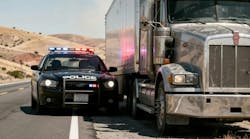 law enforcement pulling over truck
 Dreamstime red truck The Fleet Lead
About the Author
 Jeremy Wolfe
Jeremy Wolfe
Editor
Editor Jeremy Wolfe joined the FleetOwner team in February 2024. He graduated from the University of Wisconsin-Stevens Point with majors in English and Philosophy. He previously served as Editor for Endeavor Business Media's Water Group publications.