We are moving down the path toward reducing emissions in trucking, and we should be pleased with the progress we have made to date. However, there is more work to do.
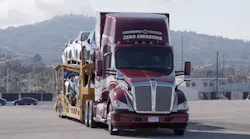
There has been talk of zero emissions with California Air Resource Board (CARB) indicating it is heading toward zero emission transport. In a recent webinar, Leslie Goodbody, CARB engineer, indicated that cleaner combustion was not the end goal — zero emissions was.
While CARB and others are heading toward true zero emissions objectives, others are focusing on what they call "net zero emissions.'"
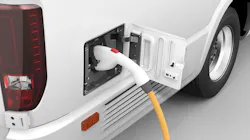
Net zero is about balancing sources of emissions that are expected to continue to exist in our future. This includes using emissions from things like waste products from cows and human garbage decomposition from refuse dumps to power transportation. By comparison, true zero is a solar panel powered community using battery electric vehicle, as an example.
While we are in the early stages of decarbonization, these two goals are on similar paths. To be honest it is easier for most of us to grasp the concept of net zero. True zero is harder to visualize as it ultimately involves figuring out how to have zero emissions from cows, garbage and other persistent sources that are part of our everyday life.
A mentor of mine early on in my career used to say to me, “Continuous improvement is better than delayed perfection.” Now that I have the internet to search, it looks like he stole that from Mark Twain. Nevertheless, zero emissions is an admirable goal, but I think we need to remind ourselves that continuing to get close to zero emissions is very good. I don't think we want this to be an all or nothing argument.
It is OK to strive for zero emissions, but we should not discount technologies and practices that get us to less and then net zero emissions. Anything we can do to continue to reduce emissions should be applauded. I know lots of folks want to see that giant leap to zero emissions, but sometimes it’s OK to take baby steps. Those baby steps will help us get closer to the ultimate goal while taking some leaps too.
About the Author
 Michael Roeth
Executive Director
Michael Roeth is the executive director of the North American Council for Freight Efficiency. He serves on the second National Academy of Sciences Committee on Technologies and Approaches for Reducing the Fuel Consumption of Medium and Heavy-Duty Vehicles and has held various positions with Navistar and Behr/Cummins.