Tips for mitigating rising roadside repair costs
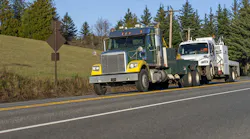
In an industry with tight margins, unexpected breakdowns that result in roadside service calls can be detrimental to fleets. These emergency repairs take away from an organization’s bottom line and can result in lower on-time delivery rates.
According to the most recent quarterly roadside breakdowns benchmarking report published by FleetNet America and the American Trucking Association’s (ATA) Technology and Maintenance Council (TMC), the average roadside repair cost rose year-over-year from $378 to $491 per event. Fortunately, fleets can improve processes and adopt new technology to mitigate these expenses.
“As a participant of the TMC benchmarking program, we’re focused on trends like rising mobile maintenance costs and are proactive in working with other industry members to discover ways to bring down those costs,” said Matt Wiedmeyer, director of fleet maintenance for Hill Transportation Services Inc. (HTSI). “However, every fleet has varying needs and different ideas of what makes up a solid maintenance program, so you have to examine your operations and find ways to reduce those expenses.”
Consider the following improvements for reducing mobile repair calls.
Preventive maintenance practices
Preventive maintenance (PM) processes must be thorough and should occur whenever a truck is in the service bay. Ensure technicians perform a visual inspection and scan the truck with an application that diagnoses all vehicle components. This comprehensive examination can help technicians discover all problems with the truck, even those that do not trigger a fault code, such as common tire problems.
“Tires are the leading cause of mobile repair visits for us,” said Wiedmeyer. “To combat this, we created a strong tire program and learned the ideal air pressure for our particular fleet of vehicles. When vehicles are in the shop, we physically inspect the tires to verify they are within that range.”
In addition to fewer tire issues, Wiedmeyer helped reduce malfunctions by utilizing vehicle health reports and driver feedback. “We talk to the driver and see if he or she has noticed any problems with the truck,” Weidmeyer explained. His technicians utilize a heavy duty diagnostic scan tool to access a comprehensive vehicle report. ““We look at all faults, whether they’re active, inactive, or ghost codes, and schedule maintenance accordingly based on what we find.”
Remote diagnostics
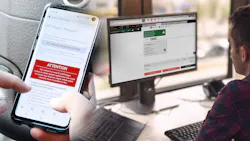
The industry is beginning to adapt remote diagnostic tools. These applications allow fleets to not only monitor the health and safety status of their trucks, but also perform remote functions that either correct a problem or buy the vehicle operator enough time to get to a service center. The ability to remotely force a diesel particulate filter (DPF) regen, for example, can save a fleet time and money compared to relying on a mobile repair service to complete the same function on the side of the road.
“Even with the best PM procedures, a truck can develop problems along its route. By setting up alerts within remote diagnostic platforms, we can catch certain issues early and make a repair decision before it escalates into a serious, costly malfunction,” said Wiedmeyer.
Benefits of benchmarking
Benchmarking programs are invaluable to fleets, but they must also track trends within their organization to know how they compare to national averages and identify problems unique to their business.
“We monitor maintenance practices and determine if there’s an area where we can improve, “Wiedmeyer explained. “If parts fail more often than expected, we determine the cause and correct it. If fuel economy is below where it should be, we decide if it’s a maintenance problem or if it’s caused by driver behavior and make the necessary adjustments.”
Fleets may not be able to control the cost of a mobile repair service, but they can decrease the frequency of these events. Fortunately, many fleets already have the tools and staff in place to make these adjustments, it’s just a matter of examining their own practices and updating their processes and procedures.
__________________________
Ben Osborne is the marketing communication manager at Noregon, a company that delivers products that expedite diagnostic and repair, and assist in total vehicle health and safety management.
About the Author
Ben Osborne
Ben Osborne is the Marketing Communication Manager at Noregon, a company that delivers products that expedite diagnostic and repair, and assist in total vehicle health and safety management.