Cooperation and collaboration are the electrification answer
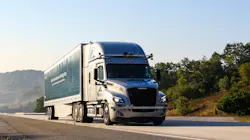
Last week we saw two major announcements about collaborations. One was the fact that Daimler Trucks and Waymo signed a global strategic partnership to deploy autonomous SAE Level 4 technology. According to a Daimler press release, their initial effort will combine Waymo’s automated driver technology with a version of Daimler’s Cascadia to enable autonomous driving. The second announcement was about Traton SE and Hino Motors signing a joint venture agreement to develop battery electric and fuel-cell electric trucks.
I am not really surprised by these announcements. Maybe the specifics are surprising, but hearing that businesses involved in the trucking industry are working together, does not surprise me at all.
Think about it. The trucking industry has a long history of collaboratively working together. Truck makers have worked with component manufacturers and fleets to develop new technologies and bring them to market quickly. This is one of the main reasons I have stayed in the heavy-duty industry for my entire career. Very little, if any, “not invented here” attitudes.
We are in the midst of a period of intense technological development in the trucking industry with much attention focused on battery electric vehicles, fuel cell electric vehicles, advanced driver assist systems, autonomous trucking and more.
Certainly, individual companies can work on bringing these technologies to market but working alone will likely take much longer and be more expensive. This matters in that having collaboration up and down the supply chain, yes and even with some competing companies, is critical to success.
Working together companies can leverage the strengths and expertise of each of the partners which should shorten the product development cycle and mean that some of these new technologies will get to market sooner.
I expect us to continue to see more of these joint ventures, partnerships, cooperative agreements etc. as we navigate what NACFE has called the messy middle. I think it is going to be interesting to see which companies form partnerships in an attempt to capture the market.
About the Author
 Michael Roeth
Executive Director
Michael Roeth is the executive director of the North American Council for Freight Efficiency. He serves on the second National Academy of Sciences Committee on Technologies and Approaches for Reducing the Fuel Consumption of Medium and Heavy-Duty Vehicles and has held various positions with Navistar and Behr/Cummins.
Related

 Dreamstime Electric Truck Welcomia 125415111