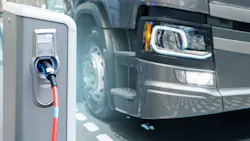
The business case for electric trucks in certain applications is developing at a rapid pace. But when making decisions about EVs, fleets need to look beyond the vehicle itself and consider the whole electric vehicle ecosystem, including charging infrastructure, regulations, incentives, service support, etc.
While I have been encouraging fleets to dip their toes into the EV pool for some time, they also need to be aware that when it comes to EVs, it is not just a matter of purchasing the vehicle. Fleets must look at their terminals to see how feasible it is to add charging stations. They need to contact their local utilities to begin talking about their increased electricity needs and to get schooled in things like variable electric rates that depend on peak usage. Unlike diesel, which typically costs the same whether the driver fuels up at 8 a.m. or 9 p.m., electricity rates vary based on demand.
Much of this was the subject of an S11 full tech session at the recent Technology & Maintenance Council meeting. I had the privilege of being on a panel with some heavy hitters: George Miller of BYD, Michael McDonald of UPS, Ken Marko of Pepsi Co., Rich Carroll of Orange EV, Mark Jameson of Cummins, and Alexander Voets of Freightliner.
Carroll kicked off the session by saying that he has never seen such a rapid technology switch as the one we are seeing with electric vehicles. Five years ago, I was one of the people who was skeptical about the growth of EVs in freight hauling applications, but the industry was smarter than I am, and we have seen some segments move rapidly to the use of EVs. The business case for EVS is happening—and it is happening quickly.
However, for the more EVs to be put in operation more fleets need to understand the need to take a much broader approach and to begin planning early, especially when it comes to the feasibility of the site to have a charging infrastructure added, as well as looking at incentives to help defray the higher initial cost of electric vehicles.
In his part of the presentation, Miller said that in determining whether EVs makes sense, fleets need to look at the vehicle’s range, when they will be charged, payload—since EVs weigh more than their ICE counterparts, consideration has to be given to loss of payload—infrastructure and the climate conditions the vehicles will be operating in.
And of course, there is the service aspect of EVs, which McDonald helped us understand. Fleets need to make sure there is a service and support network in place and must have a good understanding of what is covered under warranty. Technicians—whether at the fleet’s location or at a third-party service provider—will need to be trained to safety and effectively service EVs. While many people are saying EVs will need less maintenance, there still will be some basic maintenance that needs to be completed and repairs too.
There is also the matter of drivers, which is a real passion for Marko. Driver buy-in makes a huge difference on the successful implementation of any new technology. The good news is that if the drivers who participated in Run on Less–Electric are any indication, there won’t be a problem with drivers switching to EVs. Sure, there will be some training needed but all 13 drivers in RoL–E said that not only did they like driving EVs, but they were proud to be doing their part for a cleaner environment.
Jameson and Voets helped discuss the spec’ing of these trucks and that there is much to consider. Fleets need to keep in mind that when it comes to electric vehicles they have to plan early and involve the whole team of key stakeholders in order to be successful.
And then it will be easy to echo Marko’s comment that “there has never been a more exciting time to be in the trucking industry.”
Michael Roeth has worked in the commercial vehicle industry for nearly 30 years, most recently as executive director of the North American Council for Freight Efficiency. He currently serves on the second National Academy of Sciences Committee on Technologies and Approaches for Reducing the Fuel Consumption of Medium and Heavy-Duty Vehicles and has held various positions in engineering, quality, sales and plant management with Navistar and Behr/Cummins.
About the Author

Michael Roeth
Executive Director
Michael Roeth is the executive director of the North American Council for Freight Efficiency. He serves on the second National Academy of Sciences Committee on Technologies and Approaches for Reducing the Fuel Consumption of Medium and Heavy-Duty Vehicles and has held various positions with Navistar and Behr/Cummins.