Roeth: Fleets need to prepare for fuel volatility like a squirrel prepares for winter
Key takeaways
- Fuel prices are volatile; fleets must plan and invest in efficiency to protect margins during spikes.
- Driver behavior, engine tuning, and route optimization directly impact fuel economy and operational costs.
- Technologies like idle-reduction systems, aerodynamic devices, and alternative-fueled vehicles improve efficiency and resilience.
Fuel prices have skyrocketed. This time, it is as a result of conflict in the Middle East. And I say this time, because if you look at the history of diesel fuel prices, they have been up and down for decades. But let’s just look at 2020 to 2025. According to the U.S. Energy Information Administration (EIA), in 2020, a gallon of ultra-low sulfur diesel was $2.551. In 2021, that same gallon was $3.287, and in 2022 it soared to $4.898. Last year, it averaged $3.660. And that is only the volatility in a five-year span.
My point is, we never know what is going to happen that will change the price of fuel. Since we are in a global economy, the change in the price of fuel could be influenced by something that is happening halfway across the globe.
All of this is the foundation for my suggestion that fleets be vigilant about improving fuel economy. Those of you who know me know I love analogies, so here is one that applies to this situation. When it comes to fuel economy, fleets need to be like squirrels that put away nuts for the winter. For fleets, that translates into taking steps today to make operational changes or invest in fuel efficiency technologies so that they will feel less of an impact when fuel prices rise. And we can pretty much guarantee that they will rise at some point. In 2022, we got darn close to $5 a gallon for diesel.
Let me reiterate some things fleets can do to ensure that they are getting the most mileage out of each gallon of fuel. Check your engine parameters to make sure they are optimized for the routes you will be operating. Engage drivers in your efforts to push the fuel economy envelope. Drivers still have an impact on fuel economy, and coaching them to avoid things like hard braking, fast accelerations, and speeding can lead to improved fuel economy.
Of course, there are investments you can make to improve fuel economy. These include purchasing aerodynamic devices for both your tractors and your trailers, as well as tire pressure monitoring/inflation systems that help you keep tires at their proper inflation pressure. Additionaly, it may include investing in idle-reduction technologies that allow drivers to stay comfortable in the truck during their hours of service rest breaks but don’t require them to idle the main engine.
It can also include adding some alternative-fueled vehicles to your fleet in duty cycles where they make sense. We’ve done a lot of work through our Run on Less events and our Guidance Reports to identify where alternative-fueled vehicles, including CNG/RNG, battery electric, and hydrogen fuel cell, are already demonstrating their usefulness.
In the next few months, the NACFE staff will be attending a number of industry events, and we’d be happy to chat with you about the many ways you can improve your fleet’s overall operating efficiency.
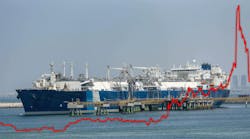 oil tanker near Hormuz
 595 Truckstop Diesel Pumps in Ft Lauderdale, Florida.
About the Author
 Michael Roeth
Michael Roeth
Executive Director
Michael Roeth is the executive director of the North American Council for Freight Efficiency. He serves on the second National Academy of Sciences Committee on Technologies and Approaches for Reducing the Fuel Consumption of Medium and Heavy-Duty Vehicles and has held various positions with Navistar and Behr/Cummins.