Electric truck adoption grows in drayage as California regulations and funding expand
Key takeaways
- Port drayage fleets are adopting electric trucks as California rules, incentives, and diesel volatility reshape operations.
- Tesla Semi, Volvo, and BYD highlight trade-offs in range, charging time, weight, and real-world fleet performance needs.
- Charging infrastructure growth and incentives are improving EV truck economics, making adoption more practical for fleets.
When the concept of deploying electric vehicles first surfaced in 2022 within the drayage community in Long Beach, I had no idea where to begin. It felt like a far-fetched idea, so I ignored it for some time. I didn't want to spend my time, energy, or resources dealing with another mandate or new technology in the middle of a global pandemic. Given my initial pushback, I can understand why some fleet operators are just not sold on electric trucks. When you already have trucks that are more than adequate for the job, there is an inherent fear of something completely new. But with unpredictable diesel prices, can people still say this?
It wasn’t diesel prices that initially made me interested in incorporating electric trucks into my business. Back in 2022, California was starting to roll out regulations on Class 8 trucks that signaled a clear intent to move toward electric, and the state was making the funding available to do it. Coupled with the fact that I care about the environment and believe we should all do our part to protect the planet, I decided to take advantage of the incentive to buy electric trucks. Now with diesel in California well over $7 a gallon, I’m really glad I made the choice.
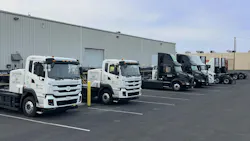
My business operates 75 trucks in and out of the ports at Los Angeles and Long Beach. Twenty-six of our trucks are electric—we’ve got 17 Volvo and nine BYD trucks. By August, we’ll add 15 of the new Tesla Semi to our fleet.
Overall, my experience with electric trucks has been positive, and I like the trucks. They are safe, very quiet, emit no emissions, and free us from fuel price volatility. Customers seeking alternative energy sources are turning to us, and with fuel prices skyrocketing and showing no sign of coming down, more shippers may consider EV options to diversify.
Of course, there are concerns when transitioning to electric. There is the anxiety about range, which is not something we necessarily need to worry about operating at the port, but the trucks are also heavier and take longer to charge than filling up. The new Tesla Semi is tackling a lot of these issues, given they will take around 30 minutes to charge, will be lighter, and cost less. A recent analysis by the International Clean Transportation Council comparing the Tesla Semi with other electric trucks is pretty astounding: The Tesla has a range of about 500 miles and costs $290,000; the nearest in price and range is the Volvo VNR with a range of 275 miles and a price tag of $436,000.
I test drove the Tesla Semi and found it a great model. There were some tweaks that needed to be done, and Tesla seems to be taking advice from fleets on how to make their trucks suit our needs. With all the incentives and funding you can receive when buying an electric truck, ordering the Tesla Semi could turn out to be $30,000 to $40,000 cheaper than going with an electric truck from one of the more established brands. Who wouldn’t want that?
I also think it’s only a matter of time before charging stations for the Tesla Semi become more prevalent along freight corridors. That will also address the fears of those with range anxiety and make the move to electric seem more palatable. It would be great if other manufacturers came on board and started offering electric models that compete with Tesla on price, range, and charging speed, just like what is happening with passenger cars. Then we’ll have a real game-on when it comes choosing an alternative to high diesel prices.
For those considering the switch, think back to the last time you tried new technology that felt strange at first. I remember when I had a BlackBerry and thought switching to an iPhone was unnecessary—but I did it and never looked back.
Sometimes, a change of mindset or a willingness to open up your mind is necessary to realize that saying no to something new may mean missing out on something better.


About the Author
 Rudy Diaz
Rudy Diaz
Rudy Diaz is the CEO and founder of Hight Logistics, which specializes in port drayage at Long Beach, Los Angeles, and Oakland.