Clark: The truck parking crisis is quietly draining fleet bottom lines
Key takeaways
- Truck parking remains a top driver concern, with shortages affecting safety, productivity, and quality of life.
- Parking shortages can create costly delays for fleets and add pressure to delivery schedules and HOS compliance.
- Expanding capacity and improving parking information could help address a persistent challenge across freight corridors.
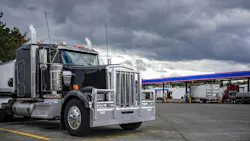
Truck parking has been a persistent industry problem for decades, yet meaningful progress remains frustratingly slow.
According to the American Transportation Research Institute's (ATRI) Top Industry Issues Report, truck parking ranked as the industry's third-largest concern in 2022, while drivers identified it as their number one challenge. Three years later, ATRI's 2025 report shows little has changed. Although parking slipped slightly to fourth place among overall industry concerns, drivers continue to rank it as their single biggest issue.
That gap in perception highlights an important reality: what many outside the industry view as an operational inconvenience is, in fact, a daily safety, productivity, and quality-of-life crisis for professional drivers.
A nationwide shortage with supply chain consequences
For the public, finding parking may seem like a minor logistical hurdle. In reality, the shortage has become a costly supply chain bottleneck.
According to ATRI estimates, inadequate truck parking costs the industry more than $100 billion annually through lost productivity, wasted fuel, increased operating expenses, and delivery delays. Those costs ultimately ripple throughout the supply chain and affect shippers, carriers, retailers, and consumers alike.
The numbers paint a stark picture. Across the U.S., there are approximately 313,000 designated truck parking spaces. Of those, only about 40,000 are at public rest areas, while most are at private truck stops. The result is roughly one parking space for every eleven trucks on the road.
Parking challenges are often associated with dense urban delivery areas, but the reality is far broader. After 7 p.m., drivers across urban, suburban, rural, and highway corridors face increasingly limited options. More than 90% of over-the-road drivers report significant difficulty finding parking after dark. Compounding the issue, approximately 38% of all truck freight moves through regions that contain just 8.5% of the nation's available legal truck parking spaces.
The hidden cost of searching for a space
The parking shortage isn't simply an inconvenience. It carries a measurable financial impact.
National Truck Parking estimates that if a 10-truck fleet spends an average of 56 minutes each day searching for parking, that translates into approximately 9.3 lost hours daily or more than 2,300 hours annually, based on 250 working days. At a conservative operating cost of $60 per hour, the fleet loses more than $140,000 per year from parking-related inefficiencies alone.
For larger fleets, those costs escalate dramatically. Every minute spent looking for a safe, legal parking spot is time that cannot be spent moving freight, serving customers, or generating revenue.
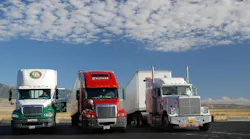 Truck parking grants add capacity along freight corridors nationwide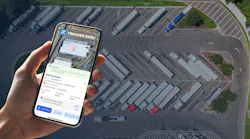
The human cost of parking shortages
At its core, the truck parking crisis is a safety issue.
While studies and surveys have provided valuable data, drivers continue to face difficult and sometimes dangerous choices at the end of their shifts. Safety concerns are particularly significant for women drivers, who often cite secure parking access as a critical quality-of-life and personal security issue. Limited access to safe parking may also hinder efforts to attract and retain more women in long-haul trucking roles.
Carriers pay the price, too
Though drivers experience the parking shortage firsthand, carriers often absorb the financial consequences.
Parking-related delays reduce productivity, disrupt delivery schedules, and create unnecessary operational costs. In an industry where margins are tight and schedules are carefully managed, an hour spent searching for parking can quickly translate into missed appointments, detention charges, dissatisfied customers, and lost revenue opportunities.
The shortage also increases the risk of hours of service (HOS) compliance challenges, forcing drivers to choose between finding legal parking and adhering to regulatory requirements.
Ultimately, inadequate parking affects every link in the freight transportation network.
Solving the problem is a joint effort
No single stakeholder can solve the truck parking crisis. Addressing the problem will require coordinated action among federal and state governments, infrastructure planners, truck stop operators, technology providers, carriers, and shippers. Examples include:
- Expanding parking capacity at existing truck stops through public-private partnerships
- Deploying technology that provides drivers with real-time parking availability information
- Encouraging investment in secure, well-lit parking facilities near major freight corridors
- Incorporating truck parking needs into regional transportation and urban planning efforts
- Supporting innovative approaches that address growing last-mile and urban delivery demands
The industry already understands the problem. What is needed now is sustained commitment to implementing solutions.
Truck parking is everyone's problem
Without adequate parking, drivers face unsafe conditions, carriers lose productivity, and freight networks become less efficient. The downstream impacts touch nearly every business and consumer that relies on goods moving through the supply chain.
The trucking industry cannot afford another decade of studies without meaningful investment. Drivers deserve safe and legal places to park. Carriers need greater operational efficiency. And the supply chain depends on both.
About the Author
Jane Clark
Senior VP of Operations
Jane Clark is the senior vice president of operations for NationaLease. Prior to joining NationaLease, Jane served as the area vice president for Randstad, one of the nation’s largest recruitment agencies, and before that, she served in management posts with QPS Companies, Pro Staff, and Manpower, Inc.