Fleets, cameras, and AI: Managing driver privacy and legal risk
Key takeaways
- Federal and state laws vary, requiring carriers to tailor their surveillance policies to ensure compliance across jurisdictions.
- Notification and consent are crucial when using GPS tracking, cameras, and audio recording to respect driver privacy and avoid penalties.
- AI-enabled cameras can improve safety but must be used carefully to prevent discrimination, inaccuracies, and privacy violations.
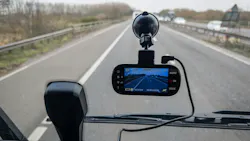
Technology has transformed how trucking companies monitor fleets and drivers. GPS tracking, telematics, dashboard cameras, and AI-enabled driver-facing cameras can provide real-time information about vehicle location, speed, braking, distraction, and fatigue. These tools can improve safety, support regulatory compliance, and provide valuable evidence after accidents. They also create legal and operational risks that cross state lines.
For national and regional carriers, no single law governs workplace surveillance. Federal motor-carrier regulations provide part of the framework, while state laws may impose separate requirements concerning tracking, audio recording, biometric information, employee notice, and privacy. A policy that works in one state may be insufficient in another.
GPS tracking: Notice is the starting point
Federal Motor Carrier Safety Administration regulations require electronic logging devices for many commercial drivers who must maintain records of duty status, subject to specified exceptions. Although FMCSA does not require real-time vehicle tracking, carriers may use tracking technology for legitimate business purposes. Under 49 C.F.R. § 390.36, however, carriers may not use ELD data or related technology to harass drivers in a manner that leads to fatigue or hours-of-service violations.
State requirements vary. Some states expressly require employee notice, while others regulate tracking through broader privacy or electronic-monitoring laws. New Jersey, for example, requires private employers to provide written notice before knowingly using a tracking device in or on a vehicle used by an employee. Violations can result in civil penalties of up to $1,000 for a first violation and $2,500 for each subsequent violation.
Regardless of whether notice is expressly required, carriers should notify drivers before assigning GPS-equipped vehicles. Written policies should identify the technologies used, information collected, business purposes, authorized users, and retention periods. They should also explain whether tracking continues during off-duty periods or authorized personal use.
Cameras, audio, and privacy
The principles governing cameras in warehouses, loading docks, and maintenance facilities also apply inside commercial vehicles. Video surveillance is easier to justify where employees know they are observable and monitoring serves a legitimate purpose, such as safety, theft prevention, or quality control. Monitoring in places or at times when employees reasonably expect privacy presents greater risk.
Road-facing and driver-facing cameras can help reconstruct collisions, coach drivers, and identify unsafe conduct. Privacy concerns become more significant when surveillance extends into a sleeper berth, continues during breaks, or captures off-duty activity. Carriers should provide clear notice and establish activation rules that protect private and off-duty conduct.
Audio recording requires separate review because federal and state wiretap laws apply and state consent requirements differ. A carrier operating across state lines should determine which laws may apply rather than assuming that consent obtained under one state’s law will be sufficient everywhere. Carriers should determine whether audio is necessary, disable it when it is not, and obtain legally sufficient consent before recording.
Driver-facing cameras and AI
AI-enabled cameras may analyze a driver’s eye and head position, detect cellphone use or seatbelt violations, and flag conduct suggesting distraction or fatigue. These capabilities serve important safety interests, but they also produce assessments that may be incomplete or inaccurate.
When AI-generated alerts influence discipline, compensation, route assignments, or termination, the technology becomes part of the employment-decision process. Federal anti-discrimination laws apply to algorithmic decisions just as they apply to decisions made by supervisors. A system that produces uneven results across demographic groups, misinterprets disability-related behavior, or penalizes a driver who needs a reasonable accommodation may expose the employer to discrimination claims.
Carriers should understand how their systems generate alerts, evaluate results for reliability, and give drivers an opportunity to challenge inaccurate findings. An automated flag should not replace a fact-specific investigation.
Carriers should also determine whether a system collects facial geometry, voiceprints, or other biometric identifiers. Some states require notice, consent, retention schedules, and secure destruction of biometric data. Using a vendor does not eliminate the carrier’s responsibility to understand what information is collected or how it is stored, used, and shared.
Managing risk
To manage workplace-surveillance risks, carriers should:
- Inventory all tracking, camera, audio, and AI functions in use;
- Provide clear written notice and obtain consent where required;
- Explain what information is collected, why it is collected. and how long it is retained;
- Avoid monitoring private or off-duty activity;
- Restrict data access and maintain appropriate security safeguards;
- Require human review before significant employment action;
- Train supervisors to use monitoring data appropriately and never to pressure drivers into unsafe or unlawful operation; and
- Review policies regularly as technology and applicable laws evolve.
The best approach is not to collect every piece of data a system makes available. It is to collect information that serves a defined safety or operational purpose, communicate clearly with drivers, and apply the resulting data consistently, securely, and with appropriate human judgment.
About the Author
 Valentina M. Scirica
Valentina M. Scirica
Labor & Employment attorney
Valentina M. Scirica is a Labor & Employment attorney with the New Jersey-based law firm Trenk Isabel Siddiqi & Shahdanian P.C. She can be reached at [email protected].