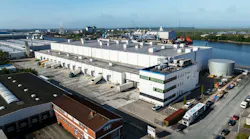
Kargo automates Lineage receiving to improve cold chain efficiency
Key takeaways
- Kargo’s camera towers have automated more than 64,000 receipts in six months.
- Lineage’s Decatur facility processes more than 500 pallets each day.
- Automated receiving captures SKU and lot data directly into Lineage’s WMS.
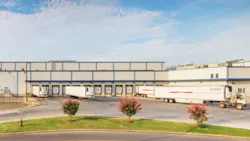
Kargo recently implemented automated receiving at Lineage’s Decatur, Alabama, warehouse to improve inventory capture and inbound material flow. The company, which provides an AI-powered vision system for automated inventory capture, uses camera towers to identify inbound pallets, capture SKU and lot information, and send the data directly to Lineage’s warehouse management system (WMS).
Receiving can create bottlenecks in high-volume food manufacturing environments because teams traditionally scan pallets manually, verify information against bills of lading, and enter data into the WMS. Kargo’s camera towers have automated more than 64,000 receipts at the Decatur facility over the past six months, reducing the receiving process from minutes to seconds.
The facility processes more than 500 pallets per day. The automated system captures each pallet as it arrives and has allowed Lineage to reallocate labor to other activities across the facility.
Faster receiving and more consistent data capture can also help Lineage customers move products from production into storage and shipping with fewer delays. Automated load scanning is scheduled to launch at the Decatur facility shortly.
"The Kargo system is helping us remove friction from one of the most labor-intensive parts of the warehouse operation," said Elliott Wolf, VP and chief data scientist at Lineage. "By automating receiving, we're not only improving accuracy and speed, but also empowering our team to focus on higher-impact work."
What this means for the trucking industry
Automated receiving could reduce the time trucks and drivers spend waiting for inbound freight to be processed at high-volume cold chain facilities. For fleets serving food manufacturers and temperature-controlled warehouses, faster receiving may support more predictable facility operations and improve overall equipment utilization.
The deployment also demonstrates how connecting physical freight movement with warehouse management systems can reduce manual data entry while improving inventory visibility. As similar automation expands, carriers and fleets may benefit from more consistent receiving processes and fewer operational delays at distribution facilities.