California bill would require cold-storage facilities to maintain emergency funds
Key takeaways
- AB 817 would require contingency funds before permits for certain cold-storage facilities could be approved.
- Emergency funds could cover housing, food, health care, air-quality monitoring, and pest control.
- The bill faces support from Los Angeles groups and opposition from food organizations.
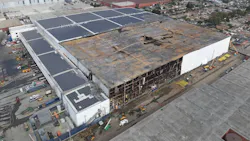
A California bill, prompted by the Boyle Heights cold-storage fire, would require operators of similar facilities to establish contingency funds for emergencies and could provide tax relief for residents, property owners, and businesses affected by the disaster.
The legislation, AB 817, was introduced by Assemblymember Mark Gonzalez and advanced after the California Senate Revenue and Taxation Committee voted to send it to the Appropriations Committee.
The measure follows the June 17 fire at a Lineage Logistics cold-storage warehouse in Boyle Heights, where roughly 85 million pounds of frozen food were stored. The fire burned for eight days, and residents later reported foul odors, pests, and health problems as food decomposed inside the facility.
Under AB 817, cities and counties could not approve building permits for cold-storage facilities unless the owner, operator, or lessee establishes a contingency fund that could be used during a declared emergency.
The funds could support affected communities with expenses including:
- Temporary housing
- Food assistance
- Health care
- Air-quality monitoring
- Pest control
The bill also would provide state income tax relief for qualified residents, property owners, and businesses that receive settlements related to the 2026 Boyle Heights fire. The exclusion would apply to qualifying payments received during tax years beginning in 2027 through 2031.
Support for the measure includes the city of Los Angeles, Los Angeles Unified School District, California Community Foundation, East Yard Communities for Environmental Justice, and several health and housing advocacy groups.
The legislation faces opposition from agricultural, food-production, and business organizations, including the Global Cold Chain Alliance (GCCA), California Grocers Association, and California Manufacturers & Technology Association.
What this means for the trucking industry
AB 817 could increase the financial planning considerations for companies operating or leasing cold-storage facilities in California if the measure becomes law. For fleets and logistics operators connected to cold-chain facilities, contingency funding requirements could become another factor when evaluating facility locations, operating costs, and emergency preparedness.
The proposed requirements also highlight the potential operational and financial consequences when a cold-storage facility experiences a major disruption. For companies moving temperature-sensitive freight, the availability of resources for emergency response could affect how quickly communities and supply-chain operations recover from a facility disaster.