How fleets can optimize TRU performance as transport refrigeration technology evolves
Key takeaways
- Proper TRU use and maintenance extend equipment life, reduce costs, and optimize performance.
- Fleet electrification and hybrid TRUs cut emissions, lower fuel costs, and improve reliability.
- Hands-on training and tech skills are vital for the next generation of refrigerated fleet technicians.
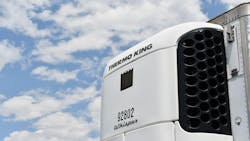
Transport refrigeration is more sophisticated today than in 1938, when Thermo King patented the first trailer unit. Diesel-powered engines are more efficient, high-voltage electrical architectures are advancing, and system controls are smarter. But maximizing performance still comes down to proper use and care—two old-school principles that haven’t shifted.
That’s why the Truckload Carriers Association (TCA) broke out two key sessions collectively aimed at optimizing transport refrigeration unit (TRU) operation and maintenance at this year’s Refrigerated Meeting in Colorado Springs: “Optimizing Your Reefer Unit” and “The Future of Reefer Technicians.” The optimization session moderated by Amber Edmondson, Trailiner president and CEO, featured Gareth Macklam, Utility Trailer director of sales operations, and Kevin Williams, Carrier Transicold senior development manager; and the reefer technician session moderated by Ralph Moyle CEO Ashley Kordish included Bob Roberts, Thermo King manager of customer solutions, and Lucas Subler, Classic Carriers president, and newly elected TCA reefer division chair.
“In any trucking market, but certainly in the current climate, proper operational use of equipment is imperative to control costs and extend the useful life of the equipment,” Edmondson emphasized.
Williams and Macklam, who estimated approximately 50,000 TRUs operate in the U.S. today, underscored that reefer units are part of a complex temperature-controlled transportation environment; new features and capabilities like preconfigured settings, probes, and sensors help users optimize temperature control and energy consumption; and hybrid refrigeration technology offers longer-term residual value while reducing emissions and operational costs. “This is a system, and the reefer’s only as good as the air coming in and going out, so maintaining airflow products, both from a cleanliness and a physical damage perspective, are relatively quick wins that can yield many benefits,” Williams said.
Subler and Roberts, who said the industry currently employs about 10,000 transport refrigeration technicians, discussed recruiting and retaining next-generation employees in an evolving field, the importance of segment-specific training, and giving techs the tools they need to succeed. “I look at reefer technicians as the best of the best, especially with the technologies we’re using today, and different types of power we need to provide,” Subler maintained.
Optimizing TRU performance and maintenance for fleets
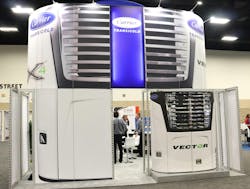
Presets offered by most TRU manufacturers, like Carrier Transicold, Thermo King, and Cargobull North America, allow fleets to speedily select a range of temperature and run-time parameters tailored for specific commodities. “They act like a popcorn button on your microwave,” Williams explained. “You push a button, and it automatically configures the unit to the levels you want.” Fleet managers can push out multiple presets with one click of a back-office key, simplifying operations for drivers and boosting confidence for customers.
New telematics capabilities also enable painless software updates, remote sensor and probe monitoring, and proactive maintenance. Macklam indicated securely connected rear probes reduce claims by tracking temperatures across the full length of a trailer. And fuel sensors reduce refueling time while also allowing fleets to scan for anomalies in equipment performance, Williams added. “If you look at a population of reefer units doing similar things, and one is burning more fuel than the others, there’s probably a reason that’s happening,” he said.
Both agreed internal trailer cleanliness and equipment condition play critical roles in reefer efficiency. Damaged or improperly installed chutes restrict air circulation, clogged and dirty coils erode system effectiveness, and ducted floors littered with debris prohibit functionality. “Air flow is king,” Williams said. “You can have the best reefer unit available, but if you can’t get air in or out of it, it’s not doing much good. So that means pulling down internal bulkheads, getting in there, and cleaning out those evaporator coils, drain pans, and tubes.
“We don’t want water to back up into the trailer and onto the floor or product.”
Additionally, bigger compressors aren’t necessarily better, continuous mode is unnecessary in many circumstances—and even can dehydrate sensitive perishables—and running a reefer with the door ajar always is sub-optimal. “If you get into a situation where you must run the unit with the doors open, there are options to set them at low speed,” Williams said. “And when you finally get that door closed, on recovery, you can do a quick manual defrost.”
 Texas emerges as a hub for cold chain logistics and temperature-controlled supply chains
Preparing refrigerated fleets for electrification and tech upgrades
Refrigerated fleets that are feeling squeezed by low freight volumes and rates, and persistent overcapacity, may be tempted to buy lower-cost reefer units, especially with the Trump administration bent on rolling back emissions regulations. But that would be a mistake, Macklam insisted. “We understand rates are low, equipment is expensive, and the knee-jerk reaction is always to buy the cheapest product,” he said. “The cheapest equipment might be more cost effective in the short term, but you're going to run this equipment five to 10 years, so think about the future and the residual value of your investment.”
Roberts called electrification “the slowest-moving car crash” possible, but all three transport refrigeration experts agreed that it will deliver multiple benefits for reefer fleets. Electric motors are quieter, more reliable, and better balanced than diesel engines, which vibrate and can overheat, disrupting TRU operability. And while electrical infrastructure still is lacking, fully electric and hybrid units unlock shore power, which is about 50% cheaper than diesel, Macklam said, allowing fleets to save money while simultaneously reducing emissions. Hybrid units also help users begin the transition to electrification with a diesel backup. “It gives you that stepping stone to what’s coming next, whether it’s a battery back under the trailer or an ePTO, where the truck powers the unit,” he added.
Utility prefers the ePTO route because truck manufacturers can more easily scale technology, Macklam said. But the trailer OEM will continue to look at battery systems, as well as trailer construction and insulation, in the ongoing pursuit of the most lightweight, thermally efficient systems.
Today’s reefer units are also more intelligent and efficient, helping fleets diagnose and optimize systems more quickly; but old-school PMs—like fuel filter replacements—still are critical, and today’s TRU technicians need advanced electrical training to work on modern machines safely. “It’s difficult because previously a guy just had to be a decent tech, or maybe a refrigeration guru, but now he basically needs to be a trained, licensed electrician,” Subler said.
Transport refrigeration: Adapting to tech and workforce changes
With so much to learn, reaching prospective TRU technicians early and dispelling misconceptions about the industry are imperative. “Today’s technicians, whether they’re working on tractors, trailers, or reefer units, can’t do anything without using a laptop,” Subler maintained.
“Our guys fix more with laptops than their wrenches.”
Younger Millennials and older Zoomers may not gravitate toward dirty, greasy, labor-intensive jobs. They will, however, consider a technology-filled career that allows them to advance sustainability while participating in an industry that’s essential to food and pharmaceutical supply chains, panelists agreed. That’s why reefer carriers must promote themselves and the industry through community involvement and regularly updated company websites and social media platforms, and deliver their message to students and teachers in high schools, trade schools, and career-oriented organizations like the Future Farmers of America.
“I put a lot of effort into getting onto technical school boards for programs in my area, so I’m starting to build a real presence there,” Kordish revealed.
It’s also important to make the job enjoyable, so provide work-life balance where possible—perhaps with staggered shifts and on-call assignments—and actively monitor job satisfaction with regular “stay” interviews, experts agreed. “This generation is not motivated by overtime,” Roberts said.
“What they truly value is their own time.”
Practical training programs for next-gen reefer technicians
For reefer technicians, real-world experience is indispensable.
That’s why hands-on job training and blended learning are invaluable, and TCA is developing an apprenticeship program it hopes to introduce next year, Kordish said. “It’s not what technicians need to know, it’s what they need to know how to do,” Roberts emphasized. Thermo King offers technician training for carriers and dealers, and partners with the National Coalition of Certification Centers (NC3) to supply industry-specific curriculum to 1,800 technical schools, he continued. “Right now, we’re integrated at the end of an HVAC or diesel program,” he said. “But we want to offer a full course, with multiple semesters devoted exclusively to transport refrigeration. That’s where we’re hoping to go.”
Other valuable sources of training materials include dealership networks, the Next Generation in Trucking Association, and online vendors like Ancora and Signature, which offer leadership training for master technicians entering management. Roberts also advised fleets to make those materials mobile friendly and readily available on distribution platforms like Salesforce. “We give every one of our mechanics their own laptop,” Subler revealed. “You walk over to their workstation, and there’s a pile of tools, a laptop, and a coffee mug.
“That’s what they utilize every day—so why make them share?”
Finally, fleets can maximize technician efficiency, or revenue per employee, and total billable hours by dividing jobs between high- and low-level employees based on complexity. “We’ve found about 80% of dealer revenue comes from what we call ‘AAP’ jobs [or entry-level positions] that take less than four hours. Those include replacing alternators, starters, belts, and hoses,” Roberts said. Thermo King also offers technician productivity training designed to boost profitability.
“I tell people, have the low-level guy to the basic service, like changing oil and filters,” Macklam said. “But then, for the last 10 minutes, have that high-level give it a quick once over to see if they catch anything else.”
About the Author
 Jason McDaniel
Jason McDaniel
Jason McDaniel, based in the Houston TX area, has nearly 20 years of experience as a journalist. He spent 15 writing and editing for daily newspapers, including the Houston Chronicle, and began covering the commercial vehicle industry in 2018. He was named editor of Bulk Transporter and Refrigerated Transporter magazines in July 2020.