As Class 8 EV momentum slows, Volvo reinforces electrification path with VNL Electric and new vocational technology
Key takeaways
- Product Expansion: Volvo Trucks North America (VTNA) teased the VNL Electric—its second Class 8 battery-electric tractor—specifically targeting regional haul, drayage, and city distribution segments.
- Vocational Capability: VTNA expanded the existing VNR Electric platform with a new mechanical electric power take-off (ePTO) capable of generating 69.5 kW of continuous power to electrify auxiliary equipment. This proprietary technology immediately opens the zero-emission market to vocational fleets, including construction, refuse collection, and reefer applications.
- Market Headwinds: The broader heavy-duty EV market is described as "chilling." While MD/HD BEV registrations grew 21% between 2024 and 2025, this pace is unlikely to continue due to federal policy reversals, the loss of the federal EV tax credit, and a prolonged freight recession.
- Existing Scale: Volvo is leveraging an existing North American fleet of over 750 VNR Electric trucks that have logged more than 30 million zero-tailpipe emission miles. This operation is supported by 84 Certified EV Dealerships across 33 U.S. states and four Canadian provinces.
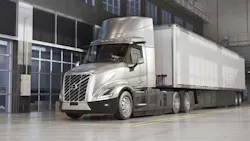
Despite a broader slowdown in the heavy-duty EV market, Volvo Trucks North America remains focused on its long-haul decarbonization push. The OEM used ACT Expo to announce a second Class 8 battery-electric tractor—the VNL Electric—while simultaneously expanding the vocational capabilities of its existing VNR Electric.
The product expansion arrives at a fascinating time for the U.S. commercial EV market. The State of Sustainable Fleets 2026 market brief, published by ACT Expo’s parent company last week, reports that while medium- and heavy-duty battery-electric vehicle registrations grew 21% between 2024 and 2025, that pace is unlikely to continue. The Class 8 over-the-road tractor segment, in particular, was slower to develop and down in 2025, though signals suggest future growth as technology matures.
The loss of the federal EV tax credit, manufacturer pivots, and a 24% share of Class 8 electric tractor registrations in 2025 highlight a chilling market. The prolonged freight recession that began as EV appetite was growing during the Biden administration has faced headwinds since President Donald Trump returned to the White House.
Fast facts: Volvo Trucks' VNL Electric and VNR ePTO
- VNL Electric focus: The new VNL Electric, Volvo’s second Class 8 battery-electric tractor, is strategically targeting regional haul, drayage, and city distribution segments, not long-haul operations. It is built on a proprietary, powertrain-agnostic platform that utilizes in-house components, including e-axles and batteries manufactured by Proterra, which is now part of the Volvo Group.
- VNR ePTO power: The new mechanical electric power take-off (ePTO) expands VNR Electric’s capability by inverting the traction battery’s high-voltage DC into three-phase AC power. This system is capable of producing 69.5 kW of continuous power at 271 Nm of torque.
- Zero-emission applications: The ePTO allows the VNR Electric to power auxiliary equipment—such as construction tools, refuse collection systems, or reefer applications—using the truck's batteries. This delivers a fully electric solution that eliminates the need for a running diesel engine and significantly reduces job site noise.
- Market scale and support: Volvo is leveraging its existing deployments, with over 750 VNR Electric trucks operating in the U.S. and Canada and collectively logging more than 30 million zero-tailpipe emission miles. This is supported by an ecosystem that includes 84 Certified EV Dealerships across 33 U.S. states and four Canadian provinces.
Sweeping federal policy reversals and tariff-driven cost increases over the past year have compounded these challenges, forcing many fleets and shippers to reassess their spending priorities. However, there are nuances to growth: California’s Hybrid and Zero-Emission Truck and Bus Voucher Incentive Project (HVIP) approved more than 1,000 vouchers in late 2025, a sign of future sales. Furthermore, the electric yard tractor market has matured, offering cost savings over diesel options and showing signs of growth. Globally, MD and HD adoption is growing as markets mature; BEVs now represent 22% of China’s HD truck market, where battery costs have fallen to a highly competitive $90/kWh.
But VTNA is betting that fleets still need to future-proof. By electrifying its flagship truck platform and expanding vocational capabilities with proprietary technology, the OEM is positioning itself to capture market share when conditions inevitably rebound.
Shipper and carriers feel the ZEV squeeze
During an ACT Expo workshop on ZEV market dynamics, industry leaders laid out the financial realities of the current freight environment.
Umar Javed, co-founder and president of Wadi, highlighted how shipper appetites have shifted. “Three, four years back, most shippers were willing to invest and pay something if they wanted to jump on a zero-emission path,” he said. “Today, things have changed … shippers still want you to have an edge or priority if you’re delivering the right service, but prices are important. Nobody wants to pay more than they want to pay.”
Sean Falcone, VP of fleet operations at Penske Transportation Services, echoed the sentiment, noting the strain of the ongoing freight recession and significant increases in capital expenditures on equipment. However, he emphasized that fleets cannot afford to stop looking ahead.
“Yes, we have to deal with the realities of what the market brings us, but we still are investing in what tomorrow’s things will be,” Falcone said. “We’ve been doing this for years—probably 10-plus years—in terms of innovation and emerging tech, alternative tools. You continue that work today, even in the midst of the climate.”
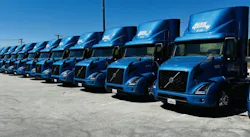
Volvo Trucks’ three paths to transportation decarbonization
Rather than pulling back, the Volvo Group continues to refine its diversified approach amid the uncertainty, demonstrating how fleets are future-proofing ZEV strategies despite the current EV market slowdown. Lars Johansson, SVP of trucks technology for Volvo Group, global parent of North American Volvo and Mack truck brands, detailed the manufacturer’s road map during the expo.
“We have a three-path strategy when it comes to zero-emission and fossil-free transports,” Johansson said on May 4. “First of all, battery-electric vehicles are what we have in production today … definitely scaling up, taking big steps.”
VTNA already has a significant head start on that scaling. Today, more than 750 battery-electric Volvo trucks are operating across the U.S. and Canada, collectively logging more than 30 million zero-tailpipe emission miles. These deployments are supported by a growing network of Volvo Trucks Certified EV Dealerships, providing the expertise and infrastructure needed to help fleets successfully transition to electric transport.
Johansson noted that the second path focuses on fuel cell electric vehicles, which are currently undergoing extensive testing. In contrast, the third path acknowledges the ongoing role of the internal combustion engine. “We believe that there is going to be a space for combustion engines also in the future, where the zero-emission application doesn’t work,” Johansson said, adding that low-carbon fuels will support this space.
 Sasko Cuklev announces new autonomous lane
Electrifying the flagship Volvo VNL and expanding VNR Electric market
To anchor its battery-electric momentum, VTNA previewed the next-generation Volvo VNL Electric. While the diesel VNL is known for long-haul operations, Volvo is strategically targeting the VNL Electric for regional haul, drayage, and city distribution—segments where zero-tailpipe emissions currently deliver the greatest impact on operations.
The VNL Electric represents the fourth truck planned on Volvo’s newly updated, powertrain-agnostic platform—joining the redesigned diesel VNL that launched in 2024, the recently launched VNR, and a future vocational model teased at ACT Expo. By using this shared vehicle architecture, VTNA can offer the same cutting-edge aerodynamic and safety features found in its new flagship tractor to the zero-emission market.
It also marks a critical shift toward an in-house supply chain. Built on more than seven years of real-world global electric trucking experience, the VNL Electric relies entirely on internal components rather than third-party sourcing.
“What is important is that this one is totally proprietary,” VTN President Peter Voorhoeve told attendees during the press event. “We have proprietary e-axles, and we have proprietary batteries built by Proterra, which is part of the Volvo Group now.”
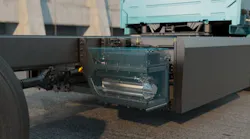
While the VNL Electric represents the next step for Volvo Trucks’ distribution segments, VTNA is also expanding the utility of its existing platforms. At ACT Expo, the OEM introduced a new mechanical electric power take-off (ePTO) capability for the Volvo VNR Electric, its original BEV Class 8 offering for regional operations.
The ePTO allows the VNR Electric to power auxiliary equipment—such as vocational tools, refuse collection systems, or reefer applications—using its own high-voltage batteries, eliminating the need for a diesel engine running in the background.
This advancement delivers a fully electric solution that can handle demanding jobs with zero tailpipe emissions and significantly less noise, offering a critical pathway for vocational and reefer fleets operating in urban environments to electrify their operations.
"For the industry, it's a lot about cooperation, working together, and learning, sharing experience. Then we will make this happen," Johansson said. "Because together, we are changing the world."
About the Author
 Josh Fisher
Josh Fisher
Editor-in-Chief
Editor-in-Chief Josh Fisher has been with FleetOwner since 2017. He covers everything from modern fleet management to operational efficiency, artificial intelligence, autonomous trucking, alternative fuels and powertrains, regulations, and emerging transportation technology. Based in Maryland, he writes the Lane Shift Ahead column about the changing North American transportation landscape.