Key takeaways
- Ploger Transportation treats safety, cost, and recruiting as interconnected risks, not separate issues.
- Ploger uses ADAS, dash cams, and tire monitoring to reduce violations and improve operational control.
- Ploger prioritizes disciplined hiring and driver communication to protect long-term safety and performance.
No matter how you measure it, today’s trucking environment is not only defined by risk but also by the fact that carriers are no longer dealing with isolated operational challenges. Instead, cost volatility, distracted driving, cargo theft, litigation exposure, and a recruiting climate that often prioritizes speed over quality are converging in a layered set of issues that compound one another.
For Ploger Transportation, an asset-based truckload carrier headquartered in Norwalk, Ohio, the response has been deliberate, disciplined, and rooted in a safety-first culture. “These challenges are no longer isolated,” Bob Ware, Ploger Transportation safety director, said. “They’re interconnected and compounding if not addressed holistically.”
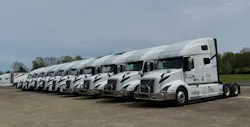
Founded in 2006 by Jerry and Tanya Morrow with a single truck, Ploger Transportation has grown into a fleet of approximately 90 Volvo tractors and more than 200 Hyundai and Strick 53-ft. dry van trailers. Serving customers across the lower 48 states, the carrier handles a mix of dry goods and specialized freight, including custom furniture.
For the Ploger fleet, equipment selection is tightly aligned with the company’s safety priorities. For example, tractors are equipped with disc brakes and advanced driver assistance systems. Complementing the OEM technology are four-way dash cameras and speed monitoring tools. “Safety-driven technology is central to our operation,” Ware explained. “It’s about protecting our drivers and everyone else on the road.”
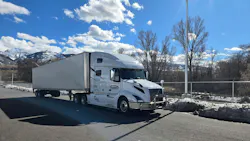
Technology plays a central role in other ways at Ploger Transportation as well. For example, when the carrier experienced a spike in out‑of‑service violations due to low tire pressure, particularly after roadside monitoring technologies became more prevalent, the company sought immediate and long‑term solutions. With tire pressure monitoring systems and through a partnership with Gray Box, Ploger implemented Fleetworthy weigh station bypass across the fleet to mitigate risk.
The impact was significant. In the year following deployment, Ploger recorded more than 10,000 weigh station bypasses across 88 vehicles, generating more than $80,000 in operational savings from reduced fuel use, lower emissions, and less time spent in weigh stations. Drivers averaged 97 bypasses per vehicle per month.
In parallel, Fleetworthy Safety+ has allowed Ploger to deploy custom in‑cab alerts, including warnings near high‑risk intersections, notifications for discounted fuel zones, guidance to avoid unnecessary toll roads, and even morale‑boosting “Welcome Home” alerts near the terminal. Together, these technologies have helped Ploger reduce costs while reinforcing safety.
One of the most defining ways Ploger addresses today’s challenges is by refusing to accelerate hiring and onboarding at the expense of quality. Company leadership has acknowledged that pushing drivers through too quickly has historically led to poorer safety outcomes and higher downstream risk. Instead, Ploger maintains disciplined hiring and training standards designed to identify drivers who align with the company’s culture and expectations. This approach extends beyond the application process with thorough vetting as a defense against higher risk.
“The only responsible response is to be deliberate about who you bring into the operation and how well you really know them,” Ware said. “Too often, the industry responds to pressure by rushing people through the process. We’ve learned that trading safety for speed may fill seats faster, but it creates long‑term problems that are far more costly.”
Engagement with drivers is another pillar of Ploger’s risk‑management strategy. The company conducts daily calls that are recorded and openly shared, reinforcing two‑way communication across the fleet. “Transparency builds accountability on both sides,” Ware explained. “When drivers know they can speak up, and when leadership is willing to listen publicly, it changes behavior in a positive way.”
Through its partnership with Tenstreet, Ploger has also improved the driver experience. The platform powers Driver Pulse, an app that supports onboarding, training, document sharing, and safety and compliance processes. By streamlining administrative tasks and maintaining compliance, Tenstreet helps Ploger stay efficient without compromising standards. From first contact to long-term retention, the platform reinforces the company’s long‑standing commitment to the driver experience.
Ploger is equally deliberate in addressing recent challenges. Because of volatility in fuel costs, the company has identified opportunities to reduce idle time and speeding, including driver coaching and the addition of auxiliary power units (APUs) to all new tractors.
For Ploger Transportation, navigating industry challenges is less about reacting quickly and more about responding thoughtfully. “When you put safety and driver engagement first,” Ware emphasized, “efficiency and performance with less risk follow.”
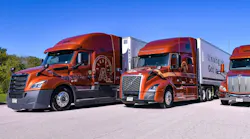 Arka Express fleet trucks
About the Author
 Seth Skydel
Seth Skydel
Seth Skydel, a veteran industry editor, has more than four decades of experience in fleet management, trucking, and transportation and logistics publications. Today, in editorial and marketing roles, he writes about fleet, service, and transportation management, vehicle and information technology, and industry trends and issues.