Tumultuous Times: Market dynamics and legislation reshape trucking
Key takeaways
- The trucking market is experiencing rapid rate increases and declines along with capacity fluctuations, making it difficult for industry players to plan long-term.
- Fleets are purchasing trucks mainly to catch up with trade cycles and reduce maintenance costs, not to expand operations.
- Operational costs have increased by 40% over six years.
- Legislative enforcement and government actions are creating additional uncertainty.
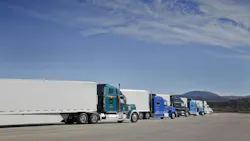
Uncertain is a word the trucking industry just can’t seem to overcome. But a new adjective was added to the list of trucking market descriptors at a recent industry conference: Tumultuous. What’s keeping the trucking market from overcoming the economic hurdles that have been set in place since this current freight recession began in 2022?
Three trucking industry experts and analysts answered these questions at the recent McLeod Software User Conference in Nashville. David Scandlyn is the director of sales at DAT Freight and Analytics, Matt Harding is the SVP of market intelligence at Triumph, and Damon Langley is the product manager of pricing optimization at McLeod Software. All have spent years in the industry, analyzing the market, listening to customers, and gathering intel. Here’s what they think about the current freight economy and its effects on the industry.
How supply and demand affect freight rates
Scandlyn said that what makes this market cycle different is the velocity of change. DAT recorded the fastest rate declines in its 16-year history from July to August of this year.
“The pace at which rates are changing—and the overall market conditions are changing—it's very ineffective in this cycle than what I've been a part of in my career,” he said.
Harding said trucking has gone through many peak and trough cycles. What makes this cycle different is that freight demand has been so low from 2022 to 2025 due to capacity and “lowering the barrier of entry” for the industry. This allowed “all kinds of drivers access to the freight markets, many of them with no training, not even understanding English," Harding said.
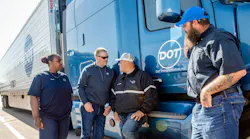
Yet, because of the Department of Transportation’s (DOT's) recent enforcement of ELD compliance, English proficiency, and the closing of CDL mills, we’re beginning to see the capacity exit, and Harding believes rates will continue to climb because of that.
Langley said even improving rates won’t give the industry much relief considering the costs to run a trucking operation won’t stop climbing; costs are up 40% on average compared to just six years ago. He also stressed the importance of driver pay to keep the safest drivers driving for your fleet. One thing he said for certain: “It's going to be an interesting next six months.”
Fleets are buying trucks. What does that mean economically?
Langley said fleets aren’t buying new trucks because business is good. Instead, it’s an indication of “people trying to catch up to their trade cycles.” As he mentioned earlier, the rising costs of running a trucking company are playing a role in truck purchases, as maintenance costs for existing fleet vehicles are also skyrocketing.
“New trucks are cheaper on maintenance, and maybe some of our 3 ½-year-old trucks are 12, 16, and 18 cents a mile,” Langley said. “Do the math and say ‘Where does this fall?’”
Make no mistake, fleets aren’t purchasing trucks to expand their operations, Harding said, though he did mention the drivers that are coming from now-ceased operations (those affected by regulatory enforcement) will need to end up somewhere. He believes that fleets are purchasing trucks to get ahead of the model year 2027 trucks to sidestep some of the additional maintenance costs that could come with them, considering their more robust aftertreatment systems.
Scandlyn echoed a similar sentiment using the phrase “pent-up demand.” The trucking economy's years-long downturn prevented companies from replacing models in their typical cycle.
“I think [summer truck purchasing] was less of a long-term view of confidence that this market is going to be good for a long time, and much more a response to necessity,” Scandlyn said.
 tom mcleod mcleod software uc 2026
How are fleets responding to the current chaotic environment?
Harding feels that in today’s trucking environment, being a good carrier and being able to vet carriers is a major focus. From a broker standpoint, “I think they've got to be really mindful of who they're working with frequently … in this litigious world we live in,” Harding explained.
The other uncertainty, according to Harding, is the changing landscape of liability, or nuclear verdicts, when accidents happen. He used the example of an accident involving a $600 load where the broker was made responsible for paying a $600 million award. “That makes zero sense, and it’s not good for anyone,” he said.
While Scandlyn believes nuclear verdicts are a problem, he feels the industry places too much focus on the costs associated with the high payouts and less on the costs of cases that even get thrown out.
“I think the cost implications aren't just on the losses; a lot of times, they're just managing the caseload,” Scandlyn said. “There are numerous cases out there where, ultimately, the liability was dismissed, but it still costs a lot of money to go through those legal proceedings and navigate that landscape.”
He suggests carriers and brokers have important conversations with their insurance providers and their lawyers to help understand the environment the industry is in.
Court cases and nuclear verdicts aside, Langley said overall, carriers and brokers are in a “wait and see” mindset, despite “flashes of demand” here and there. These industry players are holding off on big investments in technology and growth plans until they get a better understanding of the market or until things become more steady.
Government and legislation are trucking’s ultimate wildcard
The government is revoking CDLs, CDL training schools are losing their legitimacy, and the barrier to entry is getting higher, Harding explained—and this is all due to the government’s more stringent enforcement. There’s also the development of the DOT’s Motus system, which aims to make DOT registration easier.
There are also many other proposed laws that have the potential to dramatically impact the industry. While Harding admits that there are laws that have no chance of passing, those that have traction could end up changing the landscape as drastically as the “deregulation” initiatives that transformed the industry in the 1980s.
The trucking industry has been good at adjusting to the market, but the legislative uncertainty won't help the industry stabilize anytime soon.
Not only do the government’s actions (or inaction) create uncertainty for the trucking industry, Scandlyn said, it also creates uncertainty for other industries nationwide. This affects the freight demand cycle. When construction isn’t happening, loads aren’t moving.
In a chaotic environment, control what you can
Langley’s advice to everyone in the industry during these chaotic and uncertain times is simple: control the things you can control. Focus on customer relationships and making customers happier. Then, focus on getting more loads from those customers.
It’s also important to control costs where you can. Improve your fleet’s efficiency—whether that means decreasing empty backhauls or implementing fuel-saving technology.
Scandlyn emphasized the importance of relationships in today’s trucking environment. This helps retain customers, but it also helps ensure brokers are relying on trusted—and safe—carriers.
“The people that I see that really be successful in our space are the ones that have the relationships to get through these kinds of uncertainties,” he said.
About the Author
 Jade Brasher
Jade Brasher
Executive Editor Jade Brasher has covered vocational trucking and fleets since 2018. A graduate of The University of Alabama with a degree in journalism, Jade enjoys telling stories about the people behind the wheel and the intricate processes of the ever-evolving trucking industry.