Beyond the truck number: Drivers deserve more respect
Key takeaways
- Top fleets focus on building strong relationships with drivers through open communication and involvement in decision-making.
- Regular driver feedback, transparency, and respect are crucial for creating a positive and loyal work environment.
- Providing reliable equipment, fair pay, and opportunities for career growth helps retain drivers and improve job satisfaction.
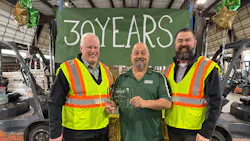
When you think about your drivers, do you see their faces, or do you think about spreadsheets? Do you refer to them by truck number or by name? Are they a means to get the job done or what keeps your doors open?
Some of FleetOwner’s most-read articles are about driver retention. It’s an industry-wide problem. Yet, the fleets that have shown the most success in driver retention all have one thing in common: Leadership continually works on building driver relationships.
“The best fleets are trying very hard to treat their drivers like tier one employees,” Jane Jazrawy, co-founder of CarriersEdge, told FleetOwner. “Other fleets don't realize that they're not doing that. They have good intentions, but they don't realize the gaps.”
Jazrawy knows what makes a fleet a desirable place for drivers. CarriersEdge is the company behind Best Fleets to Drive For, a recognition program where fleet drivers nominate their employer as “the best workplace for North American truck drivers.”
As a facilitator of the program, Jazrawy analyzes driver feedback and interviews multiple top fleet leaders. While each year brings new insights, what keeps most of the top fleets on top is their relationship with their drivers.
Peninsula Truck Lines: A 2026 Best Fleets winner

This is something Peninsula Truck Lines, a 2026 Best Fleets winner, learned by asking questions.
Scott Manthey, Peninsula’s safety and risk management director, spent his first few months on the job getting to know Peninsula’s drivers. While there were plenty of satisfied drivers, Manthey noticed there were pockets of drivers that were “really not happy.” Only by talking with them and asking why they felt that way did he learn there were plenty of areas for management to improve—and this was all while management believed they were doing right by everyone.
“Frankly, [the drivers are] the ones out there doing work,” Manthey told FleetOwner. “We can think we know what's going on, and we can do what we've been doing in the past—that is, we tell them what we want them to do because we think we know what's going on—but we really don't know what's going on.”
Manthey, along with Peninsula President Tim Vander Pol, started making these driver conversations a priority. They listened to driver pain points and built solutions through a driver-centric approach.
The culture immediately shifted at a pace that Manthey said some might have found uncomfortable. But that was how passionate Manthey and Vander Pol were about ensuring a workplace where drivers wanted to come to work, where they felt safe, and where they were involved. The culture turnaround “can almost take you to a state of emotion,” Manthey said, “almost like you're in a state of awe.”
 truck driver turnover thumbnail
 CarriersEdge opens 2027 Best Fleets to Drive For nominations
American Central Transport: A Best Fleets winner for nine years running

For another fleet, American Central Transport, driver happiness comes from a desire to continually improve. Leaders rely heavily on the Best Fleets survey results as well as one-on-one conversations with every staff member and most customers to ensure each day is better than the last. And it’s working. The fleet has earned a Best Fleets award for nine consecutive years and Truckload Carriers Association Elite Fleet status for the last two years.
“We're always trying to up our game and just be stronger and better than we have done in the past,” Phil Wilt, American Central Transport president and COO, told FleetOwner. “Every year we'll meet as a management team, and we'll try to think strategically through ‘How do we become better? What does that look like?’”
What drives this improvement is American Central’s people—from drivers to office staff to the maintenance team. They all work together to make the workplace environment pleasant and, in turn, deliver exceptional service to customers.
Working together requires respect and care. This is also apparent among American Central staff. Joe Keller, a driver for American Central, said that everyone treats him with respect, and “nobody sticks their nose up in the air at you.” When he walks into the office, staff members ask about his day, his life at home, and even his dog, Walter, calling him by name.
Get drivers involved in the company
After talking with Jazrawy, Wilt, and Manthey, one could infer that driver happiness hinges on equality among employee groups and treating drivers as they would treat office employees, ensuring they feel like part of the company and not alone on the open road. This might require fleet leaders to go out of their way to interact with drivers who spend so much of their time away from the office or depot.
“The more that [drivers] are involved, and the more that a driver feels like they're part of something, the more that they want to stay,” Jazrawy said.
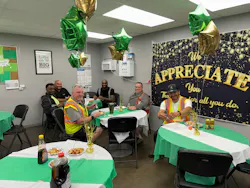
Peninsula’s driver outreach looks like one-on-one conversations, but it also includes regular terminal barbecues, where everyone—especially the drivers—is fed. Involvement also includes ensuring every leader’s office door remains open and that drivers receive their direct line during onboarding so that they have ample opportunity to communicate with management. Many drivers even have access to President Vander Pol’s direct line, Manthey said.
Because of the nature of their job, drivers often miss company updates and water-cooler conversations that keep regular employees up to date on the latest news. To combat this, Peninsula creates quarterly videos featuring a panel of Peninsula leaders giving an operational and financial update on the company. Drivers are required to watch these videos and encouraged to ask questions. The bottom line: Peninsula leads with transparency.
“We spend a lot of time explaining why we do what we do, and when you do that, you start to develop those relationships,” Manthey said. “People then start to understand the ‘why,’ and then they get curious, and it's ‘How can I help?’ And that's what we've turned into as an organization.”
The result is a workforce that’s completely in sync.
Three-legged stool: office staff, maintenance team, drivers
American Central’s philosophy is a bit different, but also hinges on employee equality. Leadership sees each employee as part of a three-legged stool. Drivers make up one leg, office staff makes up the second, and maintenance staff makes up the third. If one leg is shorter than the others, or if one group is valued differently than the others, the stool becomes wobbly.
One way American Central shows its appreciation across each group is with employee social media shoutouts. These posts help all employees “humanize” each other, Wilt said.
“They're a real person, and here's their family, and here's their hobbies,” Wilt said. “That is a strategy to make sure to help people understand both worlds. … All of a sudden, those walls come down, and people become more supportive than just thinking of a person as a number or as a driver.”
When drivers feel like they’re a valuable part of the business, they’re more likely to get involved. That includes feedback, which Wilt said is vital for American Central’s progress. The leadership team hosts open forum calls where drivers can address their concerns, and Wilt has one-on-one chats with drivers regularly. Additionally, drivers receive a weekly survey with simple questions that essentially check in on how they’re doing, what they need, and anything else that needs attention. Management provides a summary of survey results on Friday of each week. This transparency helps foster trust.
Build a company drivers want to work for
Provide reliable equipment
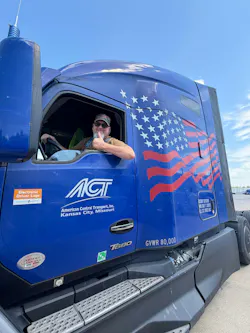
When asked what Keller liked most about American Central, equipment was the first answer. American Central keeps its fleet young. Any truck three years or older is typically on its way out, Keller said, and this reliability ensures American Central drivers “spend almost zero time on the side of the road.”
The company headquarters is also home to a “state-of-the-art” maintenance shop and near Kenworth and Freightliner dealerships. This ensures equipment is in top shape, Keller said. American Central also has a tire company come out twice a day to inspect equipment, and mechanics in the service bay also inspect trailers in the yard frequently. American Central employs an after-hours team so that drivers always have round-the-clock support.
Equipment reliability is so important to Keller and other drivers because it keeps them on the road and earning money. When a truck sits idle, no one gets paid.
Respect individuals
Keller also appreciates how the whole American Central team treats him. The respect he gets and the freedom to be himself are what make the company stand out. “They don't treat you like you're needed here—they treat you like you're wanted, and you're just part of their crew,” he said.
American Central didn’t bat an eye at Keller’s long hair and ponytail. They allow him to bring his dog Walter along for his deliveries. They don’t fuss about time off he’s requested for surgeries, and, above all, they stand behind their word—something not every trucking company finds easy to do, he said.
Peninsula also works to ensure its drivers feel respected, and it does this by ensuring drivers have a say in decisions that impact them. Manthey spoke to just about all of his drivers (300 of them) personally before implementing Netradyne safety technology in the cab. His discussions addressed the overall system, driver settings, manager settings, what drivers will hear in the cab, and more. Once drivers learned Netradyne ins and outs, “there was virtually zero pushback,” Manthey said.
Compensate fairly
Whether it made American Transportation Research Institute’s (ATRI's) top industry issues list this year or not, pay will always be top of mind for drivers. Both Peninsula and American Central tout competitive pay, with American Central having recently implemented its second pay increase for 2026. Wilt believes good pay matters because American Central wants to “earn” the right to keep its best drivers working there, especially in a competitive industry.
For Peninsula, driver pay is based on “sharing profits with the ones that make them,” Manthey said, which is a philosophy passed down from a former Peninsula president. As a result, many Peninsula drivers make up to $160,000 annually.
The companies also provide health insurance and retirement plans. Both Peninsula and American Central also provide an upward career path for drivers who eventually want to be trainers, driver managers, or regional managers.
Implement the golden rule
Many people believe that the size of the fleet makes the biggest difference in whether it can provide a great work environment, Jazrawy said. Bigger fleets have more resources, but “the stuff that small fleets are good at, bigger fleets are not good at. So it kind of evens out,” she said.
This means that all fleets have the potential to become a great fleet to drive for—all it takes is effort. That effort can look completely different from fleet to fleet. American Central Transport and Peninsula Truck Lines don’t do everything the same. But what they both do that makes a big difference is simply treating their drivers like we all want to be treated.
“Drivers are people. They want to be respected, they want to be heard, they want to know that you have their back and that you're going to take care of them,” Peninsula’s Manthey said. He also said it’s important to be honest with them and include them in your communication.
“We don't get to choose our blood family,” American Central’s Wilt said. “But we do get to choose our work family, and so we have to earn that right every day. We don't take that for granted. … We have to do things right. We have to have good equipment. We have to treat people the right way. We have to make sure pay is right. All those things are really important.”
In an industry that becomes more competitive by the day, with turnover rates that continue to climb, treating drivers with respect, transparency, and listening to their feedback could make all the difference in taking your fleet from a place where drivers pass through to a place where drivers call home.
About the Author
 Jade Brasher
Jade Brasher
Executive Editor Jade Brasher has covered vocational trucking and fleets since 2018. A graduate of The University of Alabama with a degree in journalism, Jade enjoys telling stories about the people behind the wheel and the intricate processes of the ever-evolving trucking industry.