
This year, FleetOwner had more contributors than ever before. These contributors voiced their opinions on various aspects of the industry—new and old— such as alternative fuels, artificial intelligence, regulatory changes, nuclear verdicts, and more.
While some opinions differed, these are the top IdeaXchange blogs of 2025. If you have an opinion you want to share with the industry in 2026, reach out with your pitch to [email protected].

10. Roeth: Run on Less – Messy Middle wraps with data on alternative-fueled trucks
Run on Less – Messy Middle is over. Well, that is not completely true. While the actual Run is done and we have completed gathering data from the 14 trucks we followed, we have only begun to analyze that data.
And while we are currently analyzing the data and preparing some high-level initial findings, which we will release later this month, I would be remiss if I did not take a moment to thank the 13 fleets that participated in this fifth NACFE Run. Read more…

9. Why AI, and why trucking companies are implementing it now
Artificial intelligence (AI) is no longer a futuristic concept or a trendy buzzword in logistics; it’s fast becoming a survival tool for the modern trucking industry. Faced with shrinking margins, evolving customer expectations, and massive operational complexity, carriers are leaning into AI not as a luxury but as a necessity.
Below, we break down four major forces driving this transformation and why waiting is not an option. Read more…

8. Clark: You can’t go wrong betting on the trucking industry
If anyone is questioning the future health of the commercial trucking industry, perhaps they should pay attention to tech mogul Bill Gates. Known for his forward-thinking investments, Gates made waves with his third-quarter stakes in FedEx and Paccar.
The Daily Mail captured the sentiment perfectly in this article: “Bill Gates quietly makes a $373 million bet on recovery of struggling sector that he thinks will boom in 2025.” Gates’ confidence underscores the resilience and potential of an industry facing its share of challenges but primed for recovery. Read more…
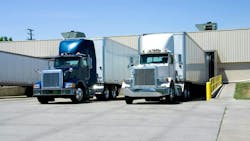
7. Clark: Nuclear verdicts and rising insurance premiums put fleets at risk
Fleet owners and managers are no strangers to challenges. From soaring vehicle and parts prices to supply chain disruptions, volatile fuel costs, and the ever-present threat of cyberattacks, running a trucking operation has never been tougher. But one issue stands out for its potentially devastating impact: skyrocketing insurance costs fueled by “nuclear verdicts”—jury awards that exceed $10 million in accident cases. Read more…

6. How AI and precision mapping are transforming fleet operations and route efficiency
With rising operational costs, ever-changing street dynamics, and fluctuating freight volumes, fleet optimization is no longer optional; it’s a necessity for survival. The American Transportation Research Institute (ATRI) reported that non-fuel costs reached a record high of $1.779 per mile in 2024. To remain profitable, fleet managers must reinvent operations by investing in smart solutions that deliver real results.
A solution lies at the intersection of precision mapping and spatial intelligence, with edge processing for scalable cost control. This approach leverages a combination of high-definition cameras and centimeter-accurate GPS to create real-time maps reflecting everything on the road, from lane markings and road signs to potholes and construction zones. Precise GPS ties spatial intelligence and navigation together, making it possible to at once understand and navigate the world with equal precision. Read more…
 Fontana: why doubling fleet safety efforts matters for drivers and companies
 Roeth: I and Letty are grateful
5. Why agentic AI could be the next big move for heavy-duty truck fleets
Organizations with transportation fleets are increasingly hearing about the benefits of artificial intelligence—but not all AI is created equal. Two distinct types of AI are currently in use: generative AI and agentic AI. And while generative AI excels at creating content and predictions, agentic AI takes it a step further by acting on insights, automating decision-making, and performing tasks with minimal human input.
For organizations managing heavy-duty truck fleets, the distinction isn’t just technical—it’s operationally critical. Agentic AI can autonomously monitor vehicle health, reroute deliveries in real-time, and optimize load planning without requiring human direction. This level of automation and intelligence could modernize logistics, reduce downtime, and improve overall fleet efficiency. Read more…
4. Changes to the CSA program are coming
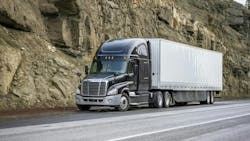
After more than a decade of debate, studies, and even an act of Congress, FMCSA is preparing to roll out major changes to its Compliance, Safety, Accountability Safety Measurement System. Those who have watched this process unfold will recall the 2015 legislation that called on an independent body, the National Academies of Sciences, Engineering, and Medicine, to assess the scoring system and recommend improvements. The planned changes to the SMS come in response to the National Academies’ recommendations and calls from the industry that the program be revamped. FMCSA floated the planned changes in February 2023 and, in November of 2024, announced its intent to implement them—likely later this year. An anticipated announcement on when the changes will be made effective is still pending. In the meantime, here is a summary of the major ones. Read more…

3. Driver pay needs to change? It already has—here’s how
I recently exchanged ideas with someone whose outlook on the industry I respect and admire, and who brings a great deal of energy and passion to finding solutions to the perennial and persistent challenges fleets face.
Knowing me and being familiar with the work we do at The National Transportation Institute (NTI), the conversation naturally centered on drivers and their paychecks, as well as drivers’ satisfaction with their career and their employers.
They pitched an idea I think they saw as a revolutionary or ground-breaking concept for the industry: a “fixed pay” or weekly pay, with guaranteed minimums that could reduce variability in paychecks and be a pillar toward reducing turnover, improving driver satisfaction, and modernizing drivers’ paychecks to support better stability and work-life balance. Read more…

2. Drivers at the center of everything we do—it’s a real business strategy with major ROI
Through the first months of 2025, the average number of driver hires per month has climbed from 2024, which itself climbed from 2023, which climbed from 2022, and so on. That’s according to data published by the DOT about pre-employment screenings for professional drivers.
March, the most recent month for which data is available, was one of the most active months for driver hiring over the past five years.
What does that tell me? Even through this years-long freight recession, challenging as it has been for our industry, carriers still face immense challenges in retaining drivers. We aren’t generally seeing meaningful headcount growth outside of private fleets right now, and it’s our contention at NTI that these elevated hiring numbers are driven by replacement demand to try to maintain headcount. Read more…

1. Where are we going to find the next generation of truckers?
I dove into the results of a Gallup poll released last month about people’s perceptions of the importance of a college education, and while they’re striking, they’re not surprising.
Just in the past 15 years, from 2010 to today, the percentage of people who reported viewing a college education as “very important” dropped from 75% to just 35%. Conversely, those viewing it as “not too important” jumped from 5% to 24%. (The remaining 40% of respondents said they still see college as “fairly important.”)
Those shifting attitudes about the importance, or lack thereof, of a college education were led by younger people, those 18-34, whose perceptions of higher education’s importance declined more rapidly than other age groups. Read more…
In addition to these articles, FleetOwner publishes several popular annual features that attract attention across the trucking and transportation industries. These include our annual looks at the largest commercial transportation systems in the U.S., the FleetOwner 500: For-Hire and FleetOwner 500: Private Fleets.
Our annual profiles of women in the industry, Women in Transportation 2025, were published this spring. Each year, FleetOwner recognizes the transportation operations of private fleets with the FleetOwner Private Fleet of the Year award. This fall, we expanded and rebranded our annual New Models into the 2025 FleetOwner vehicle guide, our largest-ever look at the next generation of heavy-duty, medium-duty, light-duty, and alternative-powered trucks and vans.
We wrapped up the year with the 2025 Trucking By the Numbers feature, an infographic highlighting the facts and figures shaping the trucking and transportation industries.
To view what's ahead for FleetOwner in the new year, please check out our 2026 Media Kit.
About the Author
 Jenna Hume
Jenna Hume
Digital Editor
Digital Content Specialist Jenna Hume joined FleetOwner in November 2023 and previously worked as a writer in the gaming industry. She has a Bachelor of Fine Arts degree in creative writing from Truman State University and a master of Fine Arts degree in writing from Lindenwood University. She is currently based in Missouri.