Roeth: Fleets focus on trailer aerodynamics to maximize tractor-trailer fuel economy
Key takeaways
- Trailer aerodynamics drives fuel efficiency; pairing aero tractors with non-aero trailers limits gains.
- Fleets benefit from optimizing trailer gaps, underbody, and rear designs for reduced drag.
- Data on report downloads shows that assumptions about fleet interests can miss what truly matters.
Like a lot of companies, we track downloads from our website. For one thing, it helps us determine if we are providing the industry with the kind of information it needs. If you had asked me which of our reports people in the trucking industry would find most interesting, I would have said our guidance reports on emerging technologies, such as battery-electric vehicles, hydrogen fuel-cell trucks, and even our work on autonomous trucking.
I would have been wrong, and there is a lesson in my being wrong, but I will get into that later.
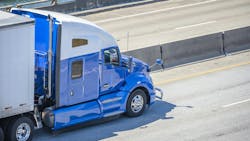
But the report downloaded most often from the NACFE website is the one on trailer aerodynamics. I am trying to figure out why people are so interested in that report. I suppose it is in part because many fleets have done a great job of improving the aerodynamics of their tractors and are discovering that when they pair an aero tractor with a non-aero trailer, they are not seeing the gains they had hoped for. After all, van trailers have been described as large boxes on wheels, which explains why fleets may not be seeing the fuel-economy improvements they had hoped for with a tractor-trailer combination. Just think of the drag on a large box running down the highway.
The other issue is that there are various technologies fleets can choose from to improve their trailers' aerodynamics, and it can be complicated to determine which to adopt. There are three areas where fleets can improve the aerodynamics of the trailer: the gap between the tractor and the trailer, the underbody, and the rear.
I am not going to go into detail about the trailer aero options, but I do encourage you to join the many who have already downloaded and read the report.
Dean Busey, director of programs at NACFE, is going to tackle updating the report sometime in 2026. Unfortunately, I cannot provide an exact publication date because we are currently tied up with the five reports from Run on Less – Messy Middle. However, we expect to be done with those by the summer, so a new trailer aero report will likely be out this fall. If you have any input on what we should include in the report or if you want to share your experience with trailer aero devices, please contact Dean at [email protected].
The other big takeaway from the data is that I should not have assumed I knew which of our reports were most popular, because there was no need to. Our internal data already had all the information I needed. But had I chosen to act on what I thought people were interested in rather than the facts, I might not have realized we needed to update the trailer aero report. The report was published in 2020, so it is not too old.
In the last five years, however, a lot has changed in trucking and in trailer aerodynamics.
It’s OK to make assumptions, but it’s also best to check those assumptions against any data you have so that you are focusing your resources on the right things. I am glad that my team shared the report download data with me so that later this year we can present the industry with a report that covers available trailer aerodynamic technologies and examines their benefits and challenges, making it easier for them to choose the right solution for their operation.
And I am going to try to remember the lesson not to act solely on what I assume to be true.

 Neumo brainwave band scanner
About the Author
 Michael Roeth
Michael Roeth
Executive Director
Michael Roeth is the executive director of the North American Council for Freight Efficiency. He serves on the second National Academy of Sciences Committee on Technologies and Approaches for Reducing the Fuel Consumption of Medium and Heavy-Duty Vehicles and has held various positions with Navistar and Behr/Cummins.