Roeth: Learning to safely share the road with trucks
Key takeaways
- Speed limits assume dry roads; slowing for rain, snow, or ice reduces crash risk for trucks and surrounding traffic.
- Loaded semis need far longer to stop—up to 525 feet at 65 mph—so space management and avoiding cut-ins are critical.
- Right-side passes and distractions raise danger; signaling, left-side passing, steady speeds, and focus improve safety for everyone.
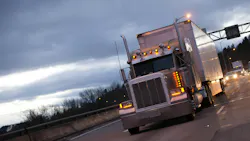
I have been driving a lot more lately, both in my car and in my RV. As a result of my time behind the wheel, I have observed the way cars and trucks share the road. Honestly, both of us could do a better job of being aware of one another and making the roads safer for all of us.
I have seen both cars and trucks driving way too fast for conditions. Posted speed limits serve as guidelines when roads are dry but should be moderated when they are wet, or if they are covered with snow or ice.
Turn signals are not optional on cars or trucks. Use them. Other drivers are not mind readers. If you are changing lanes or exiting the highway, use your turn signal to show your intent so other vehicles around you can adjust accordingly.
I continue to be amazed at the lack of understanding on the part of the general public about how long it takes for a truck to stop. A fully loaded semi needs up to 525 feet to stop when traveling at 65 mph. Cars only need about 316 feet. I cringe and sometimes even yell when I see a car cut in too close to a truck. I can’t fathom why they do it. The average car weighs around 4,000 lb. A fully loaded Class 8 tractor with a trailer can legally weigh 80,000 lb., and even empty they weigh between 30,000 and 40,000 lb. Simple physics tells us who will end up on the short end of the stick if a car and a truck collide.
Lately, I’ve also been seeing more vehicles—both cars and trucks—passing on the right. Passing a truck on the right is not a good idea. The blind side on the right side of the truck is significant, and though some trucks are now outfitted with blind spot detection systems, it is still more dangerous to pass on the right. If you want to pass, wait until there is an opportunity to pass on the left.
In previous blogs, I've talked about some experiments I have done with setting the cruise control on my RV at the stated speed limit and staying in the right lane. I typically find it does not add much time to my trip, and I find I am less stressed and tired when I do this. All that lane switching, speeding up, and slowing down takes energy and effort and can be quite stressful. I suggest you try my strategy. I’d be interested to see what you discover.
In order for cars and trucks to safely share the roads, both parties need to focus on their driving. Put away distractions—especially cellphones. You can’t be looking at what’s happening on the road ahead, behind, and beside you if your eyes are focused on your cellphone screen. Even if your vehicle has Bluetooth, talking on the phone can still be a distraction, so stay extra attentive if need to use it while driving.
Ultimately, every driver on the road, whether they are behind the wheel of a car or a truck, wants to get to their destination safely. Let’s all try to do a few simple things to make sure that happens each and every time someone gets into their car or truck.
 How finding and being a mentor can boost your trucking career
 Fleets focus on trailer aerodynamics to maximize tractor-trailer fuel economy
About the Author
 Michael Roeth
Michael Roeth
Executive Director
Michael Roeth is the executive director of the North American Council for Freight Efficiency. He serves on the second National Academy of Sciences Committee on Technologies and Approaches for Reducing the Fuel Consumption of Medium and Heavy-Duty Vehicles and has held various positions with Navistar and Behr/Cummins.