Why 2027 prebuy decisions can’t wait
Key takeaways
- Early prebuying of model year 2027-compliant trucks can reduce costs, secure build slots, and protect fleet uptime.
- Maintenance readiness and technician training are critical as emissions systems become more complex.
- Fleet size, routes, and operational needs should guide timing and scale of prebuy decisions.

The trucking industry is once again on the brink of a major regulatory shift, and this time, the clock is already ticking. With model year 2027 emissions standards rapidly approaching and expected to add thousands of dollars per truck, fleet owners and managers are asking increasingly urgent questions: Should we prebuy? What will change? How will these rules affect long-term cost, reliability, and uptime?
Even though model year 2027 appears to be a long way off, decisions made today and in the next quarter will shape fleet performance and profitability for years to come. History shows that emissions transitions don’t arrive quietly. They drive higher costs, increased system complexity, and a learning curve that affects maintenance teams and operations.
Early signals suggest the market is already responding. A notable surge in Class 8 truck purchases in December 2025 was widely seen as a strategic move rather than a demand spike. Equipment purchased today could remain in service well into the 2030s, meaning current buying decisions will determine how fleets absorb the impact of future regulations. As more fleets act, competition for favorable pricing and build slots will intensify.
MY 2027 truck emissions rules: What fleets need to know
Though final regulatory details may continue to evolve, the direction is clear. Most industry observers expect 2027-compliant trucks to feature more robust emissions systems designed to perform consistently under a wider range of real-world conditions. That could mean changes to exhaust aftertreatment, more sophisticated onboard diagnostics, and tighter engine calibration.
Geography adds another layer of urgency. Fleets operating in CARB-aligned states may face additional requirements or accelerated enforcement timelines. Understanding where equipment will operate and for how long is now a near-term compliance consideration.
Prebuy strategies for trucks to cut costs and protect uptime
Prebuying ahead of emissions changes is a familiar strategy used during previous transitions in 2010, 2014, and 2017. Fleets typically prebuy to:
- Lock in lower acquisition costs;
- Maintain familiarity with current, proven technology;
- Reduce exposure to early-adoption challenges; and
- Protect uptime during regulatory transitions.
But the advantage of a prebuy diminishes the longer a fleet waits. Production capacity is finite, and once OEM build slots fill, even well-capitalized fleets can find themselves forced into fewer options, longer lead times, or higher prices.
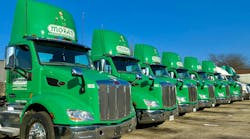
 Trump tariffs and trade wars create trucking industry uncertainty in 2025.
Delaying truck purchases can increase costs and limit options
Cost remains one of the biggest concerns tied to MY 2027 and one of the strongest drivers of urgency. New emissions-compliant trucks are widely expected to carry higher sticker prices along with the potential for increased maintenance and repair costs. More sensors, more software, and more specialized components almost always mean higher service complexity.
Yet prebuying also requires careful financial planning. Accelerated purchases can pressure cash flow, raise carrying costs, and impact residual values if too many used units hit the market simultaneously.
That’s why the conversation can’t stop at purchase price. Total cost of ownership, including fuel efficiency, warranty coverage, maintenance expertise, and resale timing, needs to be evaluated now, rather than waiting until MY 2027 trucks are the only option available.
Maintenance and uptime challenges with MY 2027 trucks
As emissions systems grow more complex, so do maintenance demands. Fleets must assess whether their technicians are trained, equipped, and ready to support next-generation technology or whether additional investments will be required.
Fleets with strong in-house maintenance programs may move faster with confidence. Others may prefer to delay adoption until new systems are proven in the field. Either way, waiting without a plan increases the risk of forced decisions later, when flexibility is limited.
How fleet size and routes affect prebuy decisions
Prebuying isn’t a universal solution. Fleet size, replacement cycles, mileage accumulation, and route consistency all influence the equation.
- High-mileage, long-haul fleets may prioritize uptime and fuel efficiency.
- Smaller fleets may feel the financial impact of accelerated purchases more acutely.
What matters most is understanding how trucks are actually used and aligning acquisition strategy accordingly.
Importantly, a prebuy doesn’t have to be all or nothing. Some fleets stagger purchases. Others offset risk by integrating alternative fuels, such as natural gas or electric, where routes and infrastructure allow. Flexibility, when planned early, becomes a competitive advantage.
Early planning secures truck build slots and pricing advantages
The 2027 emissions regulations mark another defining moment for the industry. Whether a fleet chooses to prebuy, wait, or take a hybrid approach, the real risk lies in delaying the planning process itself.
Other fleets are already securing build slots, locking down pricing, and aligning maintenance strategies. As availability tightens, options shrink. Proactive fleets maintain control; reactive fleets inherit urgency they didn’t choose.
By engaging early with OEMs, dealers, and maintenance partners, and by honestly evaluating operational realities, fleets can navigate the transition deliberately rather than under pressure. In this cycle, urgency isn’t created by 2027; it’s created by how soon everyone else moves.
About the Author
 Frank Bussone
Frank Bussone
Frank Bussone, CTP, is VP of technology & data analytics, at Corcentric Fleet Solutions. With 25 years’ experience in business analytics and business intelligence, he works with the data associated with fleet operations to find efficient and lower cost solutions for truck fleets across the country.