From cost center to profit center: How the C-suite can maximize corporate fleet value
Key takeaways
- Shifting from TCO to TVO turns fleets into profit-generating assets instead of just cost centers.
- Optimized truck specs and strategic procurement reduce maintenance, fuel costs, and maximize ROI.
- Proactive asset life cycle management stabilizes budgets and enhances residual value at replacement.
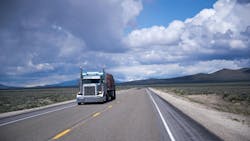
For decades, the corporate heavy-duty truck fleet has been regarded by the C-suite as an essential but ultimately uncontrollable expense—a massive capital outlay followed by an inevitable stream of unpredictable operating costs. It’s a situation that positions corporate fleet management purely as a cost center, with the goal of merely mitigating losses.
However, this traditional view fails to recognize their fleet for what it truly is: a strategic, value-generating asset class that, when managed proactively, can directly enhance profitability, improve balance sheet health, and boost overall company valuation.
Chief financial officers (CFOs) and chief executive officers (CEOs) should consider adopting a new blueprint that shifts from a passive total cost of ownership (TCO) mindset to an active total value of ownership (TVO) strategy.
From TCO to TVO: Turning your fleet into a profit-generating asset
The legacy TCO model, while foundational, is fundamentally reactive. It tracks acquisition, maintenance, and fuel costs, but it often misses the most critical financial lever: the optimal asset replacement window. Familiar TCO analysis tends to focus on functional obsolescence metrics, which, without outside expert interpretation, can lead to suboptimal performance and a higher total cost of ownership over time, eroding significant shareholder value.
In contrast, the TVO approach views the asset's entire life cycle—from initial specification and procurement to final disposal—as an integrated, performance-driven system designed for profit generation. This forward-looking view identifies the precise moment when the declining residual value and increasing maintenance and repair (M&R) costs intersect with maximum operational efficiency, ensuring every dollar is optimized at disposal.
Optimize truck specs and procurement to cut costs and boost ROI
The journey to TVO begins long before the first mile is driven, starting with strategic vehicle procurement. Many organizations with in-house fleet expertise still miss opportunities in vendor negotiations and vehicle specifications.
A highly experienced asset management partner, often operating with a complementary, dedicated asset performance team, introduces an OEM/vendor-agnostic RFP process. This ensures the absolute lowest cost to acquire the truck, immediately impacting the bottom line. More critically, they bridge the gap between technical requirements and financial outcomes by ensuring each vehicle is perfectly specified for its purpose.
Inefficiencies from suboptimal specifications lead to high M&R costs and unnecessary fuel consumption down the road. By translating technical truck knowledge into actionable, C-suite-level insights, the right partnership ensures the spec is built for success, not just use, laying the groundwork for lower operating costs from day one.
 How trucking fleets can manage cash flow during slow payment cycles
 Why 2027 truck pre-buy decisions can’t wait for fleets facing emissions changes
Predictable maintenance and fuel programs for stable fleet costs
Unpredictable fleet costs are a major source of frustration for finance professionals, complicating budgeting and financial forecasting. A dedicated asset performance team provides processes and programs designed to deliver cost consistency across the entire fleet, offering stability in a volatile M&R and fuel cost environment. By addressing key areas like fuel management and proactive tire programs, a predictable cost structure begins to emerge.
This level of control translates directly into improved budget predictability and enhanced ROI on assets. For the CFO, predictable maintenance, repair, and fuel numbers simplify financial planning, transforming the fleet from a source of chaotic expense into a reliable line item with controlled life cycle costs.
Get maximum truck residual value through proactive end-of-life planning
The disposal phase of the asset life cycle is where the TVO strategy delivers its final, most powerful financial return. Fleet assets, particularly heavy-duty trucks, represent a significant capital investment, and maximizing their residual value is paramount. This requires specialized exchange analytics to pinpoint the optimal time to rotate assets out of the fleet.
Exchanging equipment too early forfeits usable life and higher residual values; waiting too long results in diminishing returns and skyrocketing maintenance bills. A proactive asset management program overseen by the asset management partner ensures data-driven decisions determine the exchange, leveraging expert management of the entire off-lease process. This includes preventing common issues like double-billing during the transition—guaranteeing a seamless process where the new truck comes in and the old one goes out correctly, ensuring the company only carries one payment at any given time. Taking this rigorous, expert-driven approach maximizes asset value, conributing to stronger financial health.
Aligning fleet operations with corporate strategy to enhance value
For CEOs, shifting corporate fleet management to a strategic asset class delivers a strong competitive advantage and mitigates operational risk. By partnering with a specialized external asset performance team, executive leadership is freed from the operational burden of intricate truck management details, allowing them to remain focused on core business strategy and maximizing shareholder value.
This strategic partnership ensures the organization maintains a consistent image that aligns with brand integrity and provides the tools necessary to perform above industry peers at a lower operational cost. Ultimately, this approach fosters cross-departmental alignment, ensuring that high-level C-suite strategy is seamlessly connected to the operational and financial goals of the execution teams.
Turning complex fleet data into clear, actionable insights and leveraging trusted outside expertise with decades of knowledge transforms the company's corporate fleet operations into a high-performing, competitive asset that generates profit, not just mitigates loss, proving the TVO blueprint is the clear path forward for today’s sustained financial success.
About the Author
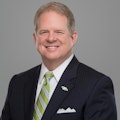 Brian Holland
Brian Holland
Brian Holland, CPA, CTP, CLFP, is the president and CEO of Fleet Advantage, a leading innovator in specialty financing, fleet data analytics, fleet management services, and life cycle cost management.