The real cost of truck accidents: Insurance, litigation, and prevention ROI
Key takeaways
- Hidden accident costs—lost productivity, downtime, and cargo delays—often exceed direct insurance and repair expenses.
- Fleets with strong safety programs and documentation receive better coverage and lower premiums amid rising nuclear verdicts.
- Investing in training and safety tech provides measurable ROI by preventing incidents and supporting defensible records in litigation.

When fleet managers calculate the cost of accidents, they typically start with insurance premiums and repair bills. But those figures represent just the tip of a financial iceberg that can threaten an operation's viability. Understanding the true cost structure—and where prevention investments deliver measurable returns—has become essential for fleet operators navigating today's challenging insurance and legal environment.
Truck accident costs beyond premiums: Hidden expenses fleets face
The visible costs of a truck accident—deductibles, increased premiums, vehicle repairs—often account for less than half of the total financial impact. The hidden costs add up quickly: lost productivity during investigations, driver downtime, administrative hours spent processing claims, cargo delays, damage to customer relationships, and potential contract penalties.
For a serious injury accident, these indirect costs can exceed direct costs by a factor of three to five. A fleet that experiences multiple incidents may find itself facing not just higher premiums but restricted coverage, higher deductibles, or difficulty obtaining insurance at any price.
Rising premiums and nuclear verdicts impact trucking insurance
The commercial trucking insurance market has tightened significantly over the past decade. Insurers have responded to rising claims costs—particularly large verdicts—by increasing premiums, reducing capacity, and becoming more selective about which fleets they'll cover.
The term "nuclear verdict" has entered the industry vocabulary for a reason. Jury awards exceeding $10 million in trucking cases have become more common, with some reaching into the hundreds of millions. These verdicts not only affect the carriers directly involved but also ripple through the entire insurance market, driving up costs for all operators.
Insurers now scrutinize safety records, training programs, and compliance histories more closely than ever. Fleets with documented safety cultures and prevention programs increasingly receive preferential treatment in both pricing and coverage availability.

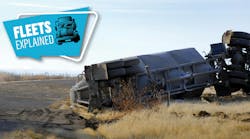 Fleets Explained: What are nuclear verdicts?
Litigation risks and fleet documentation every manager must track
When accidents result in serious injuries, litigation often follows. Plaintiff attorneys have become sophisticated in their approach to trucking cases, and they look beyond the driver to the carrier's systems and practices.
Common areas of scrutiny include: hiring and qualification processes, training documentation, hours-of-service compliance, vehicle maintenance records, safety management systems, and how quickly data was preserved after an incident. Gaps in any of these areas can significantly increase exposure.
The discovery process in trucking litigation is extensive. ELD data, dashcam footage, training records, safety meeting minutes, and internal communications all become part of the record. How a fleet manages these records before an accident occurs often determines how defensible its position will be afterward.
Safety programs and tech deliver measurable ROI for fleets
Safety investments that once seemed like nice-to-have features are now demonstrable cost-savers. The business case for prevention has never been clearer.
Consider the math: if a serious accident can cost $500,000 or more in total impact, and a comprehensive driver training program costs $50,000 annually, that program only needs to prevent one significant incident every 10 years to break even—and most effective programs deliver far better results.
Technologies like forward-facing cameras, collision mitigation systems, and telematics with real-time coaching have proven track records of reducing accident frequency. Equally important, they provide documentation that demonstrates a commitment to safety if litigation does occur.
Fleet safety strategies to reduce accidents and lower total risk
Fleet managers looking to reduce their total cost of risk should consider these priorities:
- Audit your documentation systems. Can you produce complete records for any driver or vehicle within 24 hours of an incident?
- Evaluate your hiring and training programs against current industry best practices, not just minimum compliance requirements.
- Implement technology that both prevents accidents and creates defensible records.
- Build relationships with insurers by proactively sharing your safety initiatives and results.
- Develop an incident response protocol that preserves evidence and protects your interests from the first moments after an accident.
The fleets that thrive in today's environment treat safety not as a cost center but as a competitive advantage. The investment in prevention pays dividends in insurance costs, litigation exposure, and operational continuity. In an industry where margins are tight and risks are significant, that's a return worth pursuing.
About the Author
 A.J. Bruning
A.J. Bruning
A.J. Bruning is an attorney at Bruning Law Firm in St. Louis, Missouri, where he handles commercial vehicle accident litigation.