Clark: Reducing traffic congestion through fleet management strategies
Key takeaways
- Traffic congestion is slowing truck speeds and increasing fuel costs, overtime, and missed delivery windows across fleets.
- Route optimization and real-time data help fleets avoid delays, reroute drivers, and improve overall operational efficiency.
- The use of telematics, off-peak scheduling, and preventive maintenance helps reduce congestion impacts and maintain reliable service.

Traffic is an inescapable part of fleet operations today. From long-term construction projects and sudden emergency repairs to accidents that snarl traffic for miles, delays have become a daily reality on America’s roads. For fleet managers, congestion isn’t just an inconvenience; it’s a persistent operational challenge that quietly erodes efficiency and profitability with every passing minute a truck sits still.
And the situation keeps getting worse. The American Transportation Research Institute (ATRI), using data from 2025, found that average rush hour truck speeds were 33.2 mph, 2.8% slower than in 2024. Fleet owners and operators understand that time is money, but congestion turns wasted minutes into missed delivery windows, rising fuel costs, overtime pay, and unhappy customers.
The good news is that fleets are not powerless. With the right strategies, congestion can be managed, even mitigated. The following approaches represent some of the most effective ways fleet operators can reduce the financial burden of traffic and improve efficiency.
AI route optimization to avoid congestion and delays
Today’s route planning tools go far beyond static maps. Modern platforms analyze real-time traffic conditions, weather patterns, and historical congestion data to identify the fastest and most fuel-efficient routes available at any given moment. Instead of reacting to gridlock, fleets can proactively steer drivers away from known bottlenecks, construction zones, and recurring trouble spots.
AI-powered optimization continuously recalculates routes as conditions change, helping minimize drive time, idle time, and unnecessary fuel burn. Many systems also factor in delivery windows, vehicle load, and regulatory requirements, such as hours-of-service (HOS) limits, ensuring efficiency doesn’t come at the cost of compliance.
Real-time telematics and GPS for fleet rerouting decisions
Telematics and GPS technology give fleet managers near-real-time insight into where every vehicle is, how it’s performing, and what’s happening on the road ahead. This visibility allows dispatchers to identify potential delays early and reroute trucks long before congestion becomes unavoidable.
Just as important, telematics supports instant communication with drivers, keeping them informed and aligned as conditions change. Over time, performance data can also help reduce congestion-related costs by identifying risky behaviors like speeding, hard braking, or erratic driving. These are factors that increase accident risk and compound traffic delays.
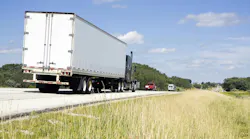 traffic congestion trucking
 CVSA updates out-of-service criteria to improve safety and compliance
Alternative delivery timing to reduce traffic delays and fuel costs
Congestion during rush hour is predictable, making it one of the easiest problems to deal with. While not every delivery can shift off the clock, many fleets find meaningful savings by scheduling routes during off-peak times such as midday, overnight hours, or weekends.
This approach often requires collaboration with customers and warehouse partners, as well as adjustments to driver schedules. However, for routes that pass through dense metropolitan areas, the payoff can be significant. Fewer vehicles on the road translates to smoother trips, lower fuel consumption, and more reliable delivery windows.
Preventive maintenance to limit wear from stop-and-go traffic
Congested traffic takes a heavy toll on equipment. Stop-and-go driving and excessive idling accelerate wear on brakes, engines, and transmissions, increasing the likelihood of costly breakdowns, often in the worst possible places.
Fleets that prioritize preventive maintenance and predictive diagnostics are better positioned to keep trucks operating efficiently even in heavy traffic. Regular maintenance reduces unplanned downtime, improves engine performance in stop-and-go conditions, and extends overall vehicle lifespan. Investments in newer trucks with fuel-efficient engines, aerodynamic designs, and idle-reduction technology can further offset the fuel penalties of slow-moving traffic.
Driver training to improve decisions in congested conditions
Technology can only go so far without skilled drivers behind the wheel. Drivers are the ones navigating crowded highways and city streets, and their decisions have a direct impact on safety, fuel use, and schedule performance.
Effective driver training ensures operators are comfortable using in-cab navigation tools and understand defensive driving techniques suitable for congested conditions. Keeping drivers informed about recurring traffic trouble spots in their territories can also improve decision-making on the road. When drivers are empowered to reroute when necessary, and supported by dispatch, fleets gain agility where it matters most.
Fleet strategies to manage ongoing traffic congestion and operational impact
Traffic congestion isn’t going away anytime soon. Rising population density, aging infrastructure, and the continued growth of e-commerce all point to heavier traffic in the years ahead. But worsening conditions don’t have to mean shrinking margins.
By leaning into data, investing in the right technology, and making thoughtful operational choices, fleet operators can regain control over time, fuel, and costs. Congestion may be unavoidable, but its impact on the bottom line doesn’t have to be.
About the Author
Jane Clark
Senior VP of Operations
Jane Clark is the senior vice president of operations for NationaLease. Prior to joining NationaLease, Jane served as the area vice president for Randstad, one of the nation’s largest recruitment agencies, and before that, she served in management posts with QPS Companies, Pro Staff, and Manpower, Inc.