Roeth: How fleet data helps shrink diesel costs and improve efficiency amid high fuel prices
Key takeaways
- Limited credible data can be a barrier slowing fleet adoption of efficiency tech.
- Geotab data shows fleets are cutting idle time and fuel use.
- Connected fleet data enables faster ROI on efficiency investments.
Back in 2013, NACFE, along with the International Council on Clean Transportation (ICCT), published a report titled Barriers to Adoption of Fuel Efficiency Technologies. Lack of credible information was one of those barriers. And that is what set NACFE on a mission to publish Confidence Reports on currently available technologies and, later, Guidance Reports on emerging technologies.
Information is key. So, I was pleased to see that Geotab, which is the technology provider for NACFE’s Run on Less demonstrations, released its latest Sustainability and Impact Report. The report shows how fleets are using connected data to improve efficiency and/or lower emissions.
This is especially important today, as diesel fuel prices are averaging more than $5 a gallon. In fact, according to EIA, for the week of March 30, the average cost of a gallon of diesel was $5.401. That is up $1.809 from a year ago. By any measure, that is a big increase.
One of the things that I felt good about from the Geotab report was a statement by Neil Cawse, founder and CEO of Geotab. In the report’s Message from the COE, Cawse said, “We no longer need to debate a choice between ‘sustainability’ or ‘profitability.’ When integrated with a pragmatic focus on short-term value, sustainability can be a clear driver of efficiency and profitability.”
In its reports, NACFE has tried to calculate the payback period for technologies that enhance efficiency or reduce fuel use. Fleets typically want payback on an investment in two years or less. When diesel prices get as high as they are today, that payback period can shrink dramatically.
One area where fleets can reap big benefits is by reducing idling. But that can be tricky because fleets have to balance reduced idling with driver comfort. The good news is that there are a variety of idle-reduction solutions on the market today that allow fleets to reduce idle while maintaining comfortable cabin temperatures and allowing drivers to use “creature comforts” like microwaves, laptops, and more.
Geotab processes more than 100 billion data points a day, and in examining all that data, they found that fleets are reducing idling by up to 30%. A 30% reduction in idle can save fleets between 270 and 400 gallons of diesel annually. I will leave you to do the math on what the dollar savings are given $5-plus diesel prices.
We are fortunate to live in a time when data is so readily available to fleets that they don’t have to guess at what fuel savings or efficiency improvements will be; they can see, with real-world data, the impact of their spec’ing decisions and operational changes.
This allows you to act quickly to roll out a technology solution fleet-wide once they see how it performs in pilot programs.
Data is the key whenever you are looking to save fuel or improve efficiency, whether that is by reducing idling, improving aerodynamics, keeping tires properly inflated, and more.
Work with your data partners to determine which options make sense given your duty cycles and vehicle applications. And when our Fleet Efficiency Survey (formerly the Fleet Fuel Study) comes out later this fall, you will be able to benchmark against some of the major fleets that are working hard to improve their efficiency and reduce their fuel bills. And you can add that data to your existing data to make even smarter decisions that will improve your MPG.
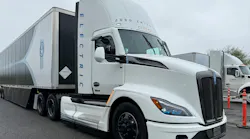 kenworth electric T680
About the Author
 Michael Roeth
Michael Roeth
Executive Director
Michael Roeth is the executive director of the North American Council for Freight Efficiency. He serves on the second National Academy of Sciences Committee on Technologies and Approaches for Reducing the Fuel Consumption of Medium and Heavy-Duty Vehicles and has held various positions with Navistar and Behr/Cummins.