Clark: The growing insurance squeeze on carriers
Key takeaways
- Nuclear verdicts are rising sharply, driving up insurance costs and increasing financial risk for carriers.
- Outdated federal insurance minimums leave fleets exposed to liabilities far beyond required coverage.
- Higher premiums and legal risks are squeezing margins and accelerating industry consolidation.
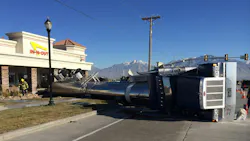
Carriers today are navigating one of the most challenging operating environments in recent memory. From fluctuating fuel prices and persistent driver shortages to tightening regulations and volatile freight demand, the pressures are coming from every direction.
Yet among these challenges, one stands out for its steady and relentless growth: the cost of insurance. What was once a manageable line item has turned into a major financial burden, driven largely by factors outside a carrier’s control. As litigation trends shift and jury awards climb to unprecedented levels, insurance is no longer just a safeguard; it’s becoming a defining factor in whether many carriers can stay on the road at all.
Growing insurance gap exposes fleets to rising liability costs
At a recent NationaLease meeting, Matthew M. Leffler, managing partner at Armchair Attorney, covered the challenge of the insurance gap, a growing imbalance between what a carrier is required to carry in insurance and the financial reality of modern litigation. At the center of this gap are the dreaded “nuclear verdicts,” jury awards that reach into the tens or hundreds of millions of dollars. As these verdicts become more frequent and more severe, they are reshaping the economics of risk and giving insurers significant leverage to raise premiums across the industry.
Nuclear verdicts exceeding $10 million are often driven by non-economic damages such as pain and suffering. As Leffler noted, these awards have surged in both size and frequency, particularly since 2020. Recent data shows a 52% increase in nuclear verdicts in 2024 compared to 2023, reaching 135 cases and totaling $31.3 billion.
According to the U.S. Chamber of Commerce, the number of verdicts exceeding $100 million hit a record high in 2023. Much of this growth has been concentrated in high-litigation states like California, Florida, and Texas.
Why commercial carriers face higher nuclear verdict exposure
Trucking companies are especially vulnerable in this environment. Roughly one in four auto accident trials that result in a verdict of $10 million or more involves a commercial trucking carrier. The size and visibility of trucks, combined with the potential for severe accidents, make them prime targets for large jury awards. This exposure has intensified the financial pressure on carriers, particularly smaller operators.
Despite this rapid escalation in liability exposure, the federally mandated minimum insurance requirement has remained unchanged since 1985 at $750,000 (with higher amounts for hazardous materials). This static threshold is increasingly disconnected from reality. When compared to a nuclear verdict of $51 million, the required coverage accounts for less than 1.5% of potential liability. In practical terms, this means that the vast majority of risk sits above the mandated coverage level.
Insurers gain pricing power as trucking risk and claims escalate
This gap is where insurers gain significant leverage. Because carriers know that a single catastrophic verdict could far exceed their minimum coverage and potentially bankrupt their business, they are incentivized to purchase higher levels of insurance. Insurers, in turn, price policies based on the growing risk of nuclear verdicts. As those verdicts rise, so do premiums, often at a pace that exceeds the ability of carriers to absorb the costs.
The result is a vicious cycle: Larger verdicts drive higher premiums, which contribute to financial strain and industry consolidation, reducing competition and leaving remaining carriers with fewer options. For many in the trucking industry, the issue is not just the cost of insurance but also the structural imbalance between outdated regulatory requirements and the realities of modern litigation.
Until that gap is addressed, either through updated minimum coverage requirements or tort reform, insurance costs are likely to remain on an upward trajectory, with nuclear verdicts continuing to shape the financial future of the industry.
 Fleets Explained: What are nuclear verdicts?
 trucking insurance
About the Author
Jane Clark
Senior VP of Operations
Jane Clark is the senior vice president of operations for NationaLease. Prior to joining NationaLease, Jane served as the area vice president for Randstad, one of the nation’s largest recruitment agencies, and before that, she served in management posts with QPS Companies, Pro Staff, and Manpower, Inc.