The states where commercial truck accidents are most deadly: A fleet safety breakdown
Key takeaways
- FMCSA and NHTSA data rank U.S. states by commercial truck fatality rates and total crash deaths.
- Texas, Florida, California, Georgia, and North Carolina lead in total truck crash fatalities.
- Montana, Wyoming, Mississippi, South Carolina, and Arkansas have the highest fatality rates per miles traveled.
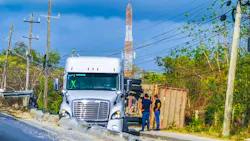
Commercial truck accidents are a significant source of fatalities and injuries in the U.S. Over 5,000 people are killed annually, but the risk level varies significantly depending on where your truck fleet operates. For fleet managers looking to minimize risk when making routing decisions, driver assignments, and safety investments, knowing which states carry the highest fatality rates can be extremely valuable.
State-by-state commercial truck accident risk rankings for fleets
This state-by-state analysis uses data from the Federal Motor Carrier Safety Administration (FMCSA) and the National Highway Traffic Safety Administration's (NHTSA’s) Fatality Analysis Reporting System (FARS) to rank states by large truck fatality rate per 100 million vehicle miles traveled and per 100,000 registered commercial vehicles. It also considers secondary factors driving these fatality numbers, including highway type (rural vs. interstate), hours-of-service violation rates, driver fatigue incidents, and infrastructure condition ratings.
Based on this data, the top five most dangerous states for commercial trucks by total fatalities are Texas, Florida, California, Georgia, and North Carolina. The top five most dangerous states for commercial trucks by rate are Montana, Wyoming, Mississippi, South Carolina, and Arkansas. These states share several common factors, including long rural haul corridors, high percentages of two-lane highways, extreme weather exposure, and fewer rest stop facilities.
Key risk factors for commercial truck accidents by state include:
- Rural highway exposure: States with high percentages of rural vehicle miles traveled present a higher risk of fatal single-vehicle and head-on crashes.
- Weather conditions: Ice, fog, and high winds increase the risk of accidents and fatalities and disproportionately impact fleet operations in the Northern and Plains states.
- Hours-of-service compliance: States with long-haul hub corridors show higher compliance violation rates, which increases fleet operation risks.
- Infrastructure ratings: States with lower bridge and road condition scores also correlate with higher commercial truck accident rates.
- Urban freight congestion: High-volume metro corridors in Texas, California, and Florida account for a significant share of multi-vehicle fatalities.
How fleet managers can use crash data for routing and safety planning
Understanding fleet safety data can help fleet managers make fleet operation decisions that adapt to commercial truck accident risk. For example, fleet managers can consult state risk profiles to inform driver training priorities for high-risk route assignments and adjust routing and scheduling of drivers to reduce high-risk exposure. Fleet managers can also factor fatality rate data into insurance risk assessments and carrier safety ratings.
Fleet liability risks and legal exposure from fatal truck crashes
Proactively assessing where your fleet operates is not just a logistics decision; it is also a liability decision. Commercial truck fatalities can trigger federal investigations, FMCSA audits, and significantly higher litigation exposure than standard vehicle accidents. Consulting with experienced truck accident counsel to ensure that you are adequately accounting for accident risk and maintaining proper documentation can help minimize future liability. Waiting for a lawsuit to be filed is often too late—the difference between a properly documented response and an underprepared one can easily be millions of dollars in legal exposure.
While there are aspects of fleet operation, such as weather, that cannot be controlled, data-driven route planning and proactive legal preparedness are two levers fleet managers can use to minimize commercial truck accident risks and liability. Knowing and understanding risks before an accident happens is less costly than responding after the fact.
 CORCA cargo theft bill passes House to combat organized retail crime and freight theft surge
 New 2026 cargo theft schemes expose vulnerabilities in vetting, email systems, and pickups
About the Author
 Jarrod Burch
Jarrod Burch
Jarrod Burch is a managing attorney at Mabra Law in Atlanta, Georgia. A U.S. Army veteran from Sylvester, Georgia, he received multiple military honors. Before practicing law full-time, he spent over a decade teaching legal studies at St. Leo University and working with Georgia lawmakers. He earned his J.D. from the University of Georgia School of Law and his bachelor’s from Albany State University.