Clark: As fleet priorities shift, predictive maintenance takes the lead
Key takeaways
- Fleet managers now rank asset maintenance as a top concern, above compliance and damage notifications.
- Predictive maintenance helps fleets prevent breakdowns using real-time diagnostics and telematics data.
- Extending asset life is driving fleets to adopt condition-based maintenance over fixed service intervals.
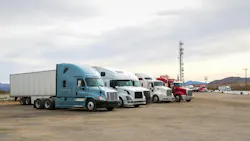
Fleet managers are sending a clear signal in 2026: maintaining assets to reduce downtime and prevent breakdowns has become their top operational concern. According to data from J.J. Keller’s annual State of Fleet Management survey, 54% of fleet leaders now rank asset maintenance as a primary challenge, surpassing even the need for rapid notification of damage or compliance issues. This shift reflects a broader recalibration away from reactive fixes toward long-term vehicle reliability.
That shift is exactly where predictive maintenance delivers the most value.
Shifting from reactive repair to proactive asset reliability
Historically, fleet maintenance has been reactive: fix the truck when it breaks down, respond to alerts as they occur, and absorb the cost of downtime. But as the survey findings suggest, fleet managers are no longer satisfied with simply knowing when something goes wrong. They want to prevent failures entirely.
Much like catching a health issue early can prevent more serious complications, predictive maintenance helps fleets identify emerging vehicle problems before they escalate. By leveraging real-time diagnostics, telematics, and advanced analytics, fleet managers gain visibility into vehicle health and can intervene before a breakdown occurs.
This proactive approach directly addresses the industry’s top concern: keeping trucks on the road and operating reliably.
Maximizing equipment lifecycle and capital investments
Economic uncertainty and the rising cost of new trucks are also influencing maintenance strategies. Many fleets are choosing to extend the life cycle of their existing assets rather than invest in new equipment immediately. That makes effective maintenance not just important but essential.
Predictive maintenance supports this strategy by ensuring vehicles remain in peak operating condition for longer. Instead of relying on fixed service intervals or waiting for failures, fleets can align maintenance schedules with actual vehicle condition. The result is:
- Fewer catastrophic failures
- Longer asset lifespans
- Better return on capital investments
In short, predictive maintenance gives fleet managers the confidence to hold onto assets longer without increasing risk.
Mitigating unplanned downtime across the supply chain
Unplanned downtime is one of the costliest challenges in fleet operations. A single breakdown can disrupt delivery schedules, strain customer relationships, and create cascading operational inefficiencies.
Predictive maintenance directly mitigates this risk by identifying issues early and allowing maintenance to be scheduled during planned downtime. Rather than reacting to emergencies, fleet managers can maintain control over when and how repairs happen.
This proactive scheduling reduces disruptions across the supply chain and keeps vehicles where they belong: on the road.
TCO control and maintenance budget forecasting
Expense management has long been a core competency for fleet managers, but predictive maintenance takes cost control to a more strategic level.
By catching issues early, fleets can avoid expensive emergency repairs and reduce the likelihood of major component failures. Smaller, planned interventions are almost always more cost-effective than large, unplanned fixes.
Just as importantly, predictive insights improve budgeting accuracy. Maintenance becomes more predictable, enabling better forecasting and fewer financial surprises, which is an especially valuable advantage in today’s volatile economic environment.
Improving fleet efficiency, safety, and emissions compliance
Predictive maintenance also contributes to broader operational goals:
- Efficiency: Vehicles that are properly maintained operate at peak performance, improving fuel efficiency and reducing delays.
- Safety: Early detection of mechanical issues reduces the risk of accidents and helps ensure regulatory compliance.
- Sustainability: Well-maintained trucks produce fewer emissions and consume less fuel, supporting environmental goals while reducing costs.
These benefits reinforce why fleets are prioritizing long-term reliability over short-term fixes.
AI-powered predictive maintenance for commercial fleet operations
Artificial intelligence (AI) is accelerating the impact of predictive maintenance by transforming how data is analyzed and applied.
AI-powered systems can process large volumes of sensor data and historical maintenance records to detect subtle patterns that humans might miss. These systems can predict component failures with increasing precision and provide real-time alerts, enabling fleet managers to take immediate, informed action.
By integrating with telematics platforms, AI-driven predictive maintenance creates a continuous feedback loop: monitor, analyze, predict, act. This level of visibility and responsiveness is critical for fleets aiming to stay ahead of maintenance challenges.
A strategic response to evolving priorities
J.J. Keller’s findings make it clear: The industry is moving beyond reactive maintenance toward a more strategic, reliability-focused mindset. Predictive maintenance aligns perfectly with this shift, offering a practical way to reduce downtime, control costs, and extend asset life.
For fleet managers, the question is no longer whether they can respond quickly to problems. It’s whether they can prevent those problems in the first place.
Predictive maintenance provides that capability. In doing so, it answers the biggest concern facing fleets today: how to keep assets running longer, more efficiently, and with fewer costly surprises.

 How predictive maintenance is driving the third wave of fleet technology
About the Author
Jane Clark
Senior VP of Operations
Jane Clark is the senior vice president of operations for NationaLease. Prior to joining NationaLease, Jane served as the area vice president for Randstad, one of the nation’s largest recruitment agencies, and before that, she served in management posts with QPS Companies, Pro Staff, and Manpower, Inc.