How fleets are optimizing routes and growing delivery volume without adding drivers
Key takeaways
- Connected planning systems help fleets improve capacity without adding more drivers.
- Better routing, scheduling, and load planning can reduce driver stress and turnover.
- Integrated planning helps fleets improve productivity and adapt to changing demand.
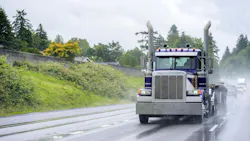
The labor pressure on fleets is layered when it comes to drivers. Experienced drivers are aging out, and the pipeline of qualified replacements is thin, constrained by CDL requirements and tightening compliance standards. The National Transportation Institute (NTI) found that the number of for-hire drivers dropped 5% last year, and much of the industry’s hiring activity is for replacements, not growth. Plus, drivers in the workforce have higher expectations for consistency and predictable schedules. In turn, fleets are spending more to recruit and retain drivers but still struggling to keep pace with delivery demands.
The common assumption is that capacity scales with head count; for example, delivering 20% more means hiring 20% more drivers. But many operations are improving delivery performance without significantly increasing head count. The solution comes from data they already have, but many just aren’t connecting it for more holistic insights. When routing, scheduling, and planning systems don’t talk to each other, efficiency falls through the cracks. Big operational gains, however, are waiting in the openings.
Across many fleet operations, route planning has been siloed. Strategic routing builds a set of optimized routes based on customer locations, delivery windows, and service frequency. Separately, dispatch assigns drivers to those routes based on availability. Somewhere downstream, load planners figure out how to get product onto trucks and trailers.
These functions may work well on their own, but what’s missing when they’re separate? Routes might be built without considering constraints on drivers’ hours or scheduling preferences, producing plans that seem efficient but generate overtime and missed windows on the road. Or maybe trailers are loaded out of sequence, so drivers spend time at every stop hunting for the right product at the back of the truck.
Eliminating these pain points increases productivity along a route and helps control the hours drivers spend on the road. When that adds up across a fleet, it’s the difference between needing additional trucks and drivers and handling growth with the existing fleet.
Optimizing fleet performance starts with modeling the full range of constraints, such as warehouse throughput, vehicle capacities, service frequency, and driver shift lengths across weeks or months at a time. Driver scheduling builds on that foundation, creating predictable, balanced assignments that account for seniority, fairness, and consistency. Load planning closes the loop by sequencing trailers to match the actual delivery order, so execution tracks to the plan.
When these layers are connected, the operation absorbs change more gracefully. New business fits into existing routes with minimal disruption. Seasonal volume increases get distributed across available resources rather than triggering emergency hiring. Operations no longer need to rely only on experienced staff with institutional knowledge to fix a broken plan.
That knowledge is now woven into the planning layers and doesn’t disappear when experienced staff members leave the company.
When planning systems are aligned, it also helps businesses retain drivers. Driver turnover remains one of the industry’s most expensive problems. One study of more than 500 drivers found that nearly 75% find their job physically and emotionally stressful. Inconsistent schedules are another leading reason drivers leave the industry. Fleets that run more efficiently can help alleviate stress by giving drivers schedules they can count on and routes they can execute within standard hours.
In turn, experienced drivers stay longer and are more productive and consistent in meeting service commitments. Fleets don’t have to constantly retrain new hires and lose institutional route knowledge when tenured drivers walk out the door.
For many fleets, the capacity they need may already exist inside their current operations. As delivery networks grow more complex and the qualified driver pool continues to tighten, the cost of disconnected planning will only increase. Smart fleets are closing those gaps before the next wave of complexity makes them harder to fix.
 Trucking driver shortage worsens as fleets struggle with retention and turnover costs
 Ken Vieth at the National Private Truck Council
About the Author
 Cyndi Brandt
Cyndi Brandt
Cyndi Brandt is the VP of fleet solutions at Descartes, aligning go-to-market strategy in the routing, mobility, and telematics space with industry needs. She has spent the last 23 years in transportation technology, spanning final-mile optimization, dispatch and tracking, telematics and ELDs, video-based safety, and data analytics. Having spent time with last-mile and over-the-road companies, Brandt understands the differences and similarities of the spaces.