Fontana: Driver shortage and retention challenges persist across fleets
Key takeaways
- Some industry players estimate the driver shortage may reach 160,000 by 2030, with replacement costs near $12,799 per driver.
- Pay alone is not enough—drivers also prioritize communication, scheduling consistency, and reliability.
- Fleet technology must be intuitive and involve drivers early to improve adoption and retention.
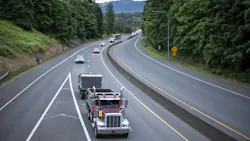
The driver shortage is a perennial problem for fleets. It’s not just about finding the right drivers; it’s also about retaining those drivers once you hire them. According to the American Trucking Associations, by 2030, the industry could be short 160,000 drivers, and some estimate the cost to replace one driver at $12,799.
Platform Science has released its Driver Experience Report 2026, a survey of 1,000 drivers to better understand what drivers want. One interesting finding was the fact that “while competitive pay remains a key factor in attracting and retaining drivers, it is not enough on its own.” Drivers want more. The surveyed drivers indicated they also value “clear communication, keeping commitments around schedules and hours, and feeling informed rather than surprised.”
Fifty-two percent of survey respondents said that technology was a factor in their decision to stay with a fleet. However, it also found that while technology was important, it needed to be “intuitive, reliable, and designed to make their work easier.” Interestingly, drivers were nearly evenly split on whether they felt technology actually made their jobs easier.
There is a lesson in this data, and it was reinforced in several sessions I attended at the annual meeting of the National Private Truck Council (NPTC). Technology for the sake of technology is not the answer. When looking at whether to add a technology to your operation that will impact drivers, ask yourself how the technology will make their lives better, safer, and more efficient.
Some things drivers noted were a dislike of the disconnected app, a lack of transparency around safety, and technologies that were unreliable. And that is understandable. None of us want a new technology or gadget that will make it harder for us to do our jobs properly.
Ideally, you want to find technologies that simplify the driver’s workflow rather than complicate it, and it must be reliable. Drivers need to know the new technology will work consistently.
Make sure you get input from your drivers when you are looking at driver-facing technology. Let them “test drive” the technology before you make a final decision to purchase it.
Getting drivers involved early in the technology-selection process pays big dividends. The drivers whose input you sought will then become advocates for the technology, which is likely to encourage other drivers to accept and use it more readily, benefiting both them and you.
 Nine fuel economy strategies fleets can use to reduce diesel operating costs
 Why dedicated transportation models reduce fuel risk and improve fleet stability
About the Author
 Gino Fontana
Gino Fontana
Chief operating officer and executive vice president at Transervice Logistics Inc.
Gino Fontana, CTP, is COO and EVP at Transervice Logistics Inc. His operational expertise emphasizes cost savings, process efficiency and improvement, superior quality, and people management skills. He has more than 35 years of experience in the transportation and logistics industry with both operational and sales experience.