Roeth: Are you sure you know your true trucking costs?
Key takeaways
- ATRI reports miles per truck have declined since 2016, impacting the value of efficiency investments.
- Fuel costs reached $0.48 per mile in 2025 and could rise further with higher diesel prices.
- Truckload drivers average 1.71 hours of dwell time per stop, reducing time spent hauling freight.
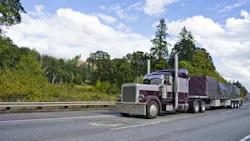
The American Transportation Research Institute (ATRI) recently released its 2026 Analysis of the Operational Costs of Trucking. This is a leading benchmark tool for costs, revenue, and other key performance metrics across a variety of fleets. It contains a wealth of information on the various factors that go into operating a fleet, including fuel, vehicle purchase/lease payments, repair/maintenance, truck insurance premiums, permits/licenses, tires, tolls, and drivers’ ages and benefits. The data was gathered from truckload, less-than-truckload (LTL), and specialized carriers, and it is also analyzed by geographic regions.
There were some interesting nuggets in the report. Here are just a few things that caught my eye:
Miles per truck per year has been dropping over time—a lot. Since 2016, it has dropped from 105,000 miles to 86,000 miles and was only 78,000 miles in 2022. It used to be that we commonly used 125,000 as the number for the average miles per truck per year. This number is important when we try to justify freight efficiency features over time, especially those that cost more upfront and pay off with lower fuel costs based upon the miles traveled.
No surprise that I found fuel costs interesting as well. In 2025, ATRI showed fuel at $0.48/mile, and using the U.S. Energy Information Administration’s (EIA’s) average of $3.67/gallon in 2025, I calculated what this cost would be if diesel fuel was $5/gallon, which is basically where we are here in the middle of 2026. We could see an historic high of $0.65/mile in next year’s report at a time when efficiency of these same trucks has improved to more than 7.0 MPG. What I mean is that even though fleets are running more efficiently, that high cost of fuel is having you spend more money than ever to power your trucks.
Finally, I was intrigued by dwell time. This is a likely culprit in the lower miles per truck per year. However, it shocked me that truckload drivers are experiencing a dwell time of 1.71 hours per stop. Essentially, they are not able to get back on the road and do what they do best—haul freight. As the old saying goes, “if the wheels aren’t turning, we aren’t earning!” Another interesting thing in the dwell time data is that in LTL, given their cross-docks and drop-and-hook nature, dwell time is only 0.42 hours, significantly less than a quarter of the time of a truckload.
I need to spend some more time with the report, and when I do, I am sure I will find some other interesting information. I encourage each of you to spend a little time with the report—it’s a total of 65 pages. Still, some of that is boilerplate, graphical presentations of the data, and a reproduction of the survey instrument itself.
The information in this report is based on real-world data since it was gathered from fleets themselves. It’s worth taking a deeper dive so that you can see how you stack up to other fleets. It could provide direction on areas of your operation that you need to take a closer look at to reduce your operational trucking costs.

 How propane autogas can help medium-duty fleets meet sustainability goals
About the Author
 Michael Roeth
Michael Roeth
Executive Director
Michael Roeth is the executive director of the North American Council for Freight Efficiency. He serves on the second National Academy of Sciences Committee on Technologies and Approaches for Reducing the Fuel Consumption of Medium and Heavy-Duty Vehicles and has held various positions with Navistar and Behr/Cummins.