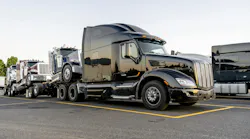
Solar panels designed specifically for the trucking industry are flexible, thin, lightweight, and can be affixed to the curves of the tractor’s fairing as well as to the top of trailers.
In addition to having solar panels on the tractor, some fleets are adding them to the trailer. Trailers have traditionally been powered by the seven-way connector between the tractor and the trailer, which powers brakes, running lights, etc. Recently, several other electrical loads have been added to trailers, and many of those electrical demands can be supported by solar panels. Trailer solar panels can help support liftgates, telematics, and refrigeration units.
There are some best practices for determining if adding solar panels makes sense for your fleet. Fleet managers need to consider factors such as total energy produced by the panels, fuel saved, panel lifespan, battery life extension, and the fleet’s total energy profile. Fleets also need to evaluate the cost of installing the system, panel ratings vs. their physical size, the fleet's battery replacement rate, the typical number of roadside calls for jump starts or battery replacement, and the areas of the country in which the fleet operates.
When considering adding solar panels to the tractor, include cost savings from reduced idling, less load on the alternator during normal tractor-trailer operation, increased battery life, and fewer emergency roadside assistance calls.
When considering solar panels for trailers, analyze the electrical requirements of liftgates, refrigeration units, telematics devices, lighting, pallet jack charging, duty cycle, cost savings from increased battery life, and the number of emergency roadside assistance calls.
One important note when it comes to solar panels: they must be sized appropriately for their intended application. For example, the size of a solar panel to support an eAPU on a tractor might be limited by the area available on the tractor fairing, whereas a solar panel to support a refrigeration unit only needs to be large enough to provide a small trickle charge to the reefer unit’s starting battery.
If you have not considered solar panels in the past, now might be a good time to evaluate whether they make sense for your application.